Black or white - after two World Cup matches, reactions are mostly black and white. At home on the TV couch, in public and on social media, people are happy to let go of all inhibitions.
The enormous, collective disappointment on Midsummer's Day does not escape the players or leaders of the more than 60-person World Cup squad in Dallas.
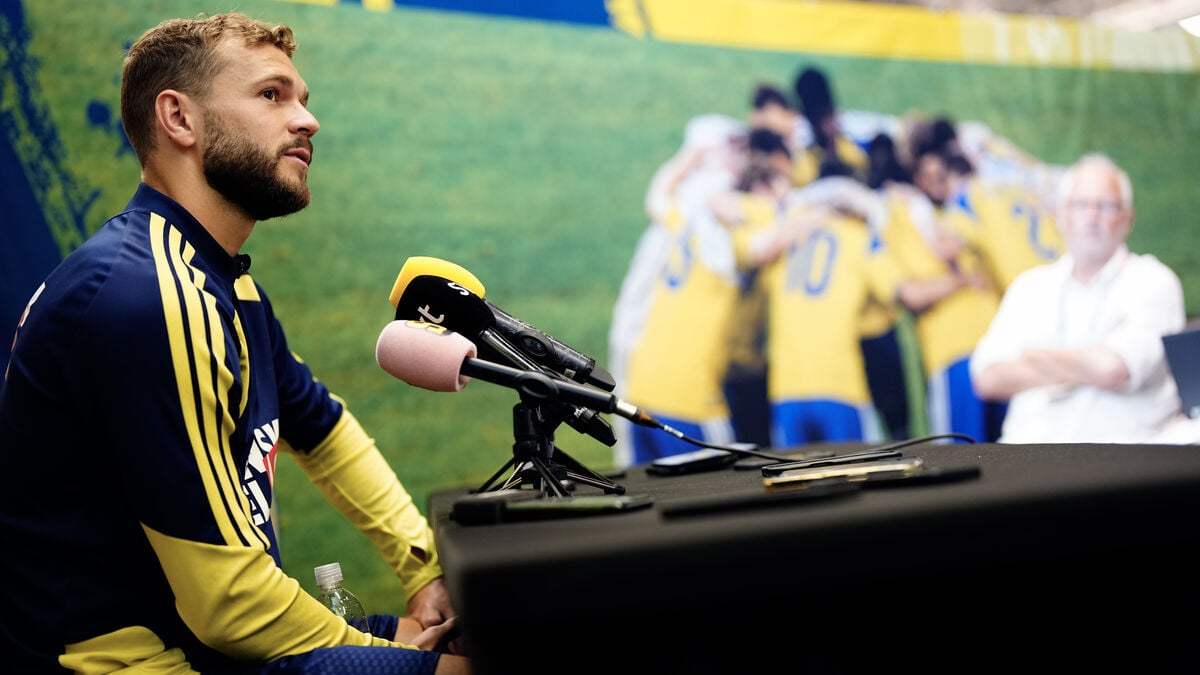
Midfielder Jesper Karlström refrains from taking part in what is said and written - regardless of the result.
"Even if you know what's written, it feels better to avoid it as much as possible. You know for yourself what was right and wrong, what was good or not good. I don't want to be influenced by anything else but stick to what is correct," he says.
Frictions may arise
National team manager Kim Källström played 131 international matches between 2001 and 2016 and managed at several championships, including the World Cup and the European Championship.
He knows how easily friction can arise between players and factions can form in a squad that has been together for several weeks. The media campaign surrounding whether he or Anders Svensson would play created irritation during the 2006 World Cup.
Not everyone likes everyone. It's the same in the national team as in any larger group.
"The shorter a competition is, the more important the start is. It creates calm, faith and gives a lot of energy," Källström said after the opening match against Tunisia.
He also pointed out:
"This is an extremely results-driven industry. Every comma in the results line has a huge impact."
"There are sometimes abrasions"
One by one, the players have confirmed that the mood in the squad is good under national team captain Graham Potter. Whatever may be bubbling under the surface, no one is bringing it up to the outside world.
"Every group has its challenges. It is clear that there is friction sometimes. Sometimes friction is good; it creates tension that drives performance. It depends on which leader you have, which players you have," Källström says.
"The group we have now feels very harmonious, both on and off the pitch. Sometimes it can be good on the pitch but worse off. Or vice versa. This is not an exact science; we are dealing with people and people react differently to stress and pressure."
How do you, as a manager, handle friction or divisions?
"Talk about it. And above all, look one step ahead. If things start to get a little messy, maybe we can handle it before it gets serious. And if it does, we'll handle it."