In the new phase, Israel and the US will "further dismantle the regime and its military capabilities."
"We have further surprises waiting, but I am not going to reveal them," says Zamir on Thursday evening.
The army chief also stated that 80 percent of Iran's air-defense systems have been destroyed and that Iran is close to "complete air dominance." In addition, 60 percent of Iran's ballistic missile launch sites have been destroyed. According to previous information, this is about 300 sites.
“We are waiting for them”
Iranian Foreign Minister Abbas Araghchi says in a video interview with American NBC News that the Iranians are ready if the conflict develops into a ground war.
"We are waiting for them. We are convinced that we can confront them, and that would be a great disaster for them," he says.
According to Araghchi, there are no winners in the war. For Iran, it is about "resisting."
"That's what we've done so far. They've failed to achieve their goals, and we've managed to stand up to what they claim is the most powerful army in the world," he told NBC.
The intense bombardment of Iran has been ongoing since the US and Israel attacked on Saturday, killing Supreme Leader Ayatollah Ali Khamenei.
In Israel, military officials tell the Times of Israel that several thousand Iranian soldiers have been killed in recent days, a number that is difficult for outsiders to verify. The US-based activist group Human Rights Activists News Agency (HRANA) reports that more than 1,100 civilians have been killed since the outbreak of the war, including 181 children.
Flight alert in Israel
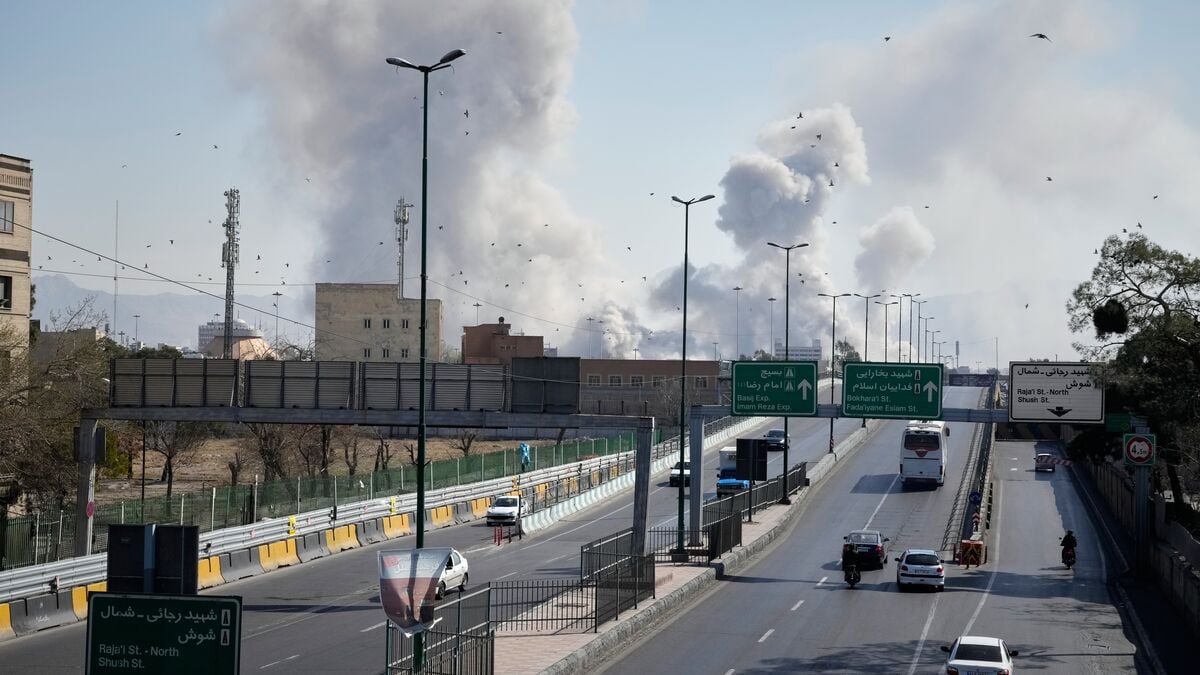
New explosions were heard over Tehran on Thursday, and in Israel, air raid sirens sounded in Tel Aviv and Jerusalem, among other places.
In Azerbaijan, at least two Iranian drones are reported to have hit a school and an airport, injuring civilians, despite Tehran denying it attacked the neighboring country.
Attacks are also reported from Qatar's capital Doha and Bahrain, where an oil facility is said to have been hit.
Reports that the US and Israel are trying to foment an armed Kurdish rebellion against Iran's religious rule and that Kurdish groups have been supplied with weapons have not been confirmed, Axios reports.
On February 28, the United States and Israel attacked Iran, without the support of the UN Security Council. The attack was described as a preemptive strike to prevent the country from developing nuclear weapons. Iran's Supreme Leader Ayatollah Ali Khamenei and several other leaders were killed in the bombings.
A year earlier, in March 2025, US President Donald Trump sent a letter to the Ayatollah to initiate negotiations over Iran's suspected nuclear weapons program. Five meetings were held but without any results.
On June 22, the United States entered the then-ongoing war between Israel and Iran and bombed three nuclear energy facilities.
In September, previous UN sanctions on Iran were reimposed. The economy deteriorated and popular protests erupted before the turn of the year. Trump said he was prepared to intervene on the side of the protesters when they were killed in their thousands - but that did not happen.
In early 2026, US military forces gathered in Iran's vicinity.
New negotiations with the regime began on February 3, without results.