In the brief war last summer and in the larger war this year, Israel and the United States have declared that they must destroy Iran's ability to produce nuclear weapons. After a series of bombings against Iranian nuclear facilities, Iran responded Saturday night with attacks on similar targets - possibly with even greater intensity.
The missiles bypassed Israeli air defenses and hit Dimona, in the southern Negev Desert. On the outskirts of the small town lies the country's most important and secret nuclear energy facility - where Israel is believed to have built a nuclear weapons arsenal.
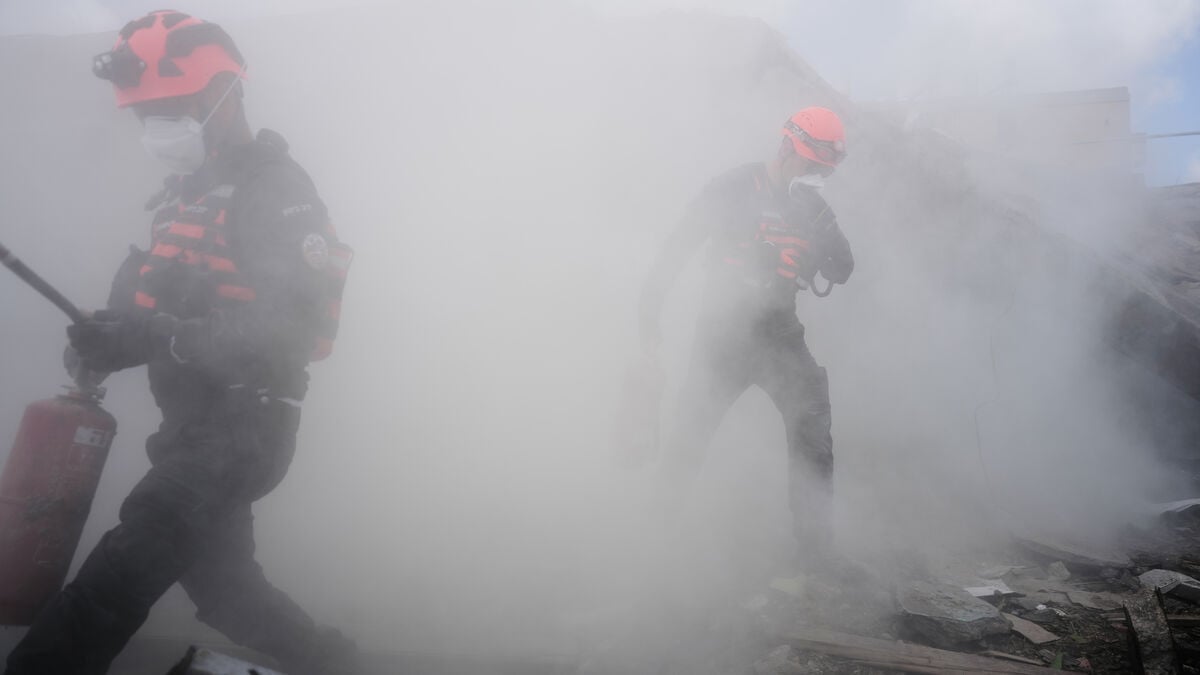
It was, as far as is known, the first time that Iran had managed to attack such a sensitive area in Israel. Residential buildings were destroyed and dozens of people were injured.
Warned early
That Israel has possessed weapons of mass destruction since at least the 1960s is a badly kept secret. In recent years, the country is also believed to have modernized its nuclear weapons capability and expanded operations at the nuclear facility in the Negev Desert.
Using the reactor located there, Israel is believed to have acquired weapons-grade plutonium for tens or hundreds of nuclear warheads.
Shortly after the major outbreak of war on February 28, military leaders in Iran announced that they were fully prepared to attack the so-called Dimona reactor if Israel and the United States attempted regime change in Iran.
There is no indication that last weekend's attack hit the reactor - but it was said to be a revenge attack after another attack on Iran's nuclear energy facility in Natanz. There, Iran's remaining stockpile of enriched uranium is believed to be buried under rubble from last year's bombings.
“No turning back soon”
The spiral of violence raises concerns that the threshold has been lowered for attacks that could have devastating consequences.
With the attacks on Dimona and Natanz, the war has almost reached a point of no return, the International Committee of the Red Cross warns.
"The recent missile attacks near nuclear facilities in both Israel and Iran underscore the enormous danger of continued escalation. States are playing with an irreversible catastrophe," said UN human rights chief Volker Türk in a video statement.
The primary concern is not that a direct attack would cause a large explosion - but rather that radioactive leaks would occur that would affect a much larger area.
Israel will neither confirm nor deny that it is the Middle East's only nuclear power, but there is broad consensus that this is the case. Much has been revealed through researchers, leaked intelligence, and whistleblowers.
Israel currently has around 90 nuclear weapons in its arsenal, according to some analysts, while others say 200-300 or the ability to quickly produce that many. They are said to be capable of being launched from the ground, from submarines or dropped from aircraft.
The country's primary nuclear power plant, outside Dimona in the Negev Desert, was built with French assistance in 1958 and was long kept completely secret.
With plutonium from there, Israel is believed to have manufactured its first nuclear weapon in the late 1960s. A whistleblower who worked at the reactor revealed in the 1980s that Israel then had enough material for 20 hydrogen bombs and up to 200 atomic bombs.
Today, more than 2,700 people are believed to work there, including in underground laboratories.