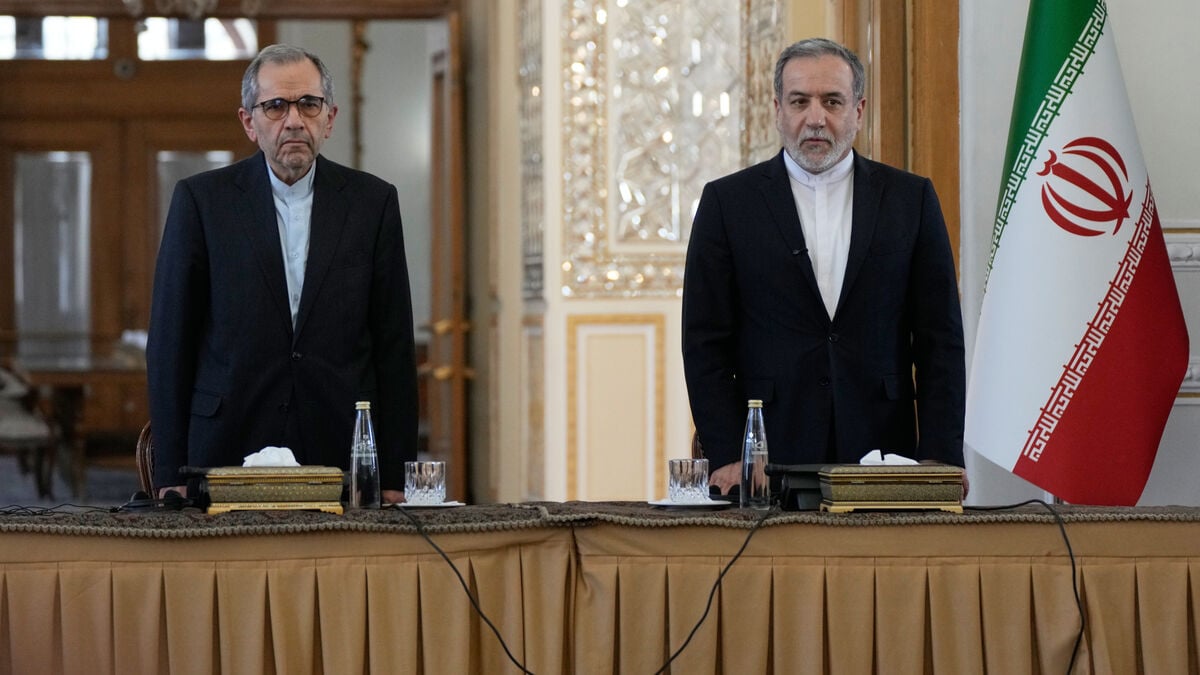
"Some countries have already discussed with us passing through the strait, and we have cooperated with them," Takht-Ravanchi said during an interview with the AFP news agency in Tehran.
However, Iran will not allow ships from countries that participated in the war in any way to pass through the strait.
"As far as Iran is concerned, we believe that the countries that participated in the aggression should not be allowed safe passage," he said.
Takht-Ravanchi also denies previous reports that Iran has mined the strait between Iran and Oman.
"That's not true," he said.
The announcement follows a statement by Mojtaba Khamenei earlier on Thursday that closing the Strait of Hormuz should be used as a means of pressure in the war.
Two oil tankers were attacked in the northern Persian Gulf, off the coast of Iraq, overnight Thursday. Several ships were attacked on Wednesday, including the Thai ship Mayuree Naree, which was hit by missiles as it navigated through the strait.
The strait between Iran and Oman is 33 kilometers wide at its narrowest point.
Iran and Oman have territorial waters in the strait, but it is subject to the right of transit passage under the Law of the Sea Convention.
It is important for crude oil transport from Saudi Arabia, Kuwait, Iraq, Qatar, Bahrain, the United Arab Emirates and Iran, as it connects the Persian Gulf with the Gulf of Oman and the Arabian Sea.
The majority of oil shipments go to countries in Asia.
Source: NE, AP