The government appointed the inquiry after the birth rate last year dropped to 1.4 children per woman – the lowest figure since measurements began in the 18th century.
For sustainable population development, 2.1 children per woman are required, according to Forssmed.
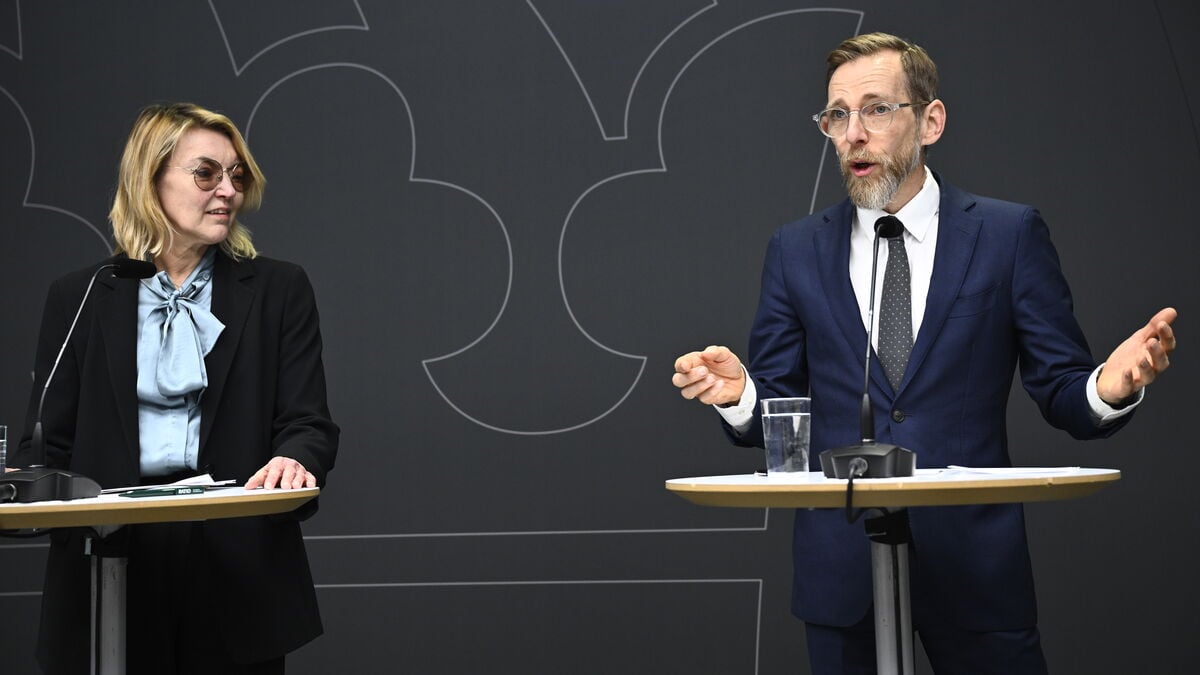
A changing demographic is not just a distant future scenario, it is happening here and now, says Forssmed at a press conference.
Worst case scenario
The part of the investigation now presented has not looked at either causes or measures, but rather at the consequences of different levels of childbearing.
In the worst case, we could end up in a scenario where the population decreases by four million (until the year 2100), says investigator Åsa Hansson, associate professor of economics.
In the worst-case scenario, more than half of GDP will disappear, according to Åsa Hansson.
According to Hansson, the demographic challenges will affect both fiscal and monetary policy, and the public sector will require extensive adaptation.
As the Minister of Social Affairs said, we are already seeing that preschools and childcare are being closed down and it will have a domino effect throughout society, says Hansson.
No global solution
Hansson points out that declining birth rates are a global problem. However, a solution across national borders, for example within the EU, is not the focus of the investigation, according to the minister.
There is a desire that we find a recipe for us in Sweden to succeed in taking on this challenge, says Forssmed.
When asked what the government is doing to tackle the challenge here and now, the Minister of Social Affairs highlights improved household finances for families with children from the turn of the year and increased single-family house production.
The investigation's mandate has been extended until 2028.