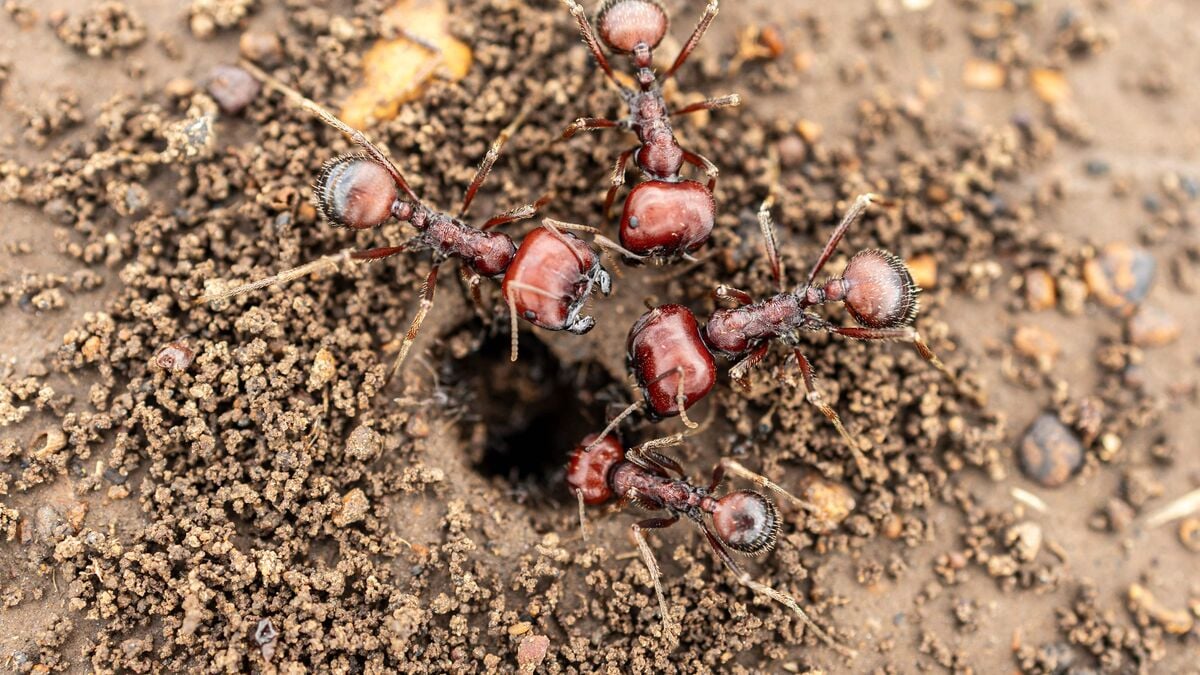
The African savannas are home to several species of so-called harvester ants in the genus Messor. Harvester ants live on seeds that they collect in large quantities, hence the name.
The largest species is Messor cephalotes, a giant ant that can reach a length of 22–25 millimeters. It is also strikingly patterned in red and black, which together means that it is highly sought after by collectors who want live queens to build ant farms in specially designed terrariums, so-called formicaria. The largest market seems to be in China.
Prison
The trade has recently been highlighted in the scientific journal Nature, among others. The giant ant is found in East Africa, in Ethiopia, Kenya and Tanzania, and illegal capture has increased significantly.
A live queen sells for between $130 and $220, according to Nature. In other words, selling a few hundred or a few thousand queens can yield a substantial profit.
A few months ago, an attempt to smuggle 5,000 queen ants from Kenya was stopped. The ants were stored in specially built capsules.
In April this year, a Chinese citizen was sentenced to one year in prison and a hefty fine after he tried to smuggle 2,200 live queens out of Nairobi International Airport.
Ecological damage
The big problem is that the loss of a single queen can mean the extinction of an entire colony of ants.
"She is not a ruler. But she maintains the population and social stability of the colony," George Otieno Ong'amo, an ecologist and professor at the University of Nairobi, told Nature.
When thousands of queens are removed, thousands of colonies can disappear, with effects on the entire ecosystem. Harvester ants are important ecosystem engineers by loosening the soil, transporting nutrients, dispersing seeds and regulating the populations of other insects.
How the trade will be curbed is unclear, but action is needed if certain species of ants are not to end up on the international red list of endangered species.
CORRECTED: In a previous version there was an error regarding how long the giant ant Messor cephalotes can grow. The correct length is 22–25 millimeters.