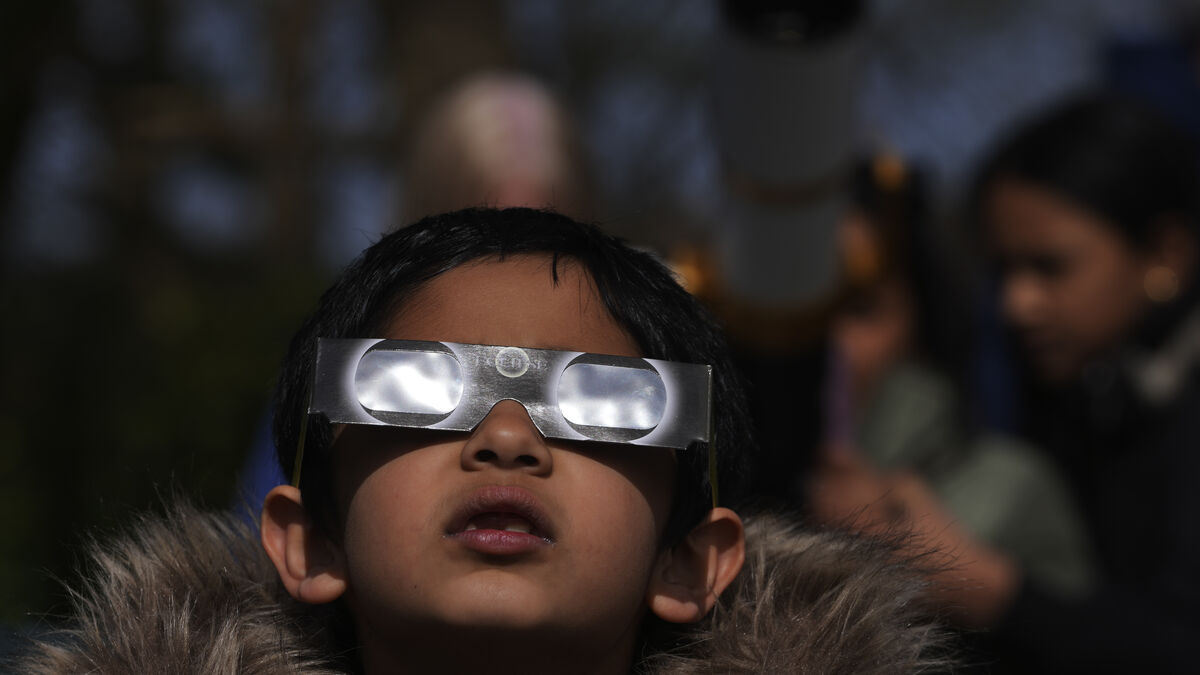
On August 12, an 80 percent solar eclipse is expected to be visible throughout Sweden. The partial solar eclipse will begin around 7 p.m. and peak around 8 p.m. in most of Sweden. In the far north, the phenomenon will begin and end up to 20 minutes earlier.
However, for those who are curious, it is good to be well prepared.
Why is it dangerous to look at the sun even during a solar eclipse?
The sun emits strong radiation that can burn holes in the retina and cause loss of visual acuity. This applies even if the sun is partially covered and the light is perceived as weaker, says Gauti Jóhannesson.
What should you consider if you want to see the solar eclipse?
You should wear solar eclipse glasses that meet a specific standard (EN ISO 12312-2). They are designed to protect your eyes from the dangerous rays.
Can you use sunglasses instead?
No, they do not provide enough protection. Sunglasses are good to use on sunny days, but not if you are going to look directly at the sun.
What do you do if you have children who want to watch the solar eclipse?
They should wear the same type of glasses. Children can be a little less able to take instructions, so it might be a good idea to keep a close eye on them so they don't take their glasses off.
Is there anything that can be done if the accident has already occurred?
Unfortunately not. If you have burned your retina, time will tell how serious the damage is and how much of your vision has been affected.






What do you think?