Many people see their pets as family members, but don't always think about including them in their emergency plan. But it doesn't have to be complicated, explains Marlene Areskog, Veterinary Medical Director at Evidensia.
It's really about the same thing as for us humans, thinking ahead so you don't have to make quick decisions under time pressure.
Home supplies for pets include things they need every day - food, water, medication and something to keep them warm. The food should not be too old, and water should be calculated based on the size of the animal.
Be proactive
It can be difficult to keep a stock of medicine, so Marlene Areskog's advice is not to wait until the last minute but to stock up in advance.
She also advises not only keeping the animal's information in digital form.
Write down your ID number, insurance information, vaccination status, and veterinarian contact information on paper. If there is a long power outage or disruption to the mobile network, you may not be able to access the information digitally.
A functioning transport cage should be available at home and preferably placed in front of the house so that it is not perceived as something dramatic. If animals are difficult to get into the transport cage under normal circumstances, it will not be easier under stress.
You can practice this with the animal. It's not just for emergency preparedness, but in general, so practicing in small steps in everyday life is also good for travel and vet visits.
Alternative protections
Marlene Areskog says that it is good to think about what one would do in a situation where people are asked to seek shelter in shelters, where pets are not allowed to come with them.
The most important thing is to have a plan in advance. If you have a pet, you need to think about alternative places where the animal can stay either with the family or with someone else.
What should happen to pets in the event of a crisis or war is an issue that the Swedish Civil Defence Agency is also looking into.
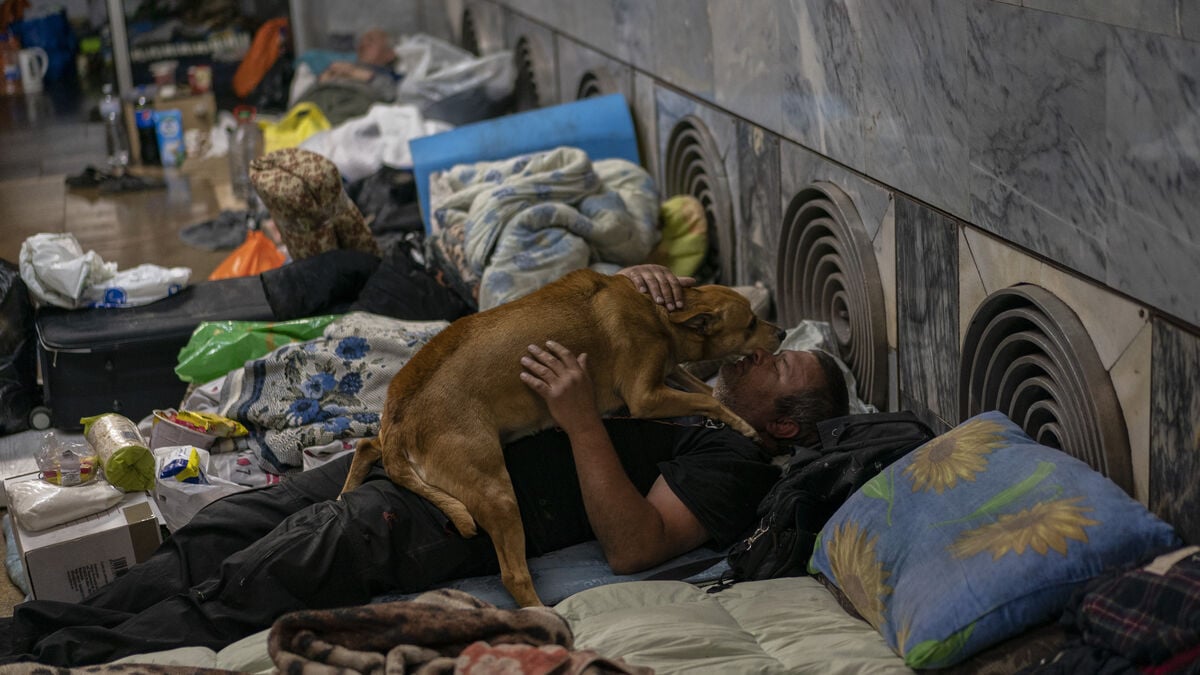
"It's a very important issue for many people. We see this not least in experiences from Ukraine," says Katja Berglund, head of the shelter unit.
She believes that the so-called protected spaces, such as tunnels and subway stations, could be a solution.
We still say that shelters are for people, but we believe that people might look at the sheltered spaces differently and that it would be possible to bring pets to them.
1. Have food and water at home for at least a week and think about how the animal can stay warm in the event of a power outage.
2. If your animal needs medication, make sure that treatment can continue even in the event of a social disruption. It is advisable to have a simple first aid kit for the animal.
3. Decide in advance how you will transport the animal and where you can go. Have a transport cage or bag easily accessible and a leash close at hand.
4. Write down contact information for the veterinarian and insurance company, as well as the animal's ID number and other important information on paper.