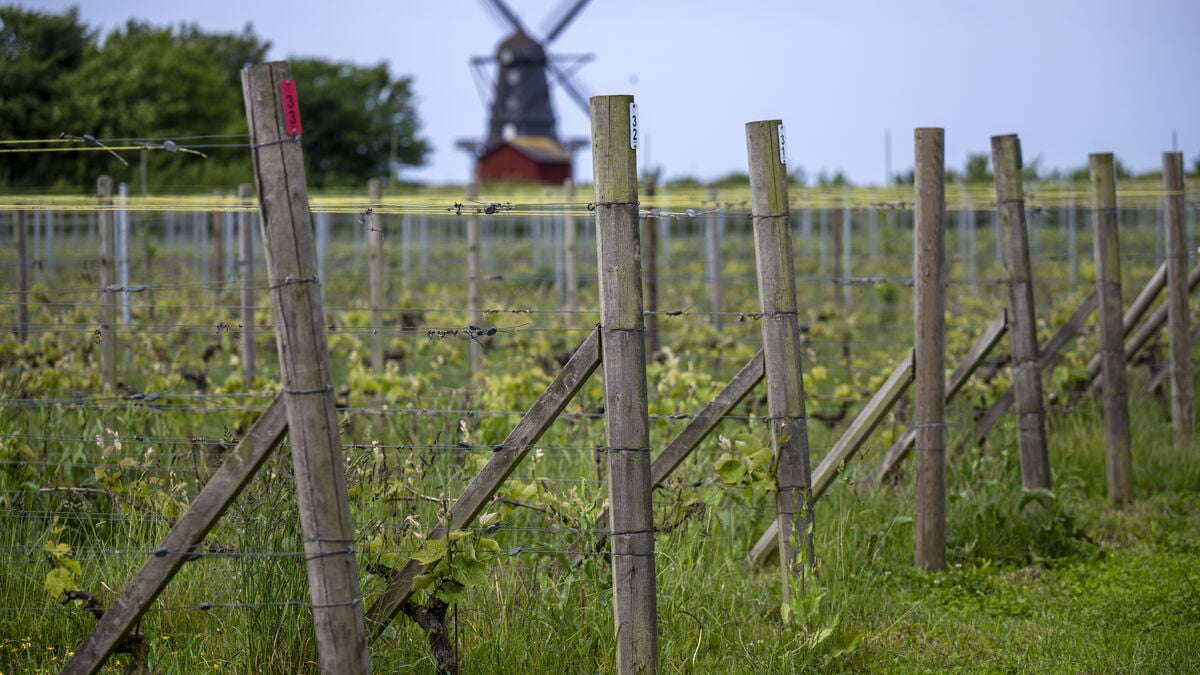
We are truly witnessing the beginning of something new in Sweden, says Luigi Servadio, senior lecturer in business administration at Jönköping International Business School at the university in the same city.
Together with researchers at Stockholm and Lund universities, he has started a project on Sweden as a new wine destination. At wine fairs in Germany and Italy, he has encountered great interest in the growing Swedish viticulture, which today consists of around 50 commercial farms.
Sweden is already known as the country of Solaris, he says of the grape that dominates Swedish viticulture.
But, he admits, it's about people who work with wine and see Swedish wine as an interesting niche. To attract other visitors, both Swedish and foreign, it's probably necessary for several players to collaborate.
For example, you can combine wine with local food and Swedish nature. You have to develop a holistic experience, he says.
Distrust of Swedish wine
Many vineyards are located in areas where there are also apple orchards, and Servadio sees synergy effects between wine, cider and apple juice.
It may not attract wine connoisseurs, but a different kind of customer, including foreign visitors, he says.
One of the biggest challenges for the wine industry to grow is money, as it requires large investments in land, cultivation and manufacturing. Another challenge is credibility, or rather distrust that it is possible to make good wine in Sweden. And getting customers to pay perhaps several hundred kronor for a bottle.
The Swedish wine industry should therefore develop a system for origin and quality certification, Servadio believes.
It would help ensure quality, create trust among consumers and increase awareness of Swedish wines, he says.
On the march
The project will also study the wine sector in Denmark and England, which are a few steps ahead of Sweden.
Not least, southern England is a wine region on the rise, partly due to climate change. For example, French champagne producers have begun to take an interest in growing grapes there, as the warmer climate at home has become a challenge.
What happens in southern England can also happen in Sweden, says Servadio.
The purpose of the study is to develop guidelines for how wine tourism can be developed in Sweden. The research is funded by the Swedish Tourism Research and Development Fund (BFUF).