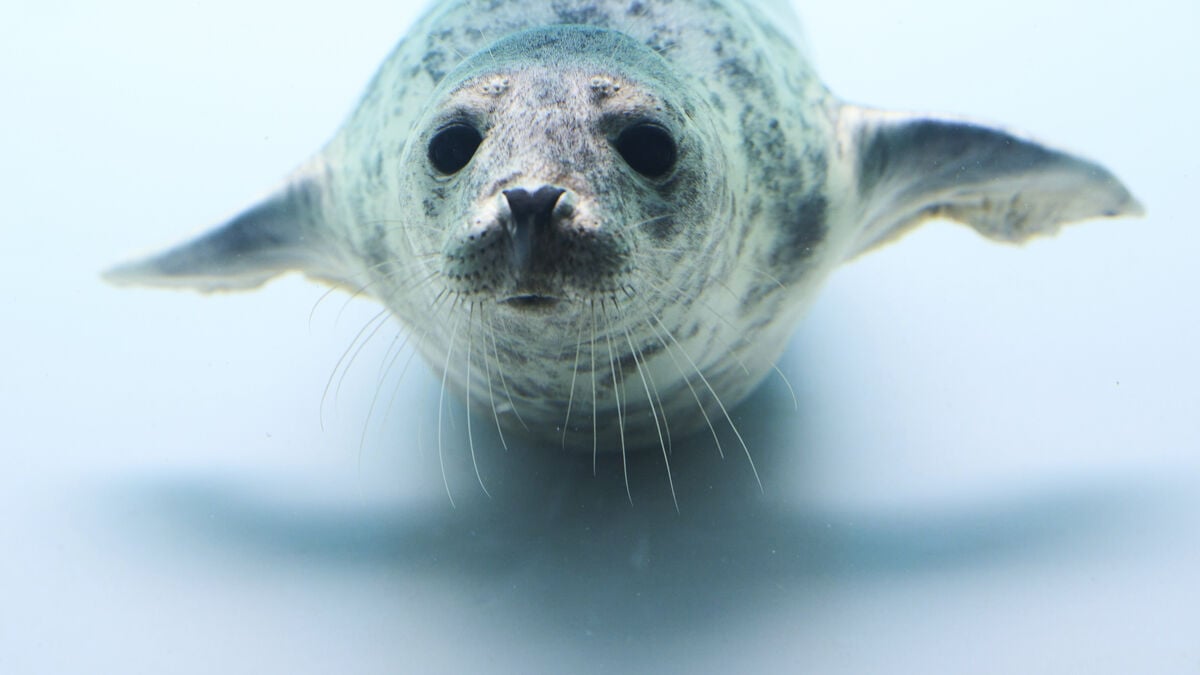
Behind the study, which is published in the Proceedings of the Royal Society, are researchers from several countries led by palaeontologist James Rule at the Natural History Museum in London.
It has long been unclear how seal species - seals, sea lions and walruses - manage to hear as well on land as they do underwater. Whales, dolphins and porpoises, for example, hear very well in water, but poorly in air.
Blood-filled tissue
However, humans and other land mammals have very poor hearing in water. Normally, we transmit sound waves from the eardrum to the cochlea, but in water this does not work because the air pocket behind the eardrum reflects almost all sound.
However, seals have solved the problem. Using microcomputed tomography, the researchers scanned more than 200 seal skulls from both modern and extinct species. They found that seals have a special tissue in their ears that fills with blood when the animals dive to protect the ear from damage when the pressure changes.
This gave them another advantage - blood has about the same density as water, which means that sound travels through the blood to the cochlea without being obstructed by an air pocket. This is why seals can hear and communicate with each other underwater.
Spooky sounds
This means they have added another skill to their repertoire. They are already masters of everything to do with sound.
Several of the species have ghostly calls that sound like eerie songs, they can imitate human speech, and sea lions can keep time to music.
The ability to hear underwater appears to have arisen more than 26.7 million years ago, during the Oligocene epoch.
A genus of five species, Enaliarctos, may have been the first to develop the special tissue. Older predecessors probably did not have the ability to hear well underwater.
The researchers point out that the study may be important for understanding how seals are affected by engine noise and other noise pollution in the oceans.
Seals, sea lions and walruses make up three families within the caniform predators, Caniformia, which otherwise consists of canines, bears and martens.
They probably descended from marten-like forms that eventually abandoned the land for the sea. This may have happened around 50 million years ago, but it was not until much later, just over 26 million years ago, that modern seals saw the light of day.
Today there are 34 species, divided into 15 species of eared seals (sea lions and fur seals), 18 species of true seals - which also include the species found in Sweden, harbour seals, ringed seals and grey seals - and the walrus.
Source: Natural History Museum