From the naval town of Karlskrona in the south to the Struve meridian arc and the church town of Luleå in the north – Sweden has 15 UNESCO World Heritage Sites, the majority of them classified as cultural heritage.
From the copper mine in Falun, the bright red metal was shipped to become the roofs of cathedrals and palaces all over Europe. Today, Stora Kopparberget and the surrounding landscape are a unique reminder of Sweden's earliest history as an industrial nation.
Far underground
This year Falun celebrates its 25th anniversary as a World Heritage Site and there are several excursion destinations here that are suitable for the whole family.
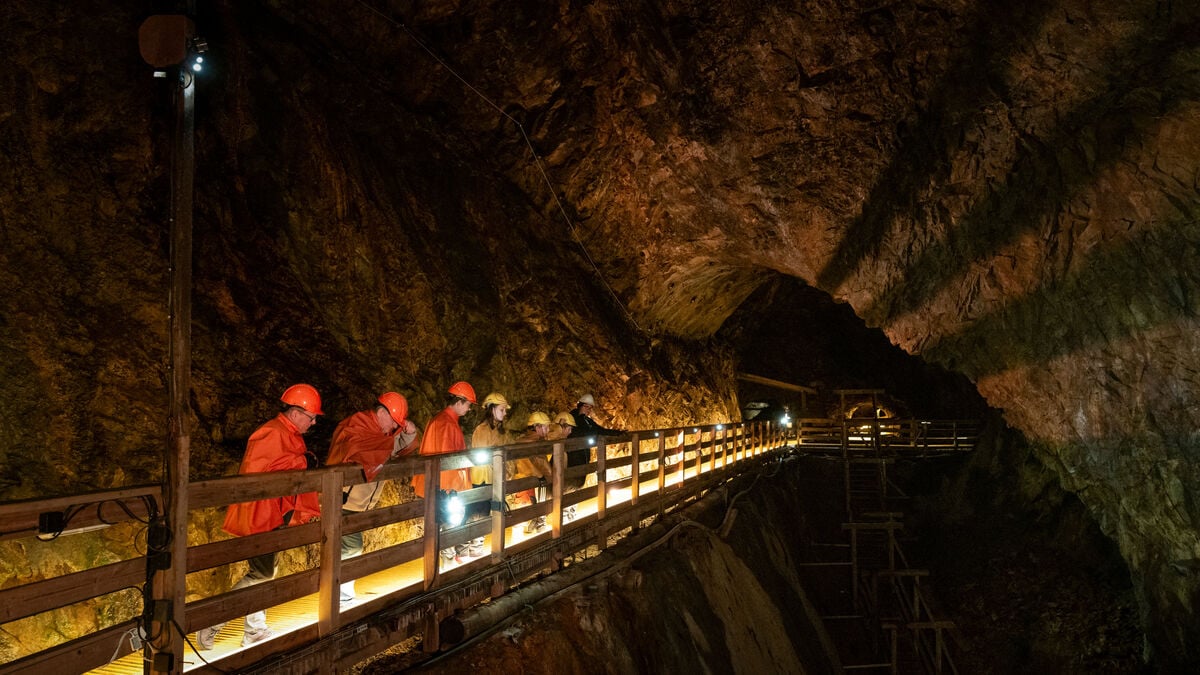
Visiting the mine shafts and enormous halls of the Falu mine deep underground is a breathtaking experience. In addition, the guides talk about the hard lives of the miners, about how they toiled and fought, says Christina Staberg, coordinator of the Falun World Heritage Site.
You can also take the “grim tour” and the “lovely tour” along the Falu River. The workers lived on the grim side of the river, closest to the mine. The air there was heavily polluted and affected by rust smoke.
On the other side lived those who were better off, and it was greener there and the land could be cultivated, says Christina Staberg.
Rock carvings in Tanum
In Tanum in Bohuslän you will find the site with the outstanding rock carvings that have become a world heritage site, and which are also examples of Bronze Age art of the highest quality. Through them we can also get to know the people of the Bronze Age better, and gain an insight into their social and religious life. Here is also the famous rock carving "The Bride and Groom", with a man and a woman embracing each other.
There are four areas with accessible rock carvings and two museums that tell about the carvings and the Bronze Age. At the Tanum World Heritage rest area on the E6 there is an exhibition and a viewpoint with a view over large parts of the area. You can also combine a visit to the rock carvings with slightly longer hiking tours.
Aalto at Vandalorum
At the UNESCO World Heritage Conference at the end of July, 25 new World Heritage Sites were designated, including the Greek Mount Olympus, Italian historical theaters and archaeological sites of Buddhist temples in Japan.
Thirteen of Alvar Aalto's buildings in our neighboring country Finland have also become world heritage sites. If you can't go there, a hot tip is to see the exhibition "Aino & Alvar Aalto" at Vandalorum in Värnamo, Småland.
The first Swedish World Heritage Site was the Drottningholm Palace area, which was designated in 1991. Since then, more places have been added to UNESCO's prestigious list:
Birka and the Manor (1993)
Engelsberg Mill (1993)
The rock carving area in Tanum (1994)
The Forest Cemetery in Stockholm (1994)
The Hanseatic City of Visby (1995)
Gammelstad church town in Luleå (1996)
The Naval City of Karlskrona (1998)
Southern Öland's agricultural landscape (2000)
Falun and Kopparbergslagen (2001)
Grimeton radio station in Varberg (2004)
Struve's meridian arc (2005)
The Hälsinge Farms (2012)
In addition to these cultural heritage sites, there are also two natural heritage sites on the World Heritage List – the High Coast and Lapland.
Sources: Swedish UNESCO Council, National Heritage Board.