If global warming is to be kept reasonably in check, the world will probably be forced to capture and store carbon dioxide, so-called CCS, on a large scale, according to the UN climate panel IPCC.
The researchers started from 31 locations in Sweden near paper mills – which emit a lot of greenhouse gas – and investigated whether the rock has potential. It turned out that Sundsvall and Örnsköldsvik could be suitable locations for future carbon dioxide storage.
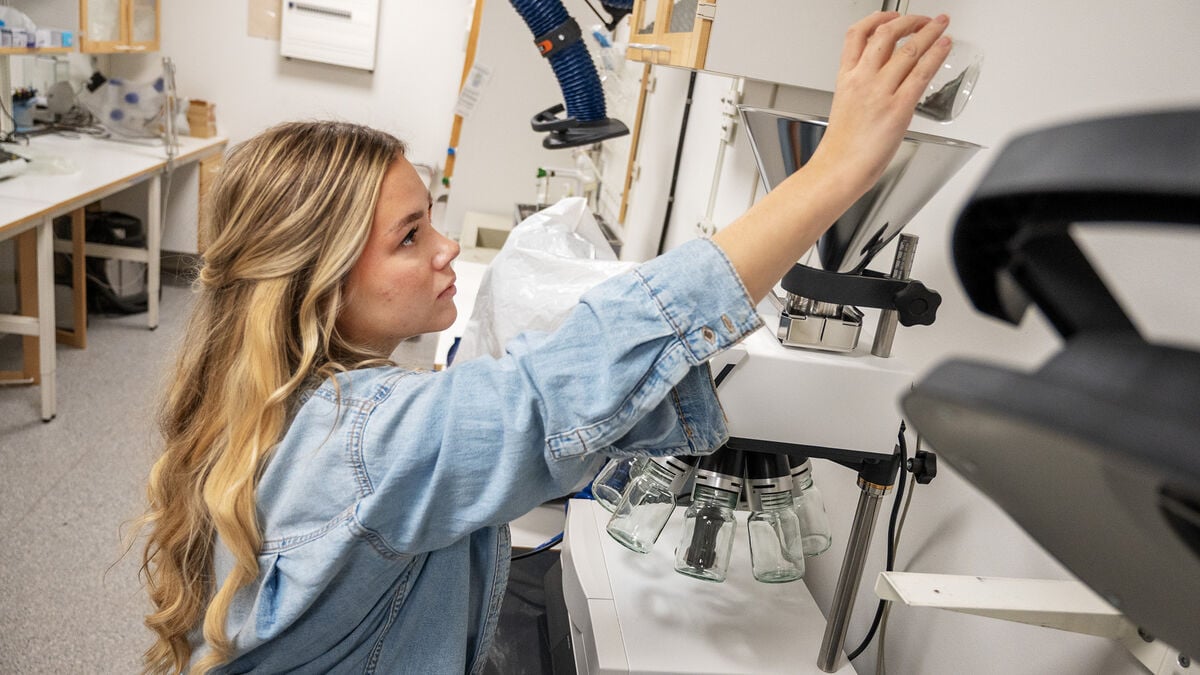
"The research is still in its early stages. The only thing we can say for sure today is that from a mineralogical and chemical perspective there is good theoretical potential for storage," says lead author Emelie Crafoord.
The technology itself is controversial. Several attempts over the years have failed or underperformed, and critics believe it is an alibi to avoid reducing the burning of fossil fuels.
Works in Iceland
The idea is that the captured carbon dioxide is mixed with water, much like in a soda stream, which is in turn pumped down into the bedrock. There, it reacts with substances in the rock and forms carbonates, which are solid salts of carbonic acid.
In Iceland, this has been done on a small scale for more than ten years, and it takes about two years for 95 percent of the carbon dioxide to be converted. The sites in question in Sweden have a similar composition, although the Swedish mountains are considerably older.
Needs to be accommodated
So far, research has only examined the surface. To know if the locations are truly suitable, it is necessary to investigate what the rock looks like at depth, whether there are cavities and cracks where the carbon dioxide solution can fit and move.
"I think offshore storage will account for the majority on a large scale. But I hope that perhaps on a smaller scale it will be possible to store in Sweden," says Crafoord.
The study is published in the scientific journal Frontiers in Climate .