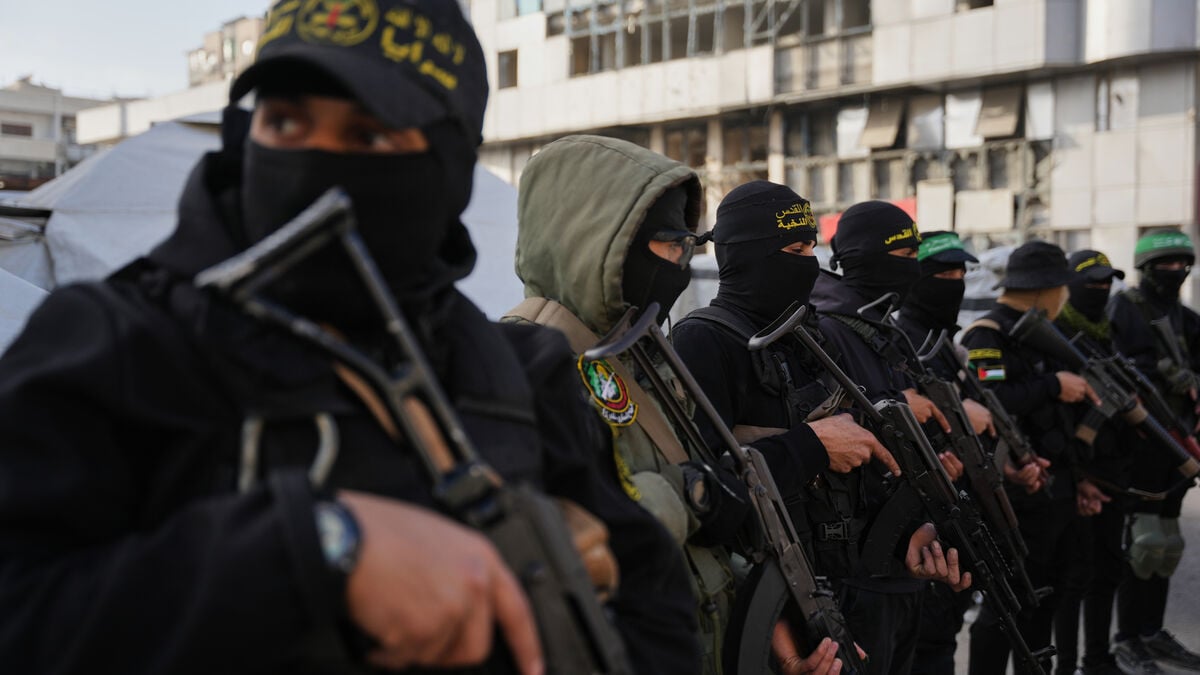
Monday's decision was announced at a press conference in Dayr al-Balah in central Gaza.
The head of the government's crisis committee, Mohammed al-Farra, has formally submitted his resignation, the head of Hamas's state media agency told AFP.
He has also decided to dissolve the body to facilitate the administrative and governmental transition to the National Committee for the Management of Gaza, he continued.
The move paves the way for a technocratic committee to establish civilian rule in the war-torn territory, in accordance with the ceasefire agreement between Israel and Hamas from September last year. Shortly after Hamas' announcement, the committee confirmed that it was ready to take over power, AFP reports.
The beginning of the end?
The big question is whether this is the beginning of the end for Hamas in Gaza, or whether it is a cunning maneuver to cling to power, says Anders Persson, associate professor of political science at Linnaeus University.
This could mean that the technocratic committee takes over responsibility for schools, healthcare and garbage collection, but that Hamas holds the real power, with its weapons, underground, he continued.
Since the ceasefire came into effect last year, Hamas has repeatedly said it is ready to dissolve the regime, but the festering issue of the movement's disarmament has so far come in the way.
“Hezbollah model”
As far as I can see, there is nothing about Hamas giving up its weapons now, says Anders Persson, who believes that it is possible for Hamas to adopt a "Hezbollah model" where the movement gives up political control of the Gaza Strip.
The technocratic government consists of 15 Palestinian representatives. The constellation is subordinate to Donald Trump's so-called peace council, which the American president himself chairs.
During the ceasefire, Israel has expanded its military presence to now control almost 70 percent of the Gaza Strip, while deadly Israeli attacks have continued.