Professor Andrew Shepherd, founder of The Ice Sheet Mass Balance Inter-comparison Exercise (IMBIE), which conducted the study, says that an increase of three centimetres may sound small.
"But it means that an additional six to nine million people are at risk of flooding and coastal erosion. With ice sheets expected to lose significantly more ice in the coming decades, global assessments are crucial to protecting communities affected by climate change."
Runs faster
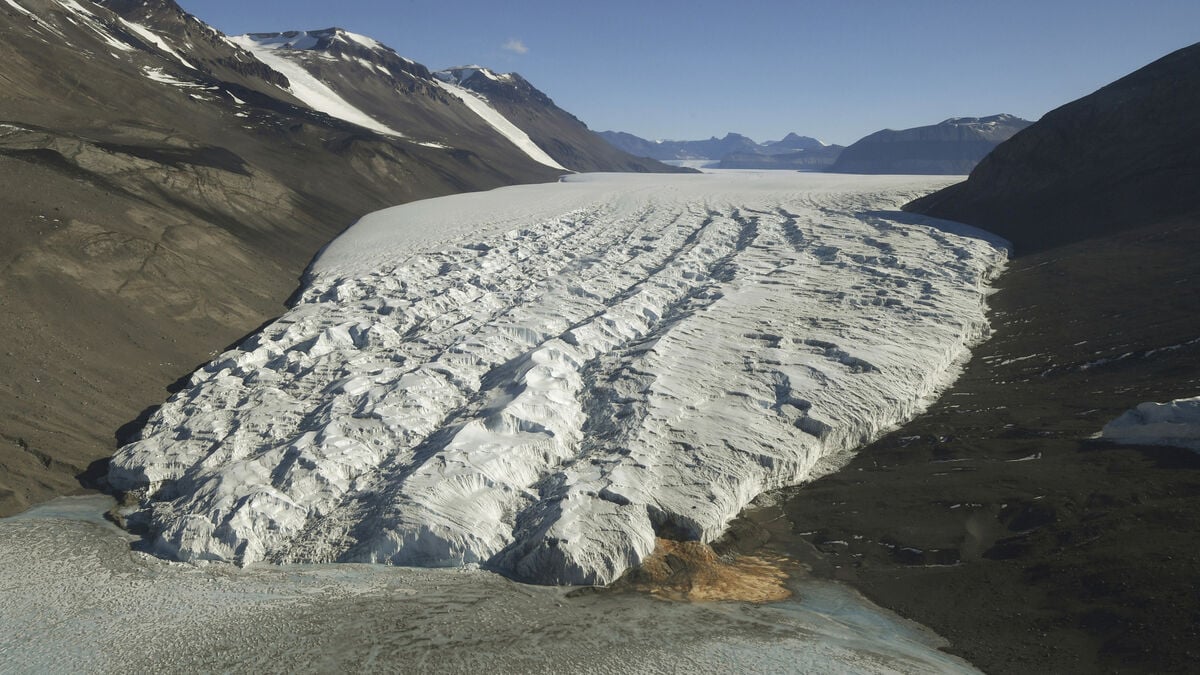
The majority of the loss is not due to ice melting on the surface, but to glaciers flowing faster into the ocean, according to the study, in which polar scientists have compiled satellite data from the 1970s onwards.
"It shows that the long-term trend is driven by the dynamic response of ice sheets to a warming ocean," says Inès Otosaka, who led the study, in a comment.
The polar ice caps are currently responsible for about a quarter of global sea level rise.
Decreased sharply
The ice sheets have declined sharply since the 1990s. Greenland has seen the amount of ice disappearing increase from around 60 billion tons per year in the 1980s to 264 billion in the 2010s.
Antarctic losses increased from about 48 billion tons a year in the 1980s to 202 billion tons in the 2010s.
The most recent years studied, 2020–2023, have seen a temporary slowdown in ice loss. Record snowfall over East Antarctica has offset glacier losses elsewhere, while a series of milder summers in Greenland have reduced surface melt by about half. However, these are temporary fluctuations, the researchers emphasize.
The study is published in the journal Scientific Data.