The Spinosaurus genus has been known for a long time. At the Field Museum in Chicago, a 14-meter-long Spinosaurus skeleton has been on display for almost three years. The dinosaur appears to be swimming across the room.
"Its proportions are incredibly strange. The tail is extremely long and the legs are short," Matteo Fabbri, a researcher at the Field Museum, said in an interview with the AP.
But the new findings in the Sahara Desert show a new species that differs drastically from the previously known Spinosaurus.
Unexpected find
The Akarazeras site in Niger was first excavated in the 1950s, but quickly fell into neglect. It was not until seven decades later that researchers rediscovered the site.
They then chose to search even further out into the sand sea where they finally found Spinosaurus mirabilis - or the "hell heron" as it has also been called.
"This area looked completely different back then; there were lakes and it was covered in forest," says Otto Hermelin, a geologist at Stockholm University.
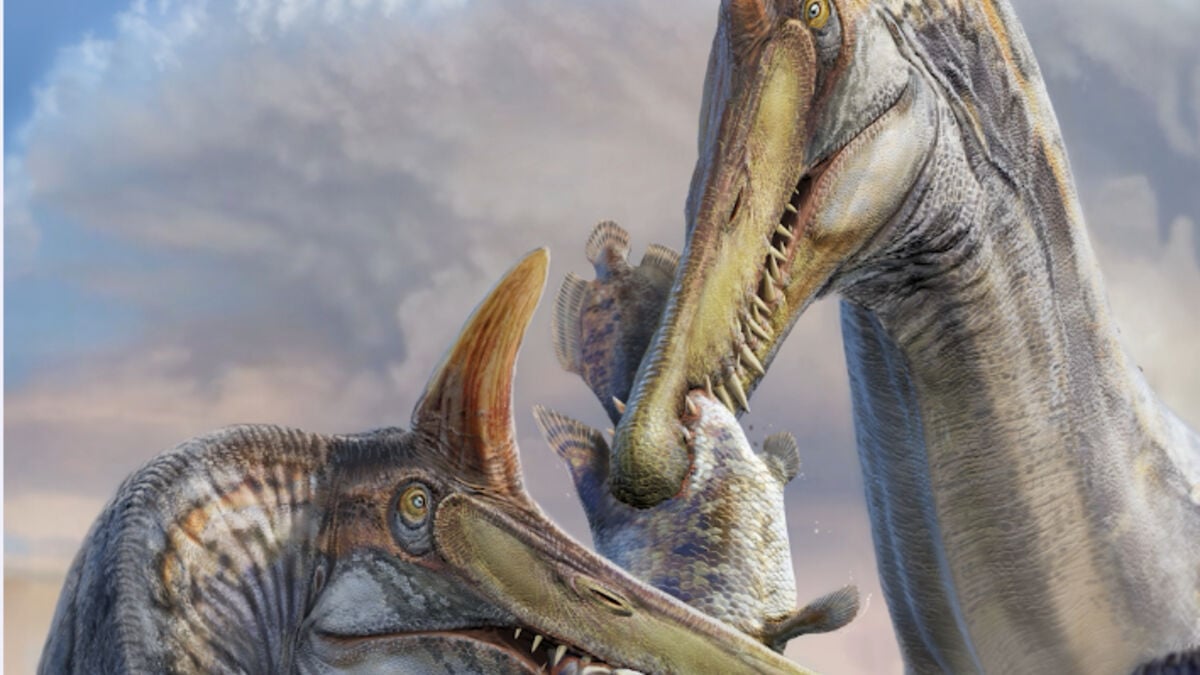
According to the study, the fossils were found preserved in river sediments and differed from previous Spinosaurus finds. Among other things, the body was larger, the snout was straighter with teeth in a zigzag pattern, and the tibia was longer.
In addition, it had a saber-shaped crest on its head.
"It is not yet clear what function the ridge served. For example, it may have served as protection if it was attacked from behind, but that is not known," says Otto Hermelin.
The species died out suddenly
From hunting fish along the coasts, Spinosaurus eventually moved into riverine areas far inland. Otto Hermelin says the discovery is important and provides a better insight into the evolution of the genus.
"The jaw is very similar to today's crocodiles. It has been possible to compare it with, for example, long-snouted crocodiles and thus understand how it hunted fish."
Spinosaurus mirabilis lived 95 million years ago and, according to the study, it went extinct rapidly when global sea levels suddenly rose, flooding several low-lying areas around the world.