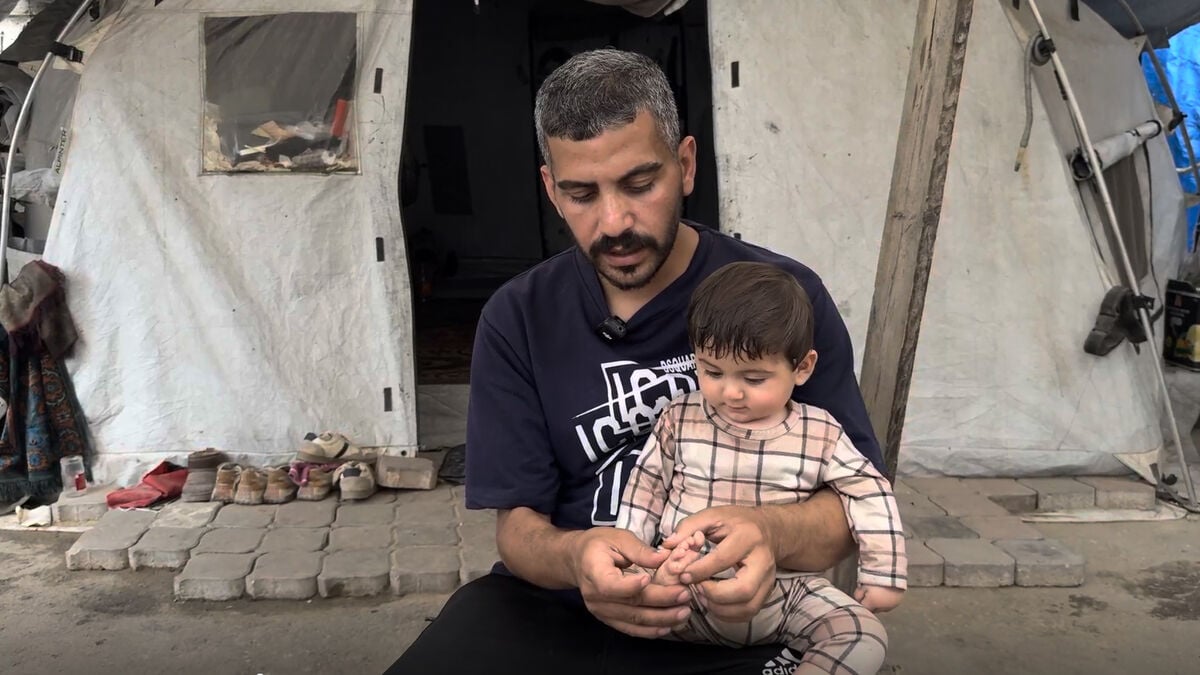
Salim Oweis has been sent by the UN agency to study how children in the Gaza Strip are doing, just over seven months into the ceasefire in the war between Israel and Hamas.
Speaking by phone from Khan Yunis, he describes a bleak situation. At the last count, UNICEF was able to arrange some form of schooling for only 260,000 of the area's 700,000 children.
Dangerous areas
Relatively few families have been able to return to something resembling pre-war life.
"At the beginning of the ceasefire, people were, of course, trying to get back to their homes. But unfortunately, many are destroyed, or in areas that are still cordoned off or dangerous to enter," says Salim Oweis.
"So a large proportion still live in tents, improvised shelters, or half-destroyed buildings."
Aid is coming in, in the form of water, food and other necessities. But not enough. And there are still many types of goods that Israel is not allowing through, making it difficult or impossible to repair the infrastructure.
"It's very sad."
Can't defend themselves
Among the problems that are getting worse are various types of vermin.
"People say they are seeing completely new kinds of rats, ones they don't recognize from before the war," says Salim Oweis.
"After two and a half years, these rodents have spread, multiplied, and now they are starting to show themselves."
Because people live so unprotected, many cannot defend themselves.
"In some camps, people tell us that dozens of rats appear at night and run around in the tents. We have met many who have been bitten, including children who were bitten while sleeping."
Lost future
The rodents thus spread diseases - and fear.
"I have met children who have developed skin diseases because they play in the same places where rats come out."
"The children are scared, they don't know what to do. How can they play when rats appear?"
With inadequate schooling and an unsafe home environment, many children are instead given adult chores to have something to do, says Salim Oweis.
"They have to fetch water, work in various ways to help the family, and collect firewood."
"Unfortunately, there are many risky things for a child in the Gaza Strip to do. They are unprotected, and lose both their education and their future."