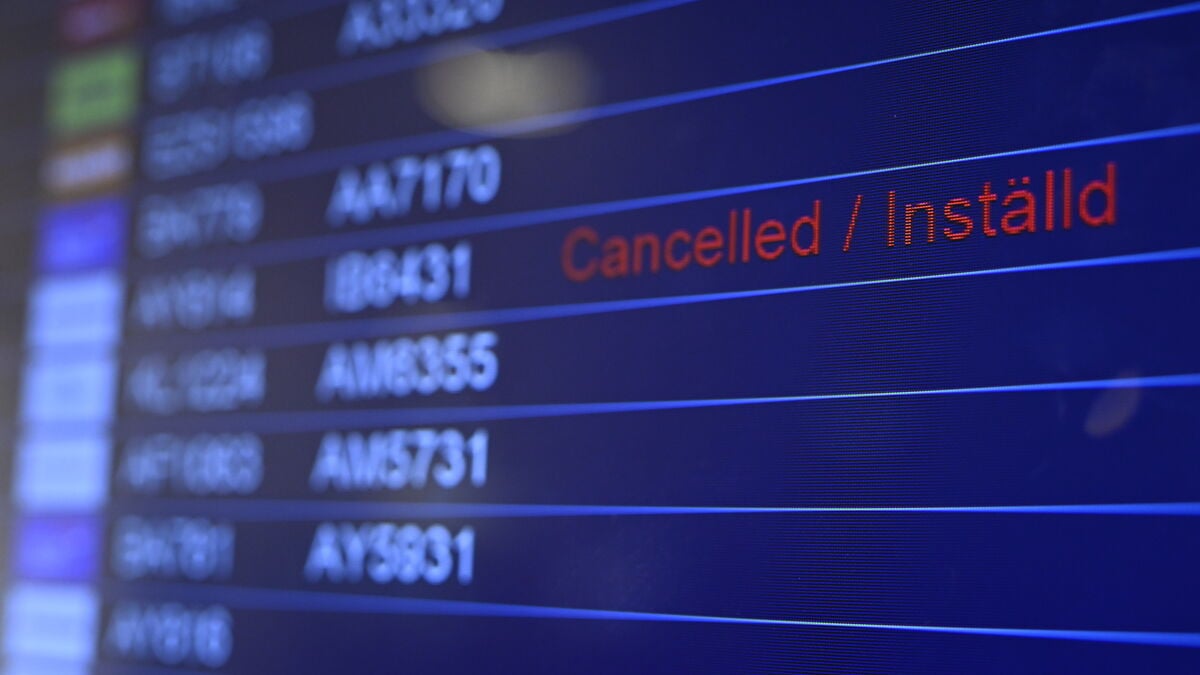
Airlines have already started canceling flights in the wake of the fuel crisis. Even if the war in the Middle East ends relatively soon, analysts see the aftermath as long-lasting.
This is how Henric Jonsson, legal advisor at the Swedish Consumer Agency, explains what applies when a flight does not depart.
An airline cancels a flight and reports fuel shortages. What happens then?
Regardless of why your flight is cancelled, you always have the right as a passenger to be given a choice by the airline. You should be offered the choice between being rebooked on another flight so that you arrive as quickly as possible under the same transport conditions, or a refund of the ticket.
If your flight is cancelled less than 14 days before you are due to travel, in some cases you may be entitled to compensation, he continues.
There may be exceptions.
So you can get both the money back for the ticket and additional compensation for the inconvenience?
Exactly, but there are exceptions to compensation, and that is for extraordinary events that are beyond the airline's control.
Whether fuel shortages are considered such an event may need to be examined in court or by a regulatory authority.
What applies when an offer to rebook is made?
It depends a bit on where you are. It can include compensation for transport home from the airport and back to the airport the next day. If you are traveling and this applies to the return trip, then you may be entitled to food and drink during the trip. And you may be entitled to accommodation in a hotel, says Henric Jonsson.
Review insurance policies
Another option that could arise in these times is that you have two flights booked to get to one place. But one of them gets canceled. What happens then?
If it is a consolidated ticket, meaning that it is included in the same booking, then you may be entitled to rebooking or a refund so that you can reach your final destination.
But what if it's two separate bookings?
Then you may not be entitled to a refund for the second flight if it goes normally.
What else should you consider?
Check your insurance. And travel with a buffer so that you can cope if you get stuck in one place before you can receive or claim compensation afterwards, says Henric Jonsson.