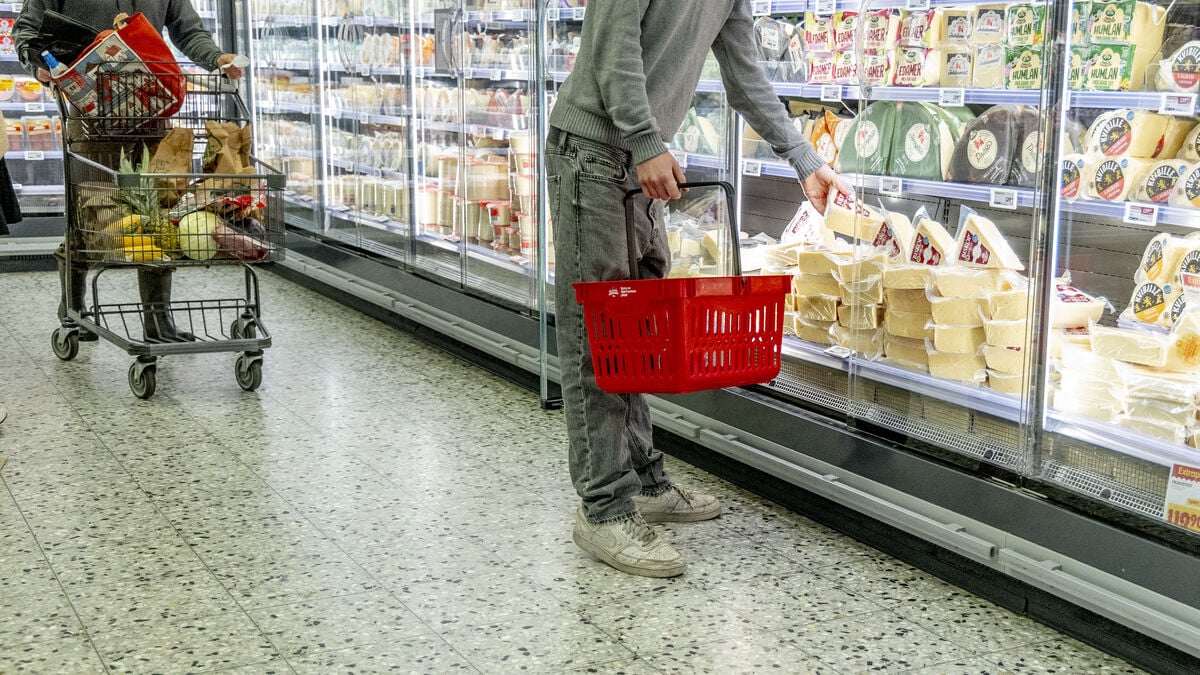
As of April 1, the food VAT will be reduced from twelve percent to six percent. The reduction will apply until December 31, 2027. Several of the food chains that TT has been in contact with welcome the change.
Coop:
Like several other stores, Coop has brought forward its price reduction to take effect on Monday, March 30. It wants to make it easier for consumers to plan their weekly shopping ahead of Easter.
It will also make it easier for stores to make the price change on time, says Anders Torell, CEO of Coop Sweden.
Although the VAT reduction is in effect for a limited time, Torell hopes that it can continue even after.
We are doing everything we can to ensure that food is affordable and healthy. This is a step in the agenda we have had for quite some time: to halve VAT.
Lidl:
Lidl began a price reduction on certain goods on March 16 for its members.
We welcome the VAT reduction. It will make things easier for hard-pressed households, says Johan Stille, Head of Business Development at Lidl.
He also mentions that Lidl has joined the independent review of food prices on the website Matpriskollen. This means that prices are frozen two weeks before the reduction to avoid a pre-emptive price increase ahead of the VAT reduction.
Lidl also hopes that the reduction will remain in place after 2027.
Our hope, together with many other actors, is that the food VAT reduction that is now taking place will remain even after 2027, says Johan Stille.
Willys:
Willys is also one of the food giants that will begin its price reduction on March 30.
Stores with digital shelf labels can change prices through an automatic filter. However, most stores still have paper labels and for them the change means a lot of extra work.
"We have been preparing for a long time and at all levels within the company. The challenge is that we will be changing 1.9 million labels in the coming days," says Louise Hulgaard, communications officer at Willys.
The label change will take place alongside regular work in the store and Willys has staffed the store to make it run as smoothly as possible.
It is also a big challenge to make our customers feel truly confident that we are actually lowering prices with a corresponding VAT reduction.
When we round, we round to the exact penny.
Ica:
Jan Prokopec, sales and marketing manager at ICA, announces that it is up to each individual store whether they want to initiate the reduction early or not.
Paper labels will now be replaced in 500 of its 1,300 stores.
I think it's a total of six million labels, so we'll send 500 of our colleagues in the office out to the stores.
In an unstable global situation, Jan Prokopec says that everyone must help each other to continue to keep food prices down.
"There are many factors that affect prices, including things that are beyond our control. We will continue to do what we can, but we also think that a permanent and reduced VAT would help with that," he says.
Hemköp:
Hemköp will also need to replace paper labels and they are lowering prices by one penny.
"A lot of price tags will be replaced on April 1, so it will be very busy," writes Jenny Pederśen, communications manager at Hemköp, in an email to TT.
Regular prices will be reduced on April 1 in accordance with VAT.
"Our campaigns will have new prices as early as Monday, March 30, and we have also taken the VAT reduction into account when we set the new campaign prices," Pederśen continues.
City Gross:
City Gross welcomes the reduction but also sees a challenging week ahead. Replacing 20,000 price tags is "no easy task," according to the grocery chain.
City Gross has chosen to lower prices early, both for the sake of customers but also out of consideration for the staff in the stores.
"By lowering prices a little more and a little earlier, we give our stores better conditions for their work but also give the customer a more affordable Easter starting Monday," writes Rebecca Wictor, communications manager at City Gross, in an email.
Price checks:
In addition to the Food Price Check, which is a check carried out on the stores' own initiative, the government has appointed a Food Price Commission. The purpose is to review food prices to ensure that the reductions are reflected in consumers' wallets.
Corrected: In an earlier version of the text, there was an incorrect word in the first quote from Lidl's representative.
As of April 1, the food VAT will be reduced from twelve percent to six percent. In practice, this will mean a reduction of 5.36 percent.
Why 5.36 percent?
An item costs 100 SEK excluding VAT.
With twelve percent VAT, the item costs 112 SEK.
With six percent VAT, the item instead costs 106 SEK.
The new price is 6 kr lower than the previous price. 6 kr is about 5.36 percent of 112 kr (6/112 = 5.36%).