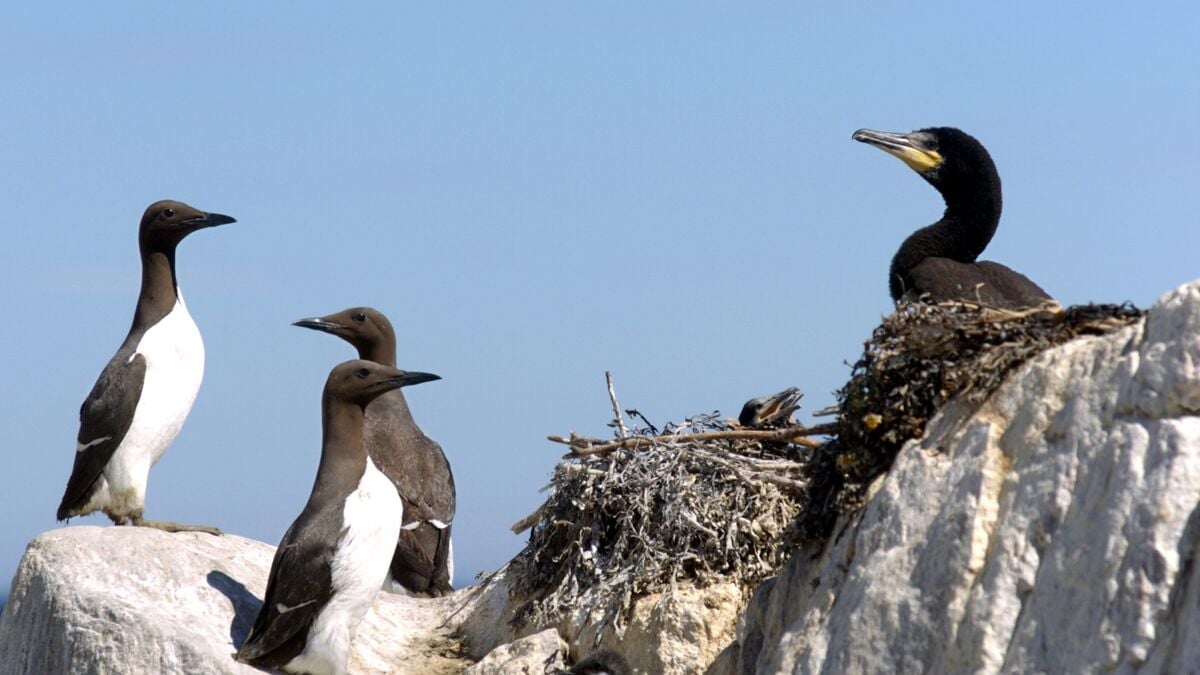
On Stora Karlsö, just west of Gotland, seabirds lay their eggs on rocky ledges 40 meters above sea level. The chicks leave the nest at just three weeks old, even though they cannot fly. They jump from the cliffs down to their fathers who are waiting by the sea. With their soft skeletons and extra fat on their bellies, they survive the fall.
For a couple of months, anyone who is interested can watch in real time when the eggs are laid on the rocky shelves, when the chicks hatch and take their first leaps down towards the shore.
The live broadcast can be followed via the World Wide Fund for Nature (WWF) website .
And this year you can even hear the birds.
"It's not just any sound, but a special sound that the chicks use to find their father among hundreds of other fathers out at sea," says Jessica Ångström, species expert at the World Wide Fund for Nature (WWF).
AI models are now also being trained to identify and group different sounds.
"The sounds open a whole new window into the lives of porpoises. We can start to hear when fish enter the rock shelf, how pairs and young communicate, and even find signs that individual young have their own voice," say Delia Fano Yela and John Martinsson at the research institute RISE, which developed the AI model.
This year, viewers can also report what happens in different videos. It could be about birds fighting or a bird arriving with a fish.
The herring guillemot belongs to the auk family and can dive down to 100 meters to search for food. It was nearly extinct before it was declared a protected species in 1880.
Herring guillemots lay their single egg on a narrow rocky shelf 40 meters above sea level, in May or June, and the incubation period is about 30 days.
The herring guillemot can live up to 50 years and they lay their first egg at five to six years old.
Source: Swedish University of Agricultural Sciences (SLU)