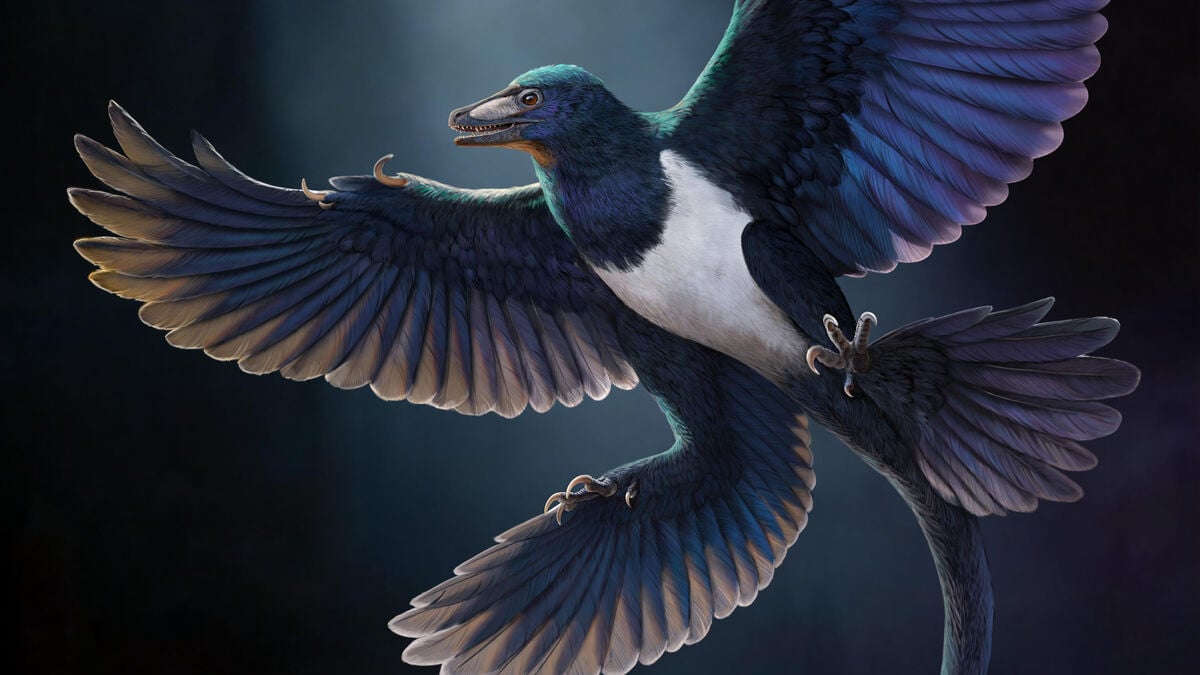
The fossil was found in northeastern China and is estimated to be between 145 and 100 million years old.
According to the researchers, the skeleton is 57 centimetres long and parts of the plumage are preserved. The analysis, published in the scientific journal Nature Communications, suggests that the dinosaur was at least three years old when it died and that it had a number of characteristics associated with the ability to fly.
The new species, named Norellraptor barsboldi by the researchers, belongs to a group of small, bird-like predatory dinosaurs that are close relatives of birds and were found mainly in northeastern China. Fossil finds show that some of these dinosaurs had long feathers on both their front and hind legs.
The results, the researchers say, support the theory that flight-related traits evolved differently in different groups of bird-like dinosaurs. The researchers note that about 30 percent of the anatomical changes identified in this dinosaur group also evolved in birds. However, the traits evolved in different orders in the two groups.
The study thus challenges the idea that these feathered dinosaurs and birds inherited their ability to fly from a common ancestor or that a common evolutionary process drove the evolution of these traits.
Instead, the researchers conclude that different selection pressures likely shaped flight-related traits. However, more studies of fossils and further knowledge of the bone growth of bird-like dinosaurs are needed to investigate how widespread the pattern was.