They say that a guerrilla should be able to move like a fish in water. Now Israel is draining the water.
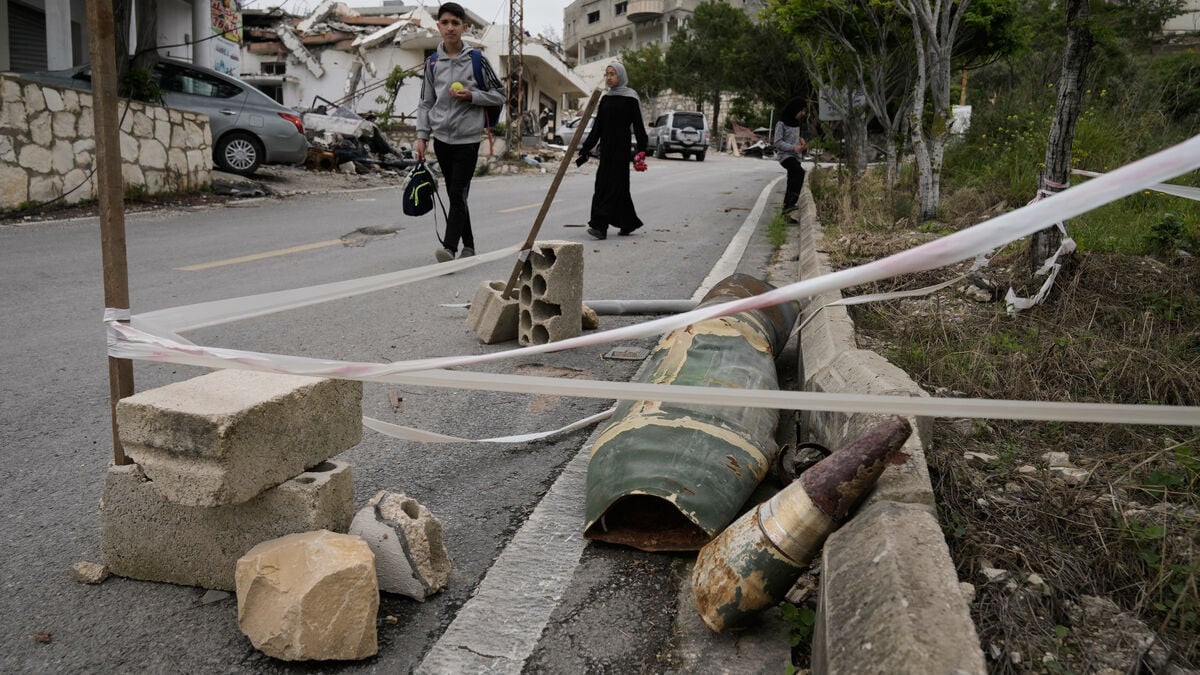
Airstrikes, ground troops and residential areas lie in ruins. According to Persson, Israel is in the process of creating a “forward defense area”, not unlike the so-called security zones it maintained during the Gaza War and in southern Lebanon between 1982 and 2000. However, in the 1980s and 1990s, civilians were allowed to remain in the zone.
A long and bloody war was fought in Lebanon, which Israel was forced to leave under humiliating circumstances in 2000. This led to Hezbollah being able to consolidate itself in communities in the south, where Israel is now aggressively eliminating infrastructure, says Persson, who is a lecturer in political science at Linnaeus University.
Like the Gaza War?
The relationship between the neighboring countries has been ravaged by conflict for decades. The situation is complicated by the fact that the political wing of the Iranian-backed Lebanese Shia militia Hezbollah is represented in parliament and government.
During the Gaza War, the group, which is labeled a terrorist organization, shelled northern Israel in solidarity with Hamas, leading to armed conflict. And on March 2 of this year, Hezbollah fired rockets into Israel in retaliation for attacks on Iran by Israel and the US linked to the war.
The response was harsh. Israel has bombed southern Lebanon and parts of Beirut, killing over 2,000 people. More than a million Lebanese have been forced to leave their homes and a long-term occupation has been threatened. There is currently a fragile US-negotiated ceasefire, which will be discussed in Washington, D.C. on Thursday.
Meanwhile, demolitions continue, raising questions about whether Israel's actions are consistent with international law. The country recently drew a "yellow line," a fortified border on Lebanese soil whose name is reminiscent of the Gaza War.
Widened border
So what does Israel want to achieve in the longer term?
According to Persson, it depends on who you ask. Israeli center-left politicians want to use the captured land as a bargaining chip that can be returned in exchange for peace and normalization agreements, possibly including Lebanon in the so-called Abraham Accords. The accords stipulate normalized relations and were concluded in 2020 between Israel and four Arab countries at the initiative of Donald Trump's first administration.
However, other parts of the Israeli center and some right-wing factions want to keep southern Lebanon under Israeli control and build settlements.
"It will be interesting to see if (Prime Minister) Netanyahu goes to the polls to expand Israel's borders," says Persson about the election to be held in October.
Facts: Seven invasions in 50 years
Over the past 50 years, Israel has entered Lebanon with ground forces on seven occasions. The longest stay was for 18 years, from 1982 to 2000.
Israel's opponent in Lebanon, the Shia Muslim Hezbollah, is a militia and political party. It was founded partly with Iranian help after Israel's occupation of southern Lebanon in the 1980s. It acts as a proxy for Iran in conflicts in the Middle East and has been partly labeled a terrorist organization by the EU and the US.
The long-running conflict flared up again in connection with the Gaza War. A ceasefire was reached in 2024 that required both Hezbollah and Israel to withdraw from a buffer zone in southern Lebanon. The parties have accused each other of violating it.
In the spring of 2026, fighting broke out again when Hezbollah fired rockets at Israel in response to the country's war with Iran. Israeli ground forces have advanced further into Lebanon, hundreds of thousands have been displaced, and there are warnings of a lasting occupation.
Civilians must not be attacked in armed conflicts and must be protected, according to principles of international law that the international community has agreed upon.
The laws of war - formally international humanitarian law - aim to spare combatants, the wounded, prisoners of war and civilians unnecessary suffering. Media workers should be treated and protected in the same way as other civilians in war.
The core of the laws is the four so-called Geneva Conventions from 1949, which have been ratified by almost 200 states. Both state and non-state actors are covered by the laws.
Key words are distinction (separation of civilians and combatants), proportionality (the military significance of attacks must be weighed against the risks they pose to civilians) and precaution (all parties must take all possible precautions to ensure that attacks are directed only at military objectives).
The presence of non-civilians among civilians does not mean that the group as a whole can be considered a legitimate target. Nor may civilians be used as so-called human shields to defend against attack. The special protective emblem of the medical service must be respected and the warring parties must do what they can to facilitate humanitarian operations.
Source: UN, Red Cross and National Encyclopedia