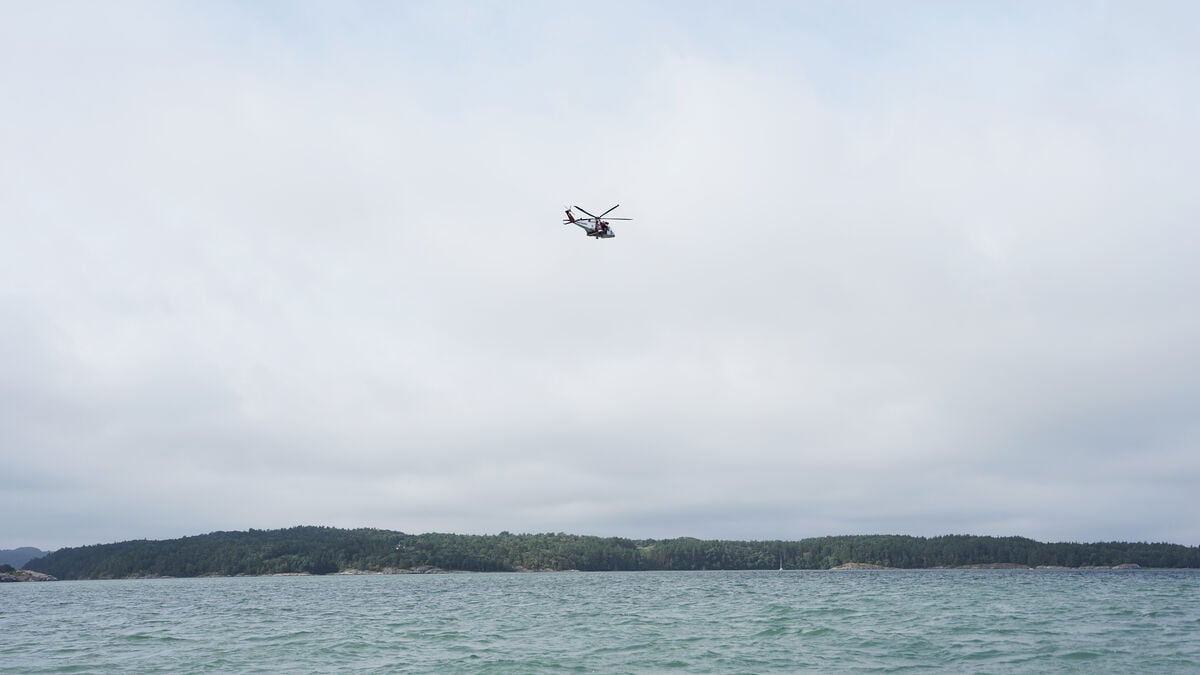
In the accident late Tuesday night last week, in which a woman and a child died, the merchant ship Misje Verdes allegedly hit the pleasure boat from behind.
Mats Gruvefeldt, head of unit at Chalmers Maritime University, does not believe there is reason to doubt that description. However, he points out that the rules for maritime traffic are different from, for example, driving a car, which makes the assessment more difficult.
Say you're driving on a main road in peace and quiet and someone comes and hits you from the side. Then you won't be at fault at all, but the other party who hit you will be held entirely at fault.
Other division of responsibilities
When it comes to maritime traffic, the issue of liability is instead often distributed in percentages, where different parts of the regulations come into play and where all parties can be considered to have violated one of the rules, says Gruvefeldt.
On Sunday, the commander of the Misje Verdes was arrested and the prosecutor highlighted several of the maritime rules in connection with this, including a rule that requires constant and careful lookout and another that requires overtaking vessels to always give way to the vessel being overtaken.
Further perspectives
But there is also another rule that states that vessels under 20 meters in length and sailing vessels must not “obstruct the passage of another vessel if that vessel can only be safely navigated in a narrow fairway or narrow water”.
I cannot determine whether it is applicable in this situation, because I still do not know the exact circumstances, but it is interesting whether this rule comes into play or not, says Mats Gruvefeldt.
It is important to be clear here, however, that if it is actually a case of overtaking in sight of each other, the overtaking vessel is always obliged to give way regardless of other rules.