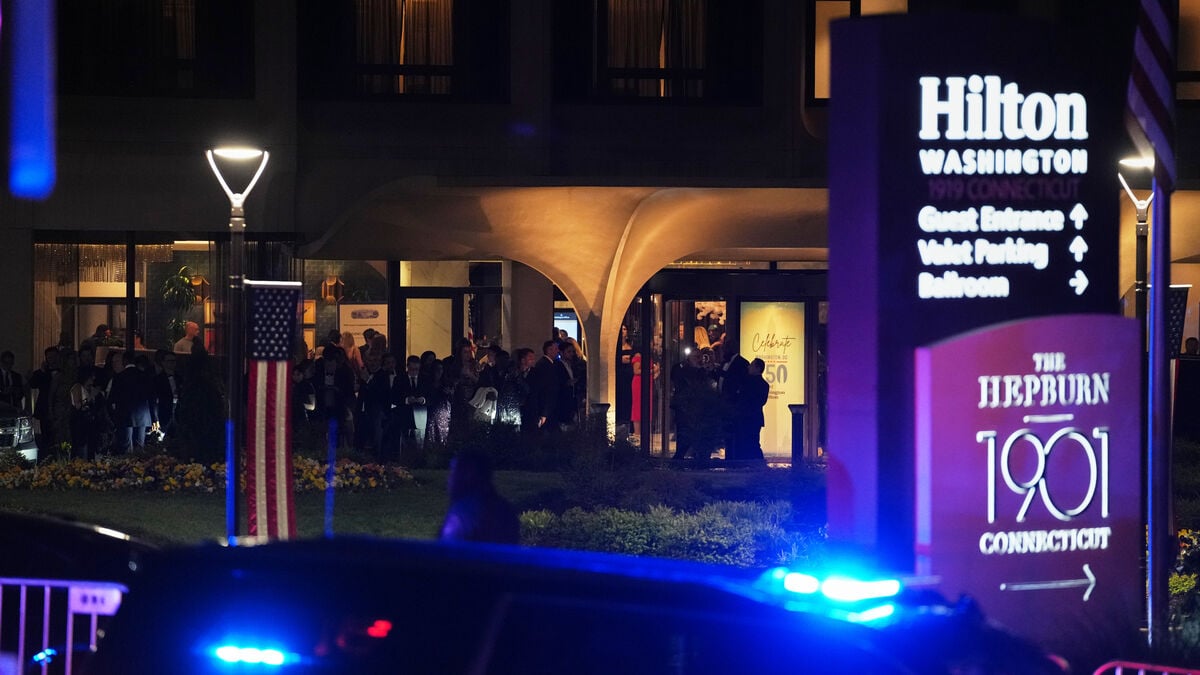
On Saturday, US President Donald Trump was subjected to another suspected assassination attempt, the third to be directed against him in less than two years.
At a press conference that evening, the president urged unity. The next day, the White House accused Democrats of creating an environment that encouraged the shooting, but the divisive language has undeniably been heard from both the right and the left.
The benefits of division
The way politicians and other influential figures express themselves can have serious consequences for society. For example, it can foster an environment where political violence becomes more acceptable, says James Piazza, a professor of political science at Pennsylvania State University.
He teaches and researches terrorism, political violence and violent extremism in the United States and sees the harsh rhetoric as a contributing factor to the increase in political violence.
"If you use dehumanizing and demonizing language, it automatically reduces resistance to political violence," he says.
One problem is that politicians actually benefit from using inflammatory rhetoric because it gets people engaged, he says.
"It's part of the mobilization process. It gets people to go out and vote, to donate to election campaigns. It creates a connection and binds you to the political party, so there can be benefits for politicians to exploit certain divisive factors."
No lasting effect
Piazza believes that attempts to tone down the rhetoric are not enough. He would like to see the harsh language condemned completely.
"Usually after something like this, there will be calls from across the political spectrum to tone down the rhetoric, and that has happened now, but it never lasts long. It never has any lasting effect," he says.
But there are also other factors that could be driving political violence, according to Piazza. Among them is a noticeable decline in trust in democratic institutions, while at the same time a lot of disinformation has been spread on social media.
Both Democrats and Republicans are frustrated about the state of democracy.
"When people begin to turn their backs on democratic institutions and lose trust in them, that too can lead to increased political violence."
Facts: Assassination attempts against Donald Trump
July 13, 2024 – Butler, Pennsylvania: Trump was shot and hit in the ear during a campaign rally. One bystander was killed and two were injured. The perpetrator was Thomas Matthew Crooks, 20, who fired from a rooftop with a rifle and was killed at the scene by the Secret Service.
September 15, 2024 – West Palm Beach, Florida: The Secret Service spotted a gunman in the bushes at Trump's golf club before he could fire. Trump escaped unharmed. The gunman, Ryan Wesley Routh, 58, was arrested while fleeing.
April 25, 2026 – Washington, DC: Shots were fired at a correspondents' dinner at the Washington Hilton. No one was injured and Trump was evacuated. The suspected perpetrator is Cole Tomas Allen, 31, who was tackled and arrested as he tried to run into the hotel's ballroom.
1865: Abraham Lincoln was shot to death by actor John Wilkes Booth at Ford's Theatre the day after the end of the Civil War.
1881: James A. Garfield was shot by Charles J. Guiteau at a train station in Washington and died after 79 days.
1901: William McKinley was shot by anarchist Leon Czolgosz during a public appearance and died eight days later.
1912: Theodore Roosevelt was shot during an election campaign in Milwaukee but survived and delivered his speech anyway.
1963: John F Kennedy was shot dead in a motorcade in Dallas.
1981: Ronald Reagan was shot but survived an attack outside the Washington Hilton hotel, the same hotel where the attack on Donald Trump and others in government took place during the 2026 Correspondents' Dinner.