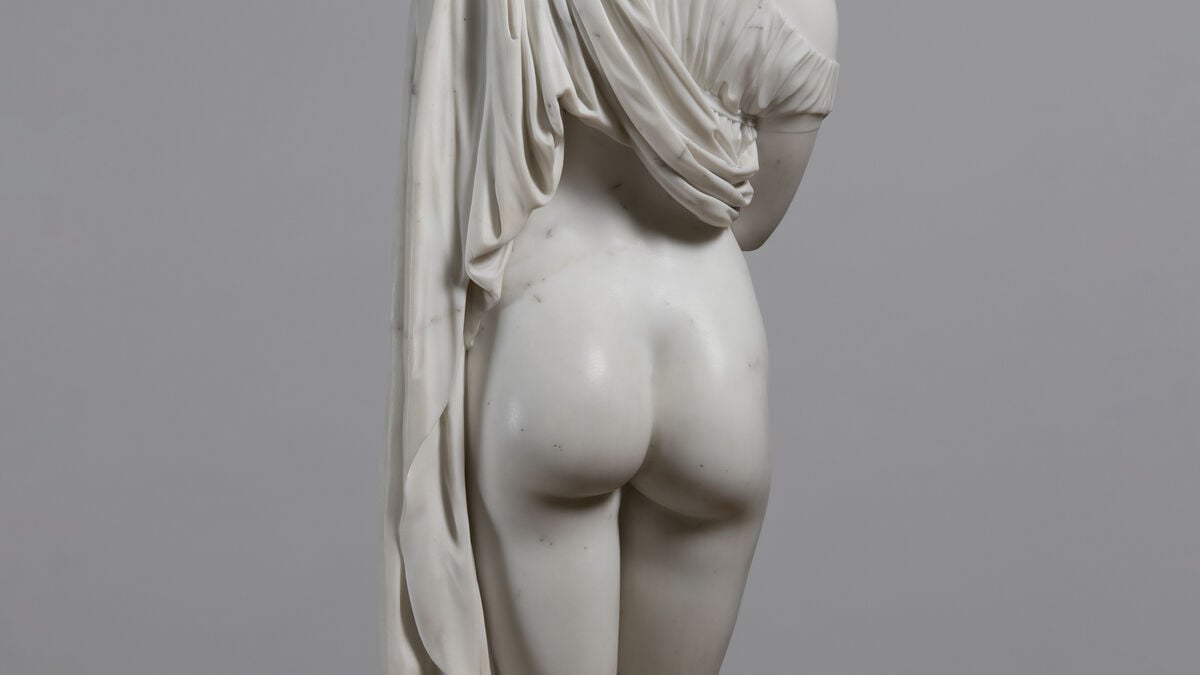
The National Museum in Stockholm wants to make Johan Tobias Sergel famous - again, at home but also internationally.
Everyone knows about Sergel's Square, but few know who Sergel was. He is one of our greatest artists and has been called the greatest since Michelangelo, says curator Linda Hinners.
The National Museum is holding its largest Sergel exhibition ever, 250 years after Gustav III called him home from Rome. Sergel was to become the new court sculptor and immortalize royalty in marble. He accepted, but delayed his return journey, including spending a year in Paris and a long time in London with his artist friends.
Is it Gustav III's fault that Sergel got stuck in Sweden and never received broad international recognition?
It was a decisive event in his life. He had international clients, he could have stayed and made a career in Paris and London, says Daniel Prytz, the exhibition's curator, comparing it to the Danish star Bertel Thorvaldsen who stayed in Italy for 40 years and came home a national hero.
Ruined talent
“33 years in Sweden have ruined my talent,” Sergel wrote in a letter late in life. Judging by his drawings, he was a cheerful artist but at times also deeply depressed and seriously ill with gout.
The royal marble is included, but only in one corner. More space is given to the terracotta sketches and the finished marble sculptures with main characters taken from ancient myths. They are shown together with central paintings by the artist friends during the eleven years in Rome - together they painted, sculpted and drew, often based on the same fiery and bloody mythological moments.
Every detail is teeming with life, says Linda Hinners.
Cartoon maniac
Starting in Rome, Sergel drew his everyday life almost manically, says Daniel Prytz. The drawings were his private snapshots, of his partner Anna Rella Hellström and the children from the summer house Ingenting in Solna, caricatures of his friends' drinking sessions at the Kräftriket pub, but also self-portraits. Many of them were previously in the possession of his heirs and are now being exhibited for the first time.
They are liberating and unforced, says Daniel Prytz.
Erotic and sometimes pornographic drawings are also given more space than before.
It has significance for his art as a whole; it goes back to a kind of liberation when he went to Italy.
Facts: Johan Tobias Sergel
Lived: 1740–1814. His father was an embroiderer at court. He became an apprentice to his predecessor, the court sculptor l'Archevêque, and later in life completed his sculpture of Gustav II Adolf in Stockholm.
He was appointed court sculptor by Gustav III in 1776. He returned to Stockholm in 1779. He became close friends with Carl Michael Bellman; they were born in the same year and both received a fee from the king.
On display: In the Nationalmuseum's exhibition "Sergel - fantasy and reality" (19/2–10/8), which includes approximately 400 works - sculptures in marble and terracotta, as well as a large number of drawings. Also on display is Peter Dahl's large painting "Proud City", inspired by Bellman's epistle of the same title and by Sergel's imagery.
Parts of the exhibition will move this fall to The Morgan Library & Museum in New York.