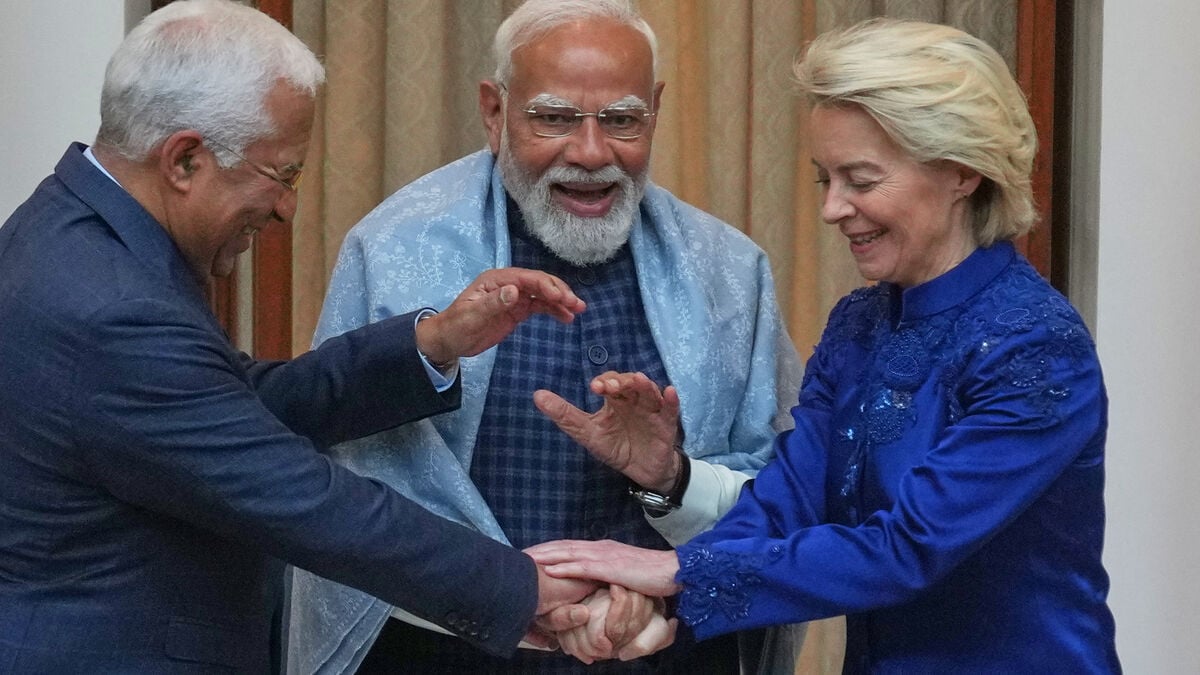
"This deal brings together two of the world's largest economies - a market of two billion people and around a quarter of global GDP," writes Trade Commissioner Maros Sefcovic in a press release.
The free trade agreement was finalised at a meeting in Delhi in January and, according to EU hopes, will lead to a doubling of exports to India.
For example, Indian tariffs on motor vehicles will be reduced from 110 percent to 10 percent, but with a quota of a maximum of 250,000 a year. Tariffs on pharmaceuticals, chemicals, aircraft parts, pasta, fruit juice and bread, etc. will be reduced to zero.
The final text is now being submitted for approval by member states in the EU Council of Ministers and must also be approved by the European Parliament.