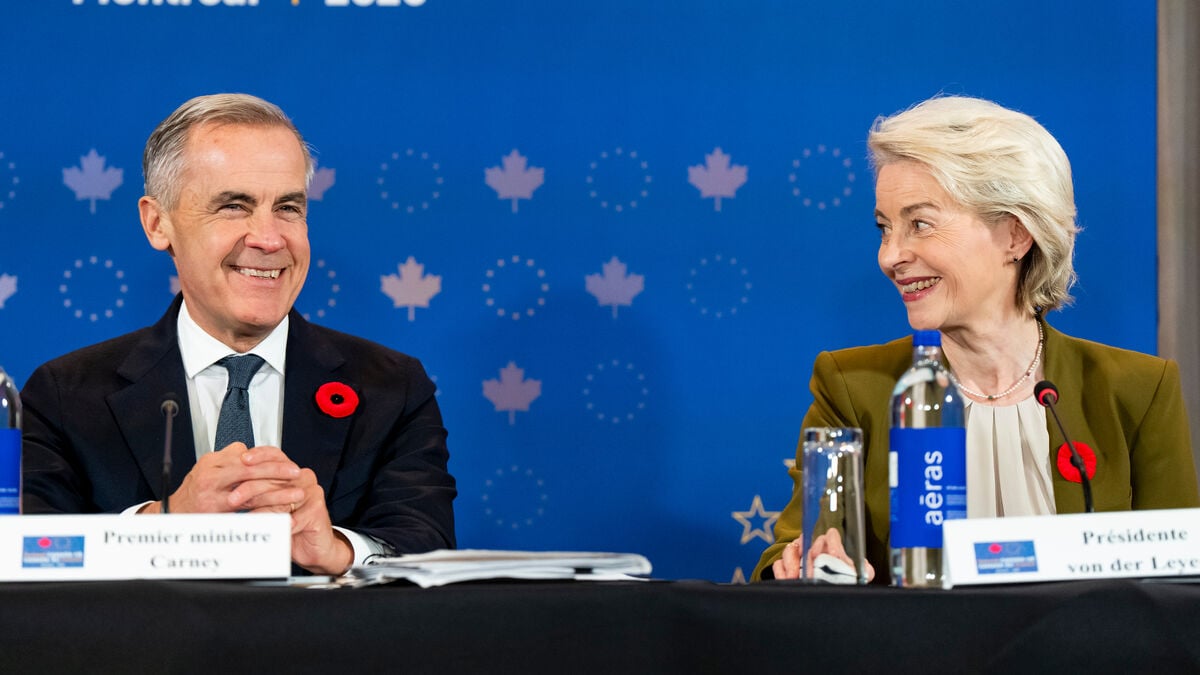
Commission President Ursula von der Leyen surprised many when she suddenly proposed in her annual state of the EU speech in September that Canada should become the EU’s first “associate member”.
Ahead of her summit with Canadian Prime Minister Mark Carney in Montreal, von der Leyen defended the term on Thursday, saying:
We both want to take our relationship to the highest possible level.
But the term has raised questions and caused irritation among EU countries. Germany, France, Italy and Greece are all reported to have firmly rejected its use in a joint statement.
Legally unclear
The main objection: nobody knows what it really means.
"No one opposes the desire to deepen ties with Canada, but inventing a concept that we have never heard of . . . raises many questions," a French diplomatic source told the newspaper Le Monde .
"It could create legal uncertainty and raise expectations among other countries. The Commission has not communicated this before. We don't know what we are talking about," another source told Euronews .
In Germany, the irritation is particularly strong, as Chancellor Friedrich Merz tried to launch exactly the same concept and propose associate membership for Ukraine last spring. This was met with a cool reception from both the Commission and other EU countries.
“Out on a trip”
Commission representatives have so far failed to provide clear answers about what “associate member” means.
"It's about building a partnership that comes closer to membership than anything we've done before. We're embarking on a journey, so let's not decide yet exactly how far we're going to go," an EU source told reporters in Brussels.
For his part, Canada's prime minister has chosen to take the conceptual battle in stride.
"This is the beginning of formal discussions and negotiations over the next year. The name or terminology doesn't matter. What matters is the changes it entails," Carney said earlier this week, according to the CBC .
The EU and Canada have long held regular summits where the president of the European Commission and the president of the European Council meet with Canada’s prime minister. This week’s meeting is the 21st and will be held in Montreal on 29-30 October.
The agenda includes everything from mutual trade and the development of economic cooperation to discussions on Ukraine, the Arctic, defence and important raw materials. Ten EU commissioners are participating in various meetings, including Environment Commissioner Jessika Roswall.
A closing press conference is scheduled for 5 p.m. on Friday, Swedish time.