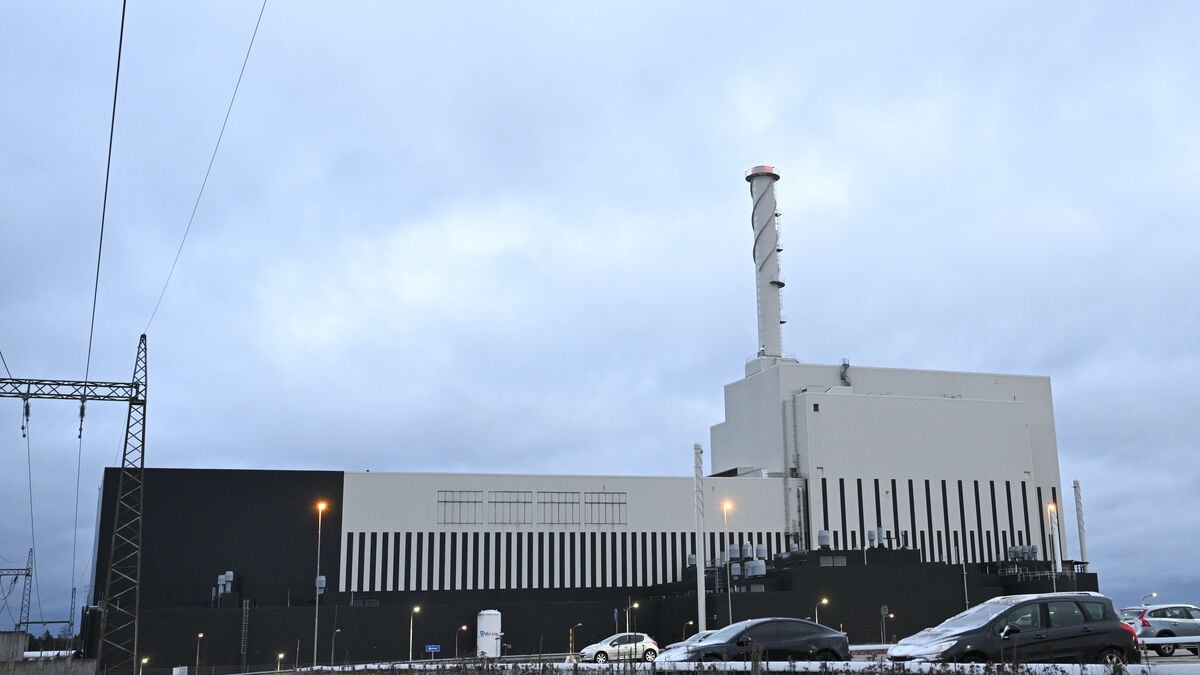
This concerns discovered deviations in the process water from the reactor containment to the water treatment, according to Oskarshamnsverket.
These deviations are small and well below limit values, says Désirée Liljevall, press manager at Uniper.
The only remaining Oskarshamn reactor will be shut down the night of Thursday, December 11. The shutdown will tentatively last until December 20, according to a message to the Nord Pool electricity exchange.
Find faults before winter
It wasn't long ago that the reactor, Sweden's largest, producing 1,400 MW, was back in operation after over six months of repairs.
Given this year's long downtime, we want to troubleshoot the cause and fix any errors before winter is here, says Désirée Liljevall.
The time to fix the errors often tends to take longer than initially stated.
If the restart date were to change, we would notify Nord Pool first, she says.
In parallel, one of the reactors at the Forsmark nuclear power plant has also been shut down for a more extensive overhaul, with a restart that has already been postponed, tentatively to December 14th.
No greater danger
But despite that, Johan Sigvardsson, an analyst at the electricity company Bixia, does not believe that the impact on electricity prices will be particularly large.
"No, there shouldn't be any major danger," he writes in a comment to TT.
Windy weather means that wind power production "more than covers the loss from the Oskarshamnsverket", according to him. And with temperatures well above normal, consumption is lower.
But the mild weather is also affecting hydropower in the north. The ice-making process is taking longer, which means that hydropower production will be at a low level for some time.
So slightly higher electricity prices than usual will still be a result of less hydropower and two nuclear reactors being off the grid for a period, according to Sigvardsson.
On Tuesday, the price on the Nord Pool electricity exchange is at a relatively normal 75–80 öre/kWh on average over the course of the day throughout Sweden.