Between 2025 and 2026, the electricity grid fee in Sweden rose by an average of 8 percent, shows the new report from the Nils Holgersson Group, an association of housing organizations.
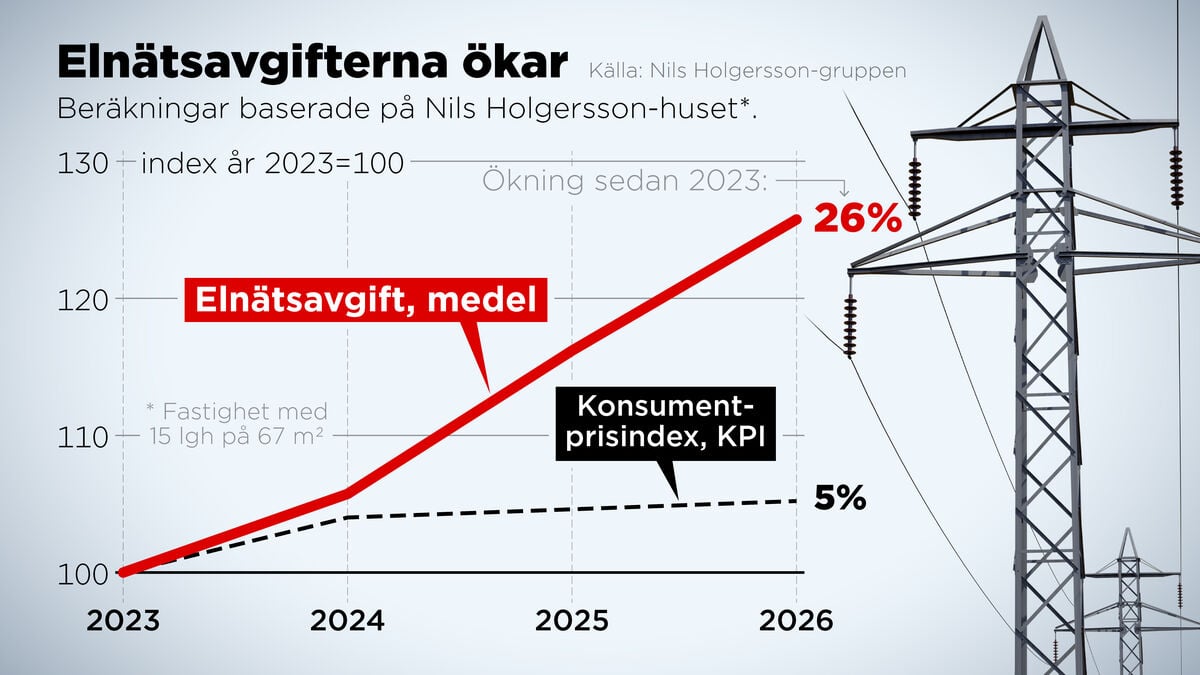
In three years, the fee has risen by an average of 26 percent while inflation - the general price increases in society - has been 5 percent.
This means that we have had increases five times higher than inflation, says Björn Berggren, chairman of the group.
More than twice as expensive
And there is no rhyme or reason in the pricing, according to him. The most expensive electricity network is owned by Kraftringen, a company owned by several municipalities in Skåne. There, the electricity network fee costs 195 öre/kWh including VAT. In nearby Bromölla, also in Skåne, the electricity network price is 90 öre.
"It is therefore not possible to see that it is becoming more expensive in southern Sweden, or that it is becoming more expensive outside metropolitan regions. On the contrary, it shows that there is simply no explanation," says Berggren.
The average price in the country for the electricity network fee is 132 öre/kWh including VAT, divided into an often high fixed fee plus a variable consumption component. The electricity price itself, which is invoiced separately, is usually lower.
Investing 30 billion
The electricity network companies operate in a monopoly market that is regulated by the Energy Market Inspectorate.
But this shows that we have regulations that don't work, he says.
The industry points to the large investments needed as an explanation for recurring price increases.
"The Swedish electricity grid companies invest around SEK 30 billion per year, which is also naturally reflected in the development of prices," says Tomas Malmström, responsible for electricity grid issues at Energiföretagen in a written comment.
In this year's report, the Nils Holgersson group has analyzed how the companies that have introduced the criticized power charges have changed their prices. The average increase has been higher among these companies, around 10 percent, compared to around 4 percent for other electricity network companies.
The calculations are based on the typical Nils Holgersson house, a property with 15 apartments.
Difficult to understand
Since the government removed the mandatory requirement that everyone introduce an efficiency fee, some companies have backed down and removed the efficiency tariffs that were supposed to be revenue-neutral.
"It has been a challenge for customers to understand these models and then be able to handle them," says Björn Berggren, also an energy expert at Sveriges Allmännytta.