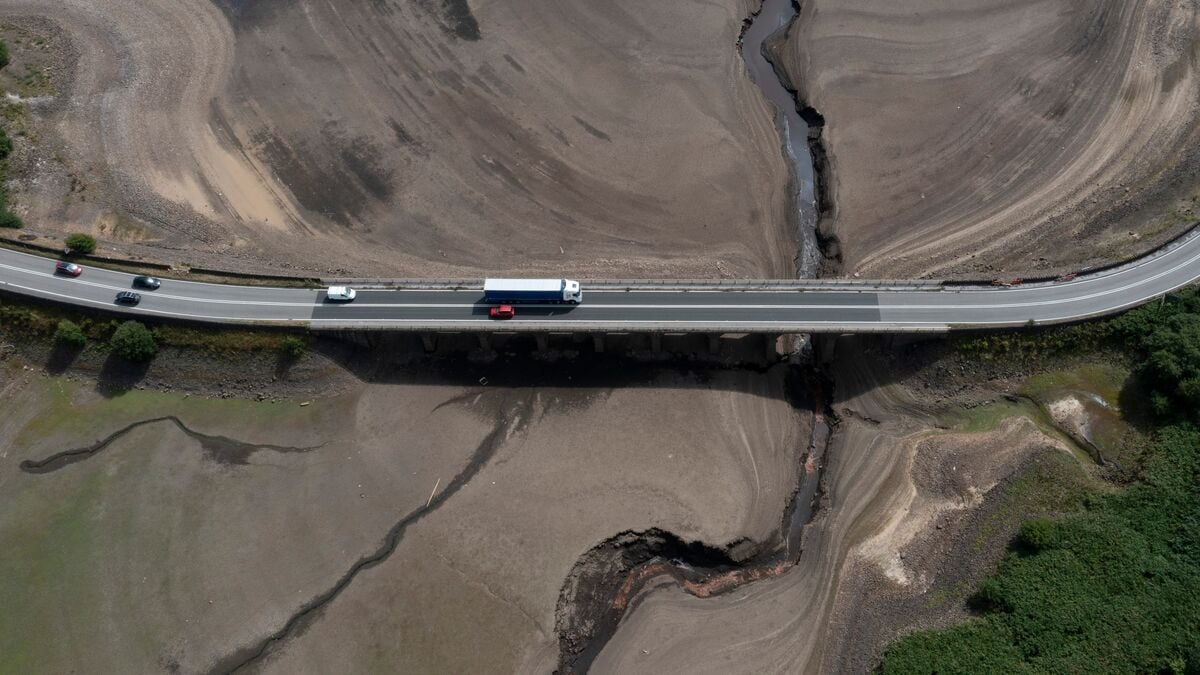
More than 70 percent of England and all of Wales are in drought, according to British authorities. July was the driest month in England and Wales since records began in 1836, writes the BBC.
The deficit in rainfall is remarkable, according to Sarah Davies, head of environment and energy at the country's meteorological agency, the Met Office.
“These conditions have significantly increased the pressure on water resources in some parts of the country,” she says in a press release.
Deadly heat
Several heatwaves have made Britons sweat since May this year.
On Thursday, 38.1 degrees was measured in Kew Gardens, west of London - the hottest day of the year so far. It is also the first time that temperatures above 37 degrees have been measured on three different days in one year, writes the BBC.
"It hasn't rained properly for two months now. I work in a factory and it's really boiling in there," Jonathan Tutty in Birmingham tells TT.
Like many others, he longs for cooler times, as he sits by a park with yellow, dry grass.
I hope autumn comes soon.
A police officer in the city, who does not want to give his name, agrees.
It's pure desert. A real drought. It's way too hot for me.
In May and June alone, 2,877 heat-related deaths were recorded. The number is expected to rise in July and August, writes The Guardian.
A little rain
During July, southeast England received one percent of expected rainfall and in parts of Hampshire, the Isle of Wight and West Sussex it has not rained a drop for two months, writes the BBC.
We know how challenging this summer has been, especially for our hard-working farmers who are on the front lines of climate change,” said Emma Hardy, Minister for Water Resources.
Early harvests, shortages of feed and dwindling water sources have prompted the UK's farmers' union NFU to raise the alarm about the risk of food shortages if temperatures continue to be high.
According to the Met Office's long-term forecast, no immediate relief is in sight.
"A lot of dry weather is expected. While some areas may occasionally receive useful rainfall, there is currently no strong indication of a sustained period of widespread rainfall," says Sarah Davies.
However, there is no drought in Scotland and Northern Ireland and rain is expected there.
Humidity is an important factor. The UK's coastal and maritime climate means that the country has high humidity. If the humidity is high, sweat does not evaporate as well. Sweat therefore has less of a cooling effect compared with when the air is dry.
The combination of high air temperature and humidity leads to a higher “perceived” temperature.
Homes in the UK are traditionally built to retain and trap heat, designed for the colder months of the year. Few households have air conditioning. 45 percent of the population say it is difficult to prevent homes from overheating during heatwaves, according to the Red Cross.
The heat affects nighttime sleep and the lack of coolness increases the overall effect of the heat.
Source: BBC, Red Cross