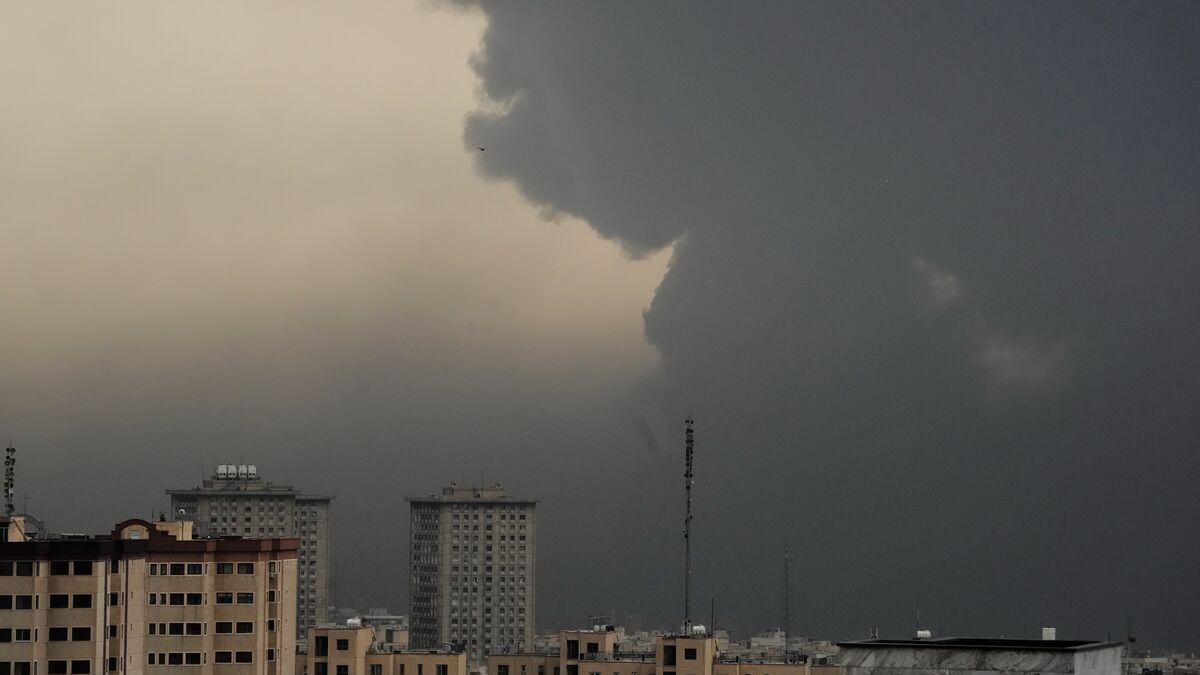
Thick black smoke from oil fires obscured daylight that morning. Cars on the main roads through Tehran still had their high beams on that morning.
"I thought my alarm clock was broken," said a man in his 50s about the apocalyptic awakening.
Israel attacked five oil facilities overnight, killing at least six people, local authorities said. Fuel distribution has been temporarily halted in the capital.
US Energy Secretary Chris Wright told CNN on Sunday that the Americans, however, are not participating and have no "plans to attack Iran's oil or natural gas industry."
The Israeli Air Force has also bombed, among other things, the Iranian Revolutionary Guard's space and satellite headquarters and about 50 bunkers with ammunition stores in the capital area, according to a statement.
A US soldier was killed in an Iranian attack on Saudi Arabia on March 1, the military command Centcom announced on Sunday evening. The person was seriously injured and later died on Saturday. A total of seven Americans have now died in the war.
Supreme leader appointed
On Sunday, Iran's Assembly of Religious Experts appointed a new supreme leader after the assassination of Ayatollah Ali Khamenei. The name was initially kept secret, but later state media announced that it would be Khamenei's son, 56-year-old Mojtaba Khamenei, as expected.
In parallel, Iranian President Masoud Pezeshkian is seeking to qualify Saturday's speech in which he apologized for this week's attacks on neighboring countries and promised they would stop.
"If Iran's enemies try to use any country to attack or invade our country, we will be forced to respond to the attack," he said in a new televised speech.
“Six months”
New attacks are being reported against a number of countries in the region, including Bahrain and Kuwait. Two people were killed and twelve injured when a projectile hit a residential area in al-Kharj, south of the Saudi capital Riyadh, the country's civil defense said.
Iran is capable of continuing the war for "at least six months," the Revolutionary Guards said in a statement, threatening that more advanced missiles will be used in the future.
The Guard said in a separate statement that targets in Tel Aviv and the Negev Desert in Israel were attacked, as well as US air bases in the region.
Six people were reported injured in central Israel, according to emergency services and hospitals.
Background: How the Iran War Started
On February 28, the United States and Israel attacked Iran, without the support of the UN Security Council. The attack was described as a preemptive strike to prevent the country from developing nuclear weapons. Iran's Supreme Leader Ayatollah Ali Khamenei and several other leaders were killed in the bombings.
A year earlier, in March 2025, US President Donald Trump sent a letter to the Ayatollah to initiate negotiations over Iran's suspected nuclear weapons program. Five meetings were held but yielded no results.
On June 22, the United States entered the then ongoing war between Israel and Iran and bombed three nuclear energy facilities.
In September, previous UN sanctions on Iran were reimposed. The economy deteriorated and popular protests erupted before the turn of the year. Trump said he was prepared to intervene on the side of the protesters when they were killed in their thousands - but that did not happen.
In early 2026, US military forces gathered in Iran's vicinity.
New negotiations with the regime began on February 3, with no results.