+ Do not cover your mouth
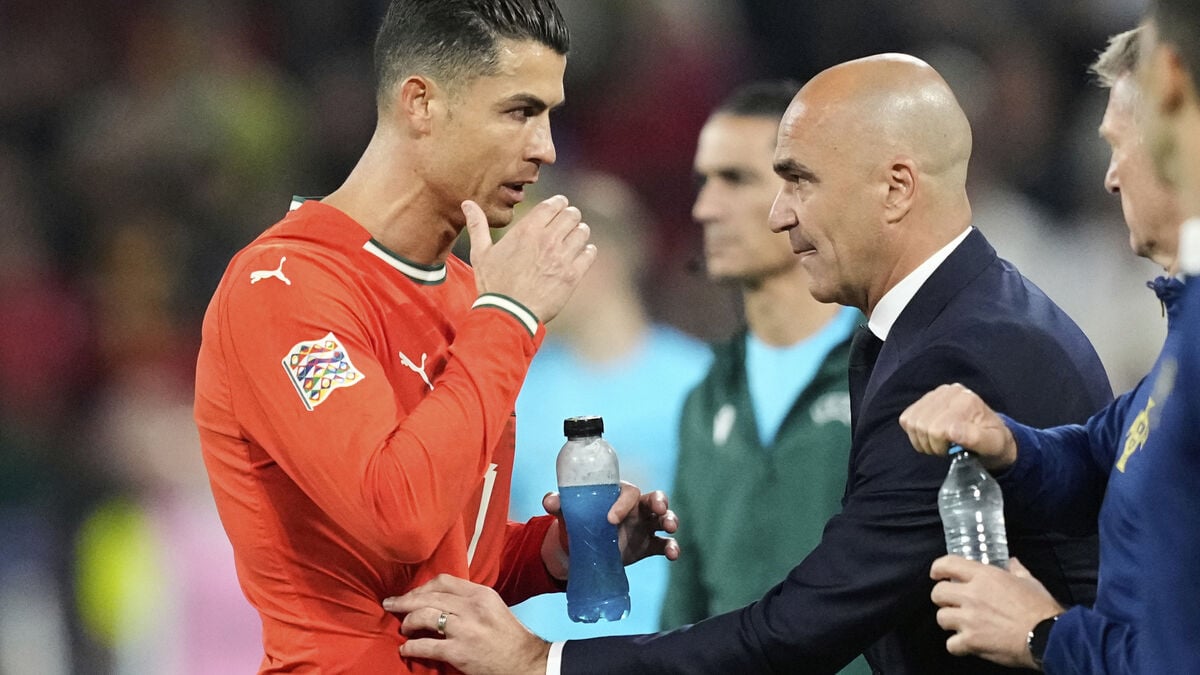
Footballers covering their mouths when talking on the pitch are a common sight, but after the Real Madrid-Benfica scandal - in which Vinicius Junior claimed Gianluca Prestianni called him a "monkey" - FIFA had enough.
If the referee or the VAR room sees a player or official covering their mouth, it will result in a red card. Jonas Eriksson praises the move, but believes there will probably be "pragmatism".
"If a player goes up to a teammate and covers his mouth, it's probably not an automatic red card. FIFA hasn't said anything about whether it should apply to players on the same team so far," he says.
+ VAR gets greater powers
The video assistant referee (VAR) system will review incorrect second yellow cards or if the referee has given the wrong player a yellow or red card.
"These shouldn't be situations that are in a grey area, where people have different opinions. It's really the same philosophy that came in 2018 when VAR was introduced, with 'clear and obvious'. But as everyone knows, if you look at the Premier League, 'clear and obvious' doesn't apply there," says Eriksson.
VAR will also review "obviously" wrong corners, provided that the review can be carried out without affecting the game.
"FIFA wants to correct those times when things really go completely wrong. And that's largely because corners have become so important, that there are so many goals."
VAR will not review incorrect kick-ins to see if it should have been a corner kick, says Eriksson.
+ Speed up the game
Players who need treatment on the pitch will now have to wait one minute on the sideline before being allowed back in. The time starts when the game restarts. When making substitutions, they must leave the pitch within ten seconds, otherwise the substitute will have to wait on the sideline for at least one minute and until the next whistle blows.
These two rules have been tested in the North American league MLS before the World Cup.
"Hopefully, this will mean that our doctors work less than they do right now," says Eriksson.
The rule does not apply to goalkeepers.
+ Slow kick-off or throw-in? Hand over the ball.
If the referee considers that a throw-in or kick-in is running out of time, they will count to five seconds and signal with their hand. If the ball is not put into play, the throw-in is awarded to the opposing team. In the event of a delayed kick-in, the opposing team is awarded a corner.
The rule does not apply to a slow corner.