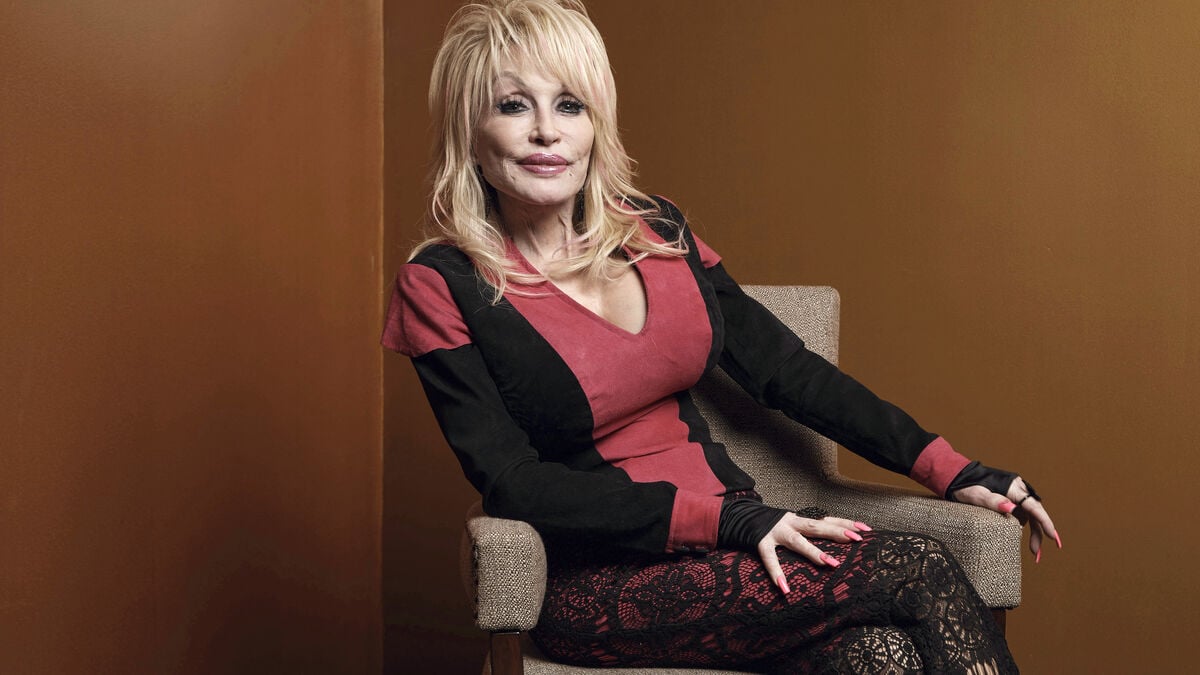
Dolly Parton was born on January 19, 1946, on a farm in Locust Ridge, Sevier County, in the Smoky Mountains of eastern Tennessee, one of twelve children in a poor family. She received her first guitar at the age of eight, and it was church that became her first stage.
After graduating from high school, she moved to the country music mecca of Nashville in 1964 at the age of 18, where she met her future husband, Carl Dean. They married two years later - he remained in the background throughout her career and died in 2025.
From 1967, she formed a duo with country singer Porter Wagoner, who had a popular television show. Although she continued to release her own music, it was not until 1974 that she had her breakthrough as a solo artist with “Jolene,” the sad song about a woman begging her husband’s mistress to let her keep him.
Two huge hits
The same demo tape - and later the album of the same name - also contained “I Will Always Love You,” which Whitney Houston turned into a huge hit almost 20 years later in the film “The Bodyguard”. Although Dolly Parton said much later that she could not remember whether she actually wrote the songs on the same day - as the classic myth claims.
In the late 1970s, Dolly Parton's international breakthrough came when, like many other country artists, she took a step closer to the pop world with songs like "Here You Come Again", the duet "Islands in the Stream" with Kenny Rogers and "9 to 5", the latter from the film comedy "9 to 5" - her first major Hollywood role.
Now she was a superstar and more films awaited. She starred in films such as "The Best Little Whorehouse in Texas" in 1982, "Steel Magnolias" in 1989 and "Honky Tonk Angel" in 1992.
“The Tank General’s Wife”
The label of being a dumb blonde stuck. On Swedish television in the 1980s, host Arne Hegerfors joked about her as “Armored General (George S) Patton’s wife who looked after his parapet”.
But she would be re-evaluated as a feminist icon. More and more artists cited her as a source of inspiration, and in 2011 she was praised as a role model in the Swedish documentary film “I Am My Own Dolly Parton” by five female music creators, including Nina Persson and Helena Josefsson.
Own amusement park
In the late 1980s, Dolly Parton returned to the country world and recorded some of her most acclaimed albums. First in the group Trio with Emmylou Harris and Linda Ronstadt in 1987. Six years later, she repeated the concept, this time with Loretta Lynn and Tammy Wynette.
In 1986, the gates opened to Dollywood, an amusement park in Pigeon Forge, Tennessee, built around the log cabin where the country star grew up in humble circumstances.
In addition to rides, Dollywood also offers traditional crafts and music from the Smoky Mountains area - where Parton herself made a guest appearance.
Dolly Parton continued to perform and release music for most of her life. Beginning in the late 1990s, she explored her bluegrass heritage in critically acclaimed collaborations with artists including Patty Loveless and Alison Krauss. In 2023, her final album, “Rockstar,” was released.
In her later years, Dolly Parton also became an unexpected hero for science - during the Covid-19 pandemic, she donated one million dollars to Vanderbilt University, money that went directly to fund the development of Moderna's Covid vaccine.
"Dumb blonde", 1967.
Early song with a warning not to underestimate her. She's not a dumb blonde.
"Down from Dover", 1970.
An early example of her way of writing about tragic life events - a pregnant teenager is shunned by everyone, including her family.
"Coat of many colors", 1971.
Tells about her poor upbringing, about how her mother sewed a coat for her from donated fabric.
"My Tennessee mountain home", 1972.
Autobiographical about the peaceful, but poor upbringing. Written in Swedish by both Lasse Stefanz and Elisabeth Andreassen.
"Jolene", 1973.
The big breakthrough, inspired by a bank teller who flirted with Dolly's husband Carl Dean.
"I will always love you", 1974.
Written for artist partner Porter Wagoner when Dolly went solo. Became one of the biggest hits of all time with Whitney Houston 18 years later.
"Here you come again", 1977.
The first major step towards a more pop sound and it topped charts all over the world. Barry Mann and Cynthia Weil wrote the song.
"9 to 5", 1980.
The song she wrote for the comedy "9 to 5", when Dolly took the step to Hollywood and began her film career.
"Islands in the stream", 1983.
The Bee Gees wrote the duet with country star Kenny Rogers which became Dolly's biggest Swedish hit, number three on the Swedish charts.
"Wildflowers", 1987.
Dolly wrote the folk song for the collaboration with Emmylou Harris and Linda Ronstadt who formed the group Trio.