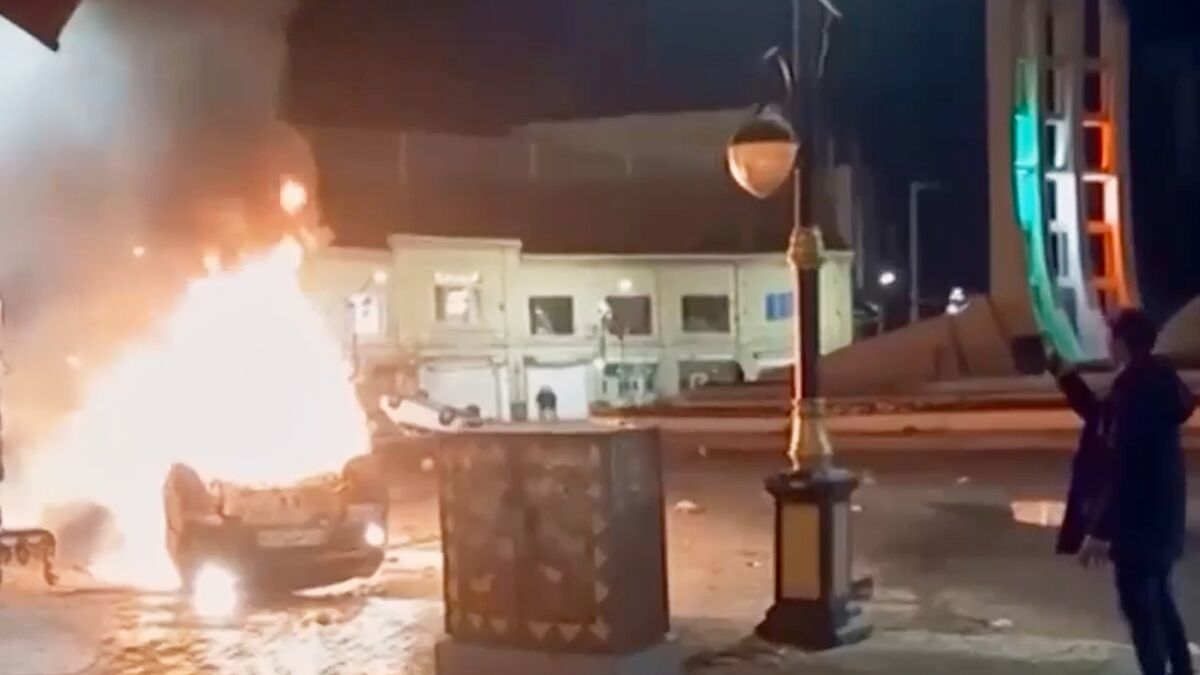
The violent developments in the protests against the regime across large parts of Iran are difficult to follow as internet traffic and telephony are throttled - on Saturday afternoon, the shutdown entered its third day. The BBC has contacted doctors and medical staff at two hospitals in Tehran.
Hospitals have declared a state of emergency as the number of injured has increased since the Iranian government responded with violence to the growing protests. Resources are insufficient to treat the injured.
Iranian Justice Minister Mohammad Movahedi Azad warned that protesters are being compared to the most serious crime in Iran, that of being “an enemy of God.” The message was broadcast by Iranian state television, AP reports.
Gunfire escalates
Time cites an unnamed doctor who estimates that over 200 people have been killed, “most of them with live ammunition.” The estimate is based on data from six hospitals in Iran.
The demonstrations have grown in strength since the initial protests on December 28, sparked by a plummeting currency and worsening economic conditions in Iran, and have since expanded to include criticism of the regime.
Earlier, several human rights organizations reported that Iranian security forces had used tear gas against protesters. The Norway-based Iran Human Rights (IHR) wrote on X on Friday that at least 51 protesters had been killed in the first 13 days of protests, including children.
The situation was exacerbated by the dramatic developments in Iran when the country's supreme leader, Ayatollah Ali Khamenei, announced that the regime did not intend to back down:
"The Islamic Republic took power through the blood sacrificed by hundreds of thousands of honorable people - and the republic will not give in to those who deny this," Khamenei said in a televised statement on Friday.
European criticism
On Saturday, European Commission President Ursula von der Leyen announced that the Union supports the mass protests by Iranians and condemns the “violent repression” of the demonstrators.
"On the streets of Tehran, and in cities around the world, the echo of Iranian men and women demanding freedom is heard. Europe stands fully behind them," von der Leyen said in a statement.
US President Donald Trump has previously threatened to "hit very hard" if protesters are killed in Iran.
Facts: The protests in Iran
The demonstrations in Iran began in late December when shopkeepers took to the streets to express their dissatisfaction with skyrocketing costs and falling living standards. Since then, other protests have grown massively and now encompass the entire country.
The discontent is rooted in the abysmal economy with skyrocketing inflation and a currency, the rial, that has collapsed. But like the wave of protests after the death of the young Mahsa Zhina Amini at the hands of the so-called morality police in 2022, the anger is directed at the regime at large.
Power in Iran stems from the supreme leader, who is seen as a representative of the twelfth imam who, according to Shiite Islam, disappeared in the 9th century and is expected to return one day.
The Supreme Leader is elected by the Assembly of Experts, which can formally also remove him. The Assembly of Experts consists of just over 80 clerics who are elected in general elections every eight years - but all candidates must first be approved by the Guardian Council, of which six of the 12 members are appointed by the Supreme Leader himself. The rest of the Guardian Council is appointed by Iran's chief prosecutor (whom the Supreme Leader chooses) and is then approved by parliament. But everyone who runs for parliament and the presidency must be approved by the Guardian Council.
The Supreme Leader is the commander-in-chief and appoints senior officials in the judiciary, state media, and the Mediation Council, which mediates disputes between parliament and the Guardian Council. He also has veto power over all important decisions made in the country.
The system is unique in the world, and stands out particularly within Shiite Islam, where the historical view has been that religion and politics should be kept separate.
Source: UI