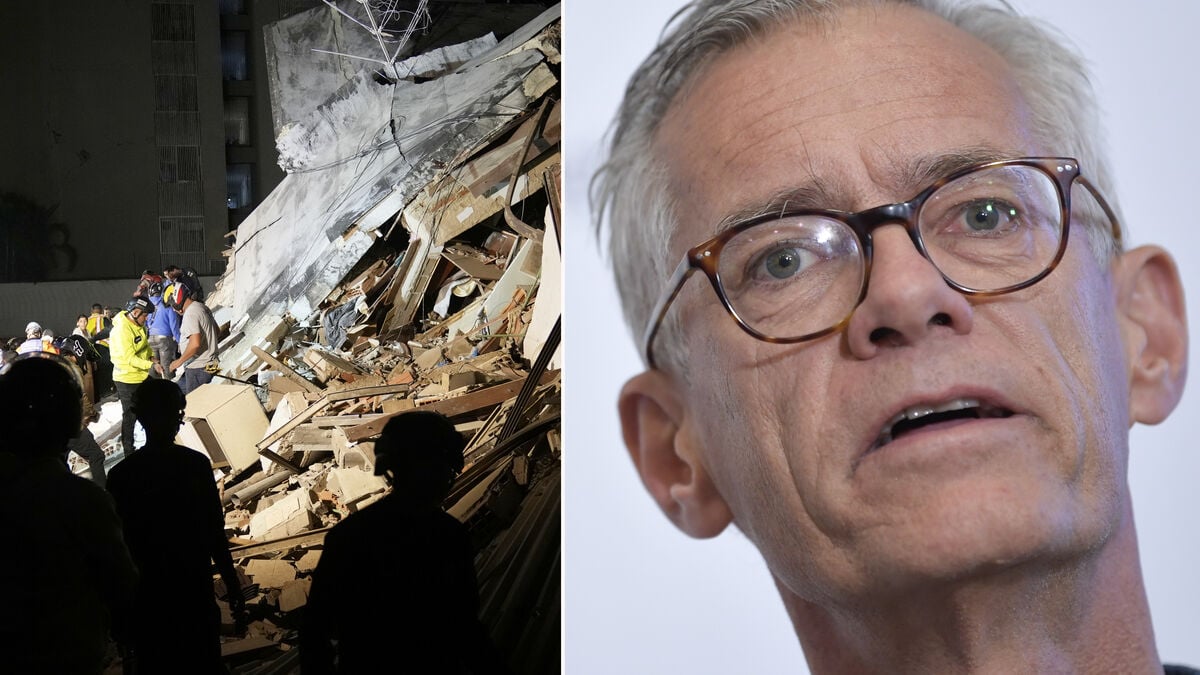
Johan von Schreeb was on site in southern Turkey after the severe earthquake there in 2023.
Then, virtually all the seriously injured - 50,000 people - were evacuated within two days, he says.
Von Schreeb, a professor at the Karolinska Institute, does not believe we will see anything like this now. Venezuela is a country that lacks both a well-functioning healthcare system and medical supplies, he notes.
It is difficult to know which hospitals in Caracas are still operating.
Crush injuries
The scale of the disaster in Venezuela is "likely widespread," according to the US Geological Survey (USGS), which estimates that there is a high risk that the death toll will exceed 10,000 people.
According to Johan von Schreeb, the number of injured people requiring medical care can be expected to be three times as high as the number of deaths.
We know that there are usually three injuries for every death, and in 70 percent of cases they are broken bones. There are also a lot of crush injuries.
Muscle cells die
He describes how important it is that logistics work and that excavators and search dogs are quickly deployed in the rescue effort.
It's very urgent.
Those who are trapped under debris for a long time suffer from crush syndrome. This means that the muscle cells in the trapped body part die and release harmful substances that are toxic to the kidneys.
Then you have to start dialysis immediately. If you wait too long, the kidneys will not cope and many people will die, as there are no resources for kidney transplants.
Field hospital
US Secretary of State Marco Rubio writes on X that the US is immediately sending search and rescue forces, medical resources and humanitarian aid to Venezuela. Sweden has also offered help.
The World Health Organization (WHO) has built a system of international field hospitals and, according to Johan von Schreeb, several countries in South America have the ability to quickly launch their own aid efforts.
Due to the difficult economic situation in Venezuela, he is convinced that the country will be dependent on outside help.
They certainly have well-trained doctors, but they lack materials, and taking care of such a massive number of injured people is an enormous strain.