If the Swedish Olympic gold medalists look across the valley from the ski stadium in Tesero to the village of the same name, they can see a small river aptly named Stava.
The water ripples quietly - unlike that fateful July day in 1985 when two dams higher up the valley gave way. A violent wave of water, mud and debris swept down at 90 kilometres per hour, burying everything in its path.
268 people drowned in one of Italy's worst disasters. In the cemetery of Tesero there is a monument to those whose bodies could never be identified.
Cable car accidents
Ten years earlier and ten years later, it was instead on the other side of the valley that the grief struck.
The cable car up to the ski resort at Alpe Cermis - where Tour de Ski skiers climb the slalom slope every year - has been hit by disasters twice.
In 1998, 20 people died when a US Marine Corps plane flew too low, cutting a cable and causing a trolley to fall from a height of 80 metres.
In 1976, 42 people died when another trolley first fell 70 metres and then rolled for at least another 100 metres.
“White War”
The accidents still pale in historical perspective.
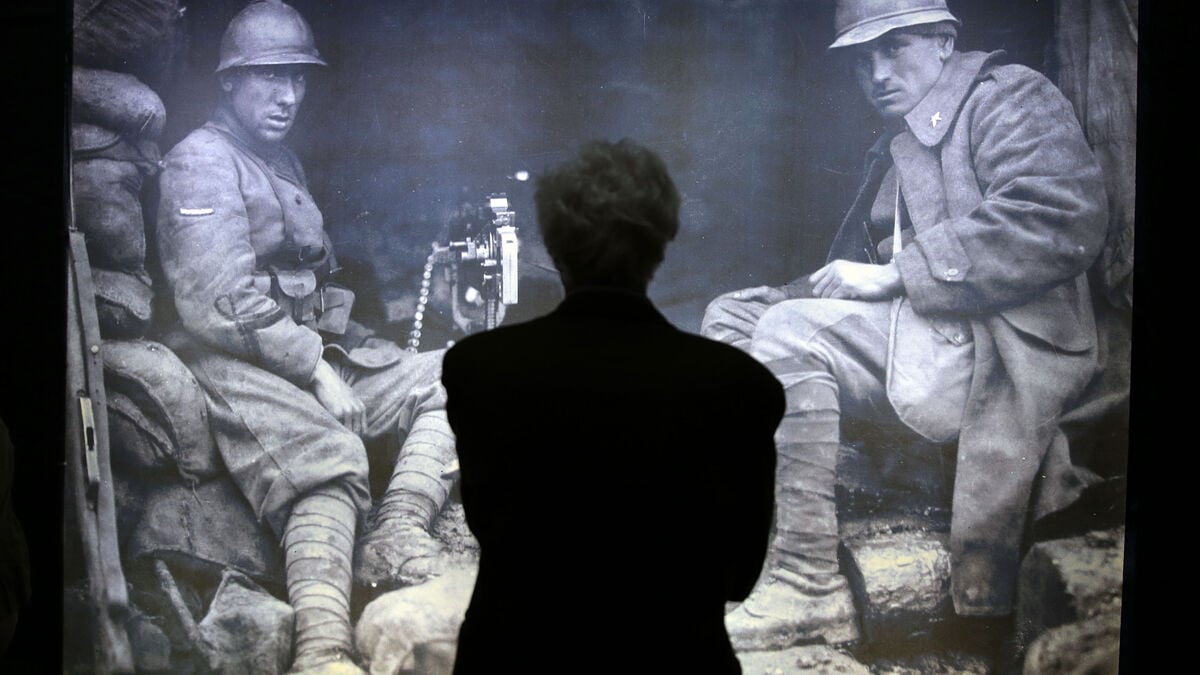
In the mountains just above the ski stadium from Val di Fiemme up towards Cortina d'Ampezzo, the border and the front line ran when Italy and Austria-Hungary clashed during the First World War, 1914-18.
At least 150,000 people died in the “White War” - the world’s highest trench warfare in the Dolomites, with battles taking place up to 3,000 metres above sea level on the Marmolada - right between the ski jumping in Predazzo and the curling in Cortina.
SS abuses
20 years later, Val di Fiemme was hit by one of Nazi Germany's last war crimes, when SS soldiers in early May 1945 - just a few days before the end of World War II - avenged an attack by massacring civilians in several of the villages that are now right next to the Olympic stadiums.
45 people died in Ziano di Fiemme. A few kilometres away from the Swedish cross-country skiers' hotel, the names are written on a memorial stone: Vanzetta, Vanzetta, Vanzetta, Zorzi, Zorzi and so on.
Those names now belong instead to Olympic history, via Val di Fiemme athletes such as Cristian Zorzi (relay gold in Turin 2006) and the Ziano siblings Giorgio and Bice Vanzetta (four and two medals respectively in 1992-94).
But that's another story.
Facts: Olympics in Milan Cortina
The 2026 Milan Cortina Winter Olympics will be held in three of Italy's 20 regions: Lombardy, Trentino-Alto Adige and Veneto - although the latter will only host the closing ceremony in Verona on February 22.
In Lombardy, the skating events are held in the city of Milan, as well as the freestyle, snowboarding and men's alpine events in the ski resorts of Bormio and Livigno.
In Trentino-Alto Adige, cross-country skiing, ski jumping, biathlon, curling and women's alpine skiing are held in Val di Fiemme, Antholz and Cortina d'Ampezzo. The region belonged to Austria-Hungary until the end of World War I in 1918, with icy battles at high altitude along the border.