An anonymous Iranian health ministry official told The New York Times that around 3,000 people have been killed in the country. Another regime official, who also remains anonymous, said at least 3,000 people had died.
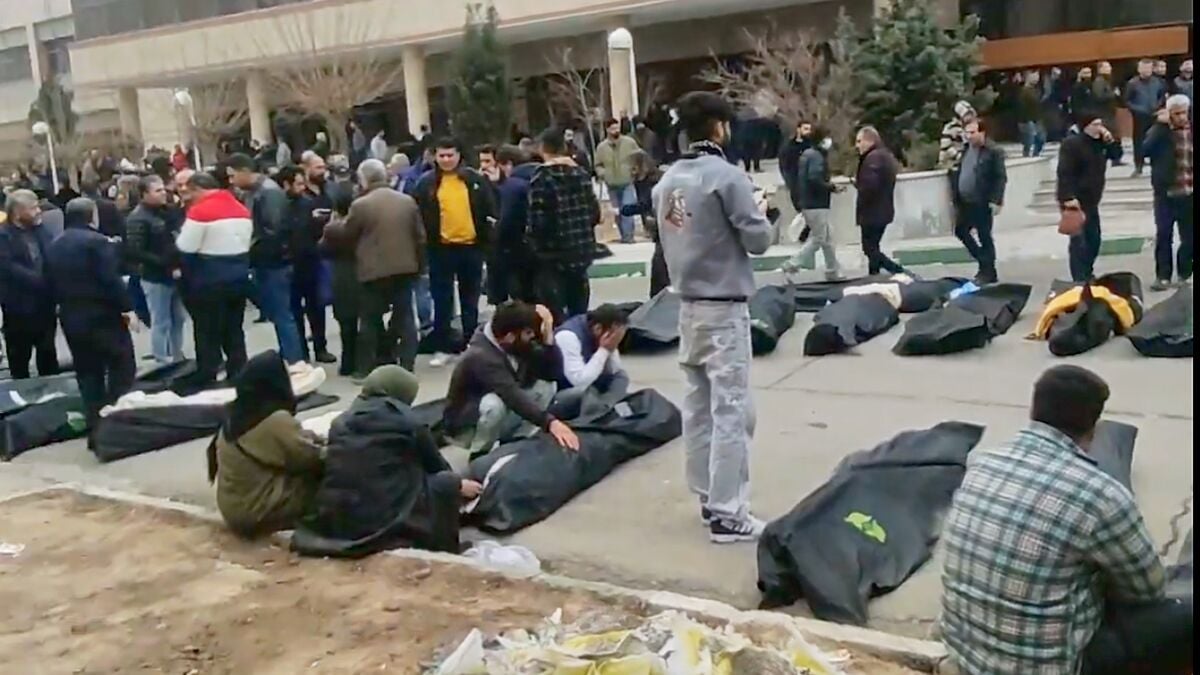
Images that have been brought out of the country despite the communications blockade show rows of body bags. A morgue employee is seen on state television.
"The majority of these people are ordinary people," he says, the newspaper reports.
"Their families are just ordinary families."
According to Iran International, the death toll is actually several times higher. A large proportion of the at least 12,000 people the UK-based organization says have been killed were reportedly shot dead, most on Thursday and Friday night last week.
"In terms of geographical scope, intensity of violence and number of deaths in a short period of time, this mass killing is unprecedented in Iran's history," the organization writes.
"Battlefield"
A woman describes the capital Tehran as a battlefield, reports the BBC.
"On Friday, the security forces kept killing. Seeing it with my own eyes made me so sick that I completely lost my courage. Friday was a bloody day," she says.
"In war, both sides have weapons. Here, people just chant and get killed. It's a one-sided war."
Omid has been protesting in a city in southern Iran. He has spoken to the BBC but his name has been changed for security reasons.
"I saw it with my own eyes - they shot straight into rows of protesters, and people fell where they stood."
According to Iran International, the killing was allegedly organized on direct orders from Iran's Supreme Leader Ayatollah Ali Khamenei.
All provinces
Yesterday, protests reportedly took place in at least 186 cities in all 31 provinces of the country, writes The Guardian.
Norway-based Iran Human Rights (IHR) and US-based HRANA have reported in their latest updates that over 600 protesters have been killed.
Iranian state media has reported that over 100 security forces have been killed and that "rioters" have set fire to dozens of mosques and banks in the country.
The protests began on December 28 and are rooted in economic dissatisfaction, but criticism has broadened to target the entire regime in Tehran.