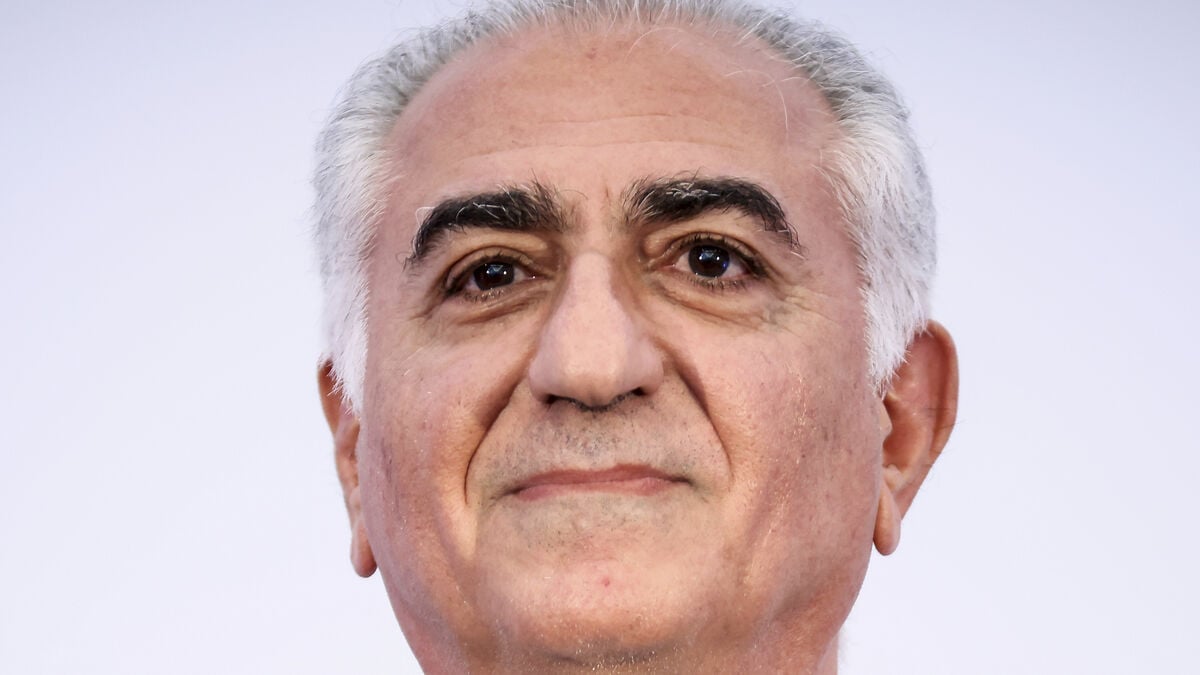
As protests rage inside and outside Iran, the former crown prince's name is heard chanted in the crowds, decades after the fall of the bloodstained monarchy.
Reza Pahlavi has stepped forward and urged them to continue. The Shiite Islamist regime has responded by branding protesters as “monarchist terrorists.”
"I am ready to return to Iran as soon as I get the opportunity," Pahlavi said in an interview with Fox News this past weekend.
Just over 45 years ago, after his father's death, he was proclaimed King Reza II by a court in exile. As his return to Iran looms, the question is how many people would welcome him – and with what title?
Were Western powers close?
His father, Mohammad Reza Pahlavi, as Iran's last Shah, led a heavy-handed rule rooted in the Cold War.
Resistance and discontent were crushed. The infamous security police SAVAK persecuted and tortured dissenters, and with support primarily from the United States, the Shah consolidated power in his own hands.
Attempts were made to quickly modernize Iran with oil revenues, but economic disparities widened and discontent smoldered.
In the late 1970s, millions of people took to the streets, initially united in resistance to the autocracy and a Shah who was seen as acting on behalf of foreign powers. But when the Shah was overthrown, Islamist mullahs seized power. Other resistance groups were then executed in their thousands under the new brutal regime.
An alternative
Reza Pahlavi lives outside Washington, D.C., and has occasionally tried to reach out to his millions of exiled compatriots, with limited success. In recent weeks, however, monarchists have played prominent roles at demonstrations around the world.
Some analysts believe that dark memories of the Shah's rule have faded over time. Others believe he now appears to be one of the few concrete alternatives.
Iran's exiled opposition is divided. Other groups accuse hardline supporters of Reza Pahlavi of working against the broader opposition. Imprisoned peace laureate Narges Mohammadi has described those supporters as an opposition within the opposition.
No talk of the throne
Three years ago, an attempt was made by Reza Pahlavi and several other opposition figures to launch a joint manifesto, but the initiative collapsed after just a few weeks. Shortly afterwards, Pahlavi traveled to Israel and shook hands with Prime Minister Benjamin Netanyahu, which drew more criticism.
Reza Pahlavi makes no explicit claim to the so-called Peacock Throne. He says he primarily wants to help Iran through a transitional period after which the people can choose their path.
Iran and its predecessor kingdoms had ruling monarchs from the 6th century BCE. The Pahlavi dynasty was the last before the 1979 revolution.
The military commander Reza Khan seized power in a coup d'état and was crowned shah (king) as Reza Shah Pahlavi in 1925. In 1933, he signed an agreement with the British oil company Anglo-Iranian to extract Iran's oil.
After World War II, when Iran was under British and Soviet occupation, Reza was forced to abdicate. His son Mohammad Reza was crowned Shah and forged close ties with the United States.
In 1951, Mohammad Mosaddegh was elected prime minister and he decided to nationalize the country's oil resources. In 1953, loyal military officers, with the help of the CIA, carried out a coup d'état in which Mosaddegh was deposed. A new oil agreement was signed.
Repression of dissent gained momentum. The Shah gradually became an autocratic ruler. Oil brought large revenues, but economic disparities grew. In the late 1970s, resistance exploded into nationwide protests and revolution.