"You could say that this makes the waters a little muddier. It's a little harder to see exactly what underlying inflation is," says SEB's fixed-income strategist Amanda Sundström, about the effects of the fiscal policy support measures.
Inflation still low
But she thinks the measures are "pretty well defined" and shouldn't really cause problems for Erik Thedéen and his board.
"We know roughly what the impact will be. The Swedish Central Bank can then focus on the underlying price components to get a good idea. And even with all this taken into account, inflation is very low. We will not even reach the target of two percent," says Sundström.
Albin Kainelainen, Director General of the Finnish Institute of Economic Research (KI), agrees.
"Inflation will be low this year," he says ahead of Tuesday's new economic report from KI and Wednesday's interest rate announcement from the Swedish Central Bank.
The low inflation means that most analysts believe that the Swedish Central Bank is holding off on raising interest rates, despite the fact that the European Central Bank (ECB) already raised its key interest rates last week for the first time in three years, citing the inflationary effects of the Iran war.
Lagging inflationary impulses
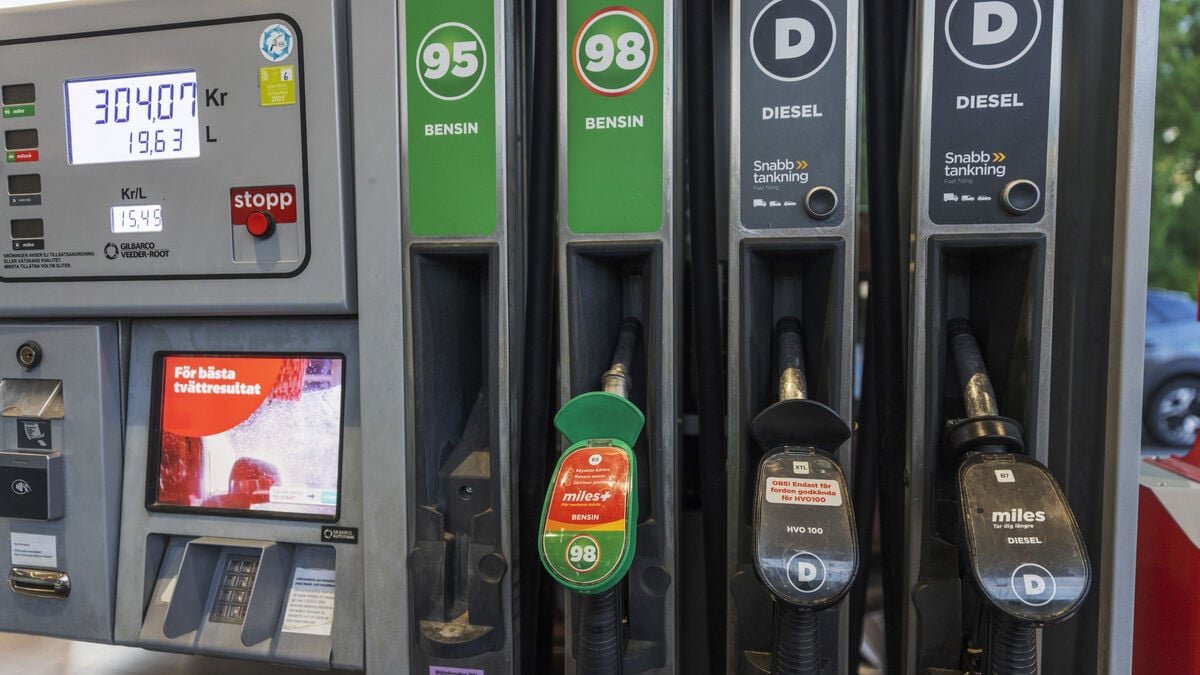
Kainelainen sees no major problems in finding alternative inflation measures, adjusted for VAT and tax cuts or the upcoming halving of the price of monthly public transport passes. He estimates the effect of all temporary support measures this year – including those that are known but not yet implemented – to be around one percentage point on CPIF inflation.
LO's economists have also calculated this and concluded that there is a greater effect.
"Overall, inflation is reduced by approximately two percentage points as an effect of the measures. But since the measures are introduced at different times and have different lengths of time, the effect is spread out over time," writes LO's chief economist Torbjörn Hållö in an email to TT.
Inflationary impulses from the Iran war's energy price shock can be assumed to continue into 2027, including in the form of higher freight prices, according to KI's Kainelainen. This may then coincide with the end of most of the effects from reduced fuel taxes, halved food VAT and reduced public transport ticket prices.
"But we still don't see high inflation next year. It will probably be around the Swedish Central Bank's inflation target – maybe a few tenths above," says Kainelainen.
The Swedish Central Bank's inflation forecast and so-called interest rate path – the forecast for the policy rate – are expected to be adjusted upwards in Wednesday's interest rate announcement. However, the policy rate is assumed to be left unchanged at 1.75 percent against a backdrop of low inflation, a weak labor market and unexpectedly poor growth.
Most analysts expect it to take until the end of 2026 or 2027 before there is any interest rate adjustment – and then in the form of one or two increases.
In the pricing of the fixed income market – where investors, funds and banks position themselves for future interest rates – an increase this autumn is fully priced in. The probability of a second increase – to 2.25 percent in the key interest rate – is also just under 50 percent in the pricing.