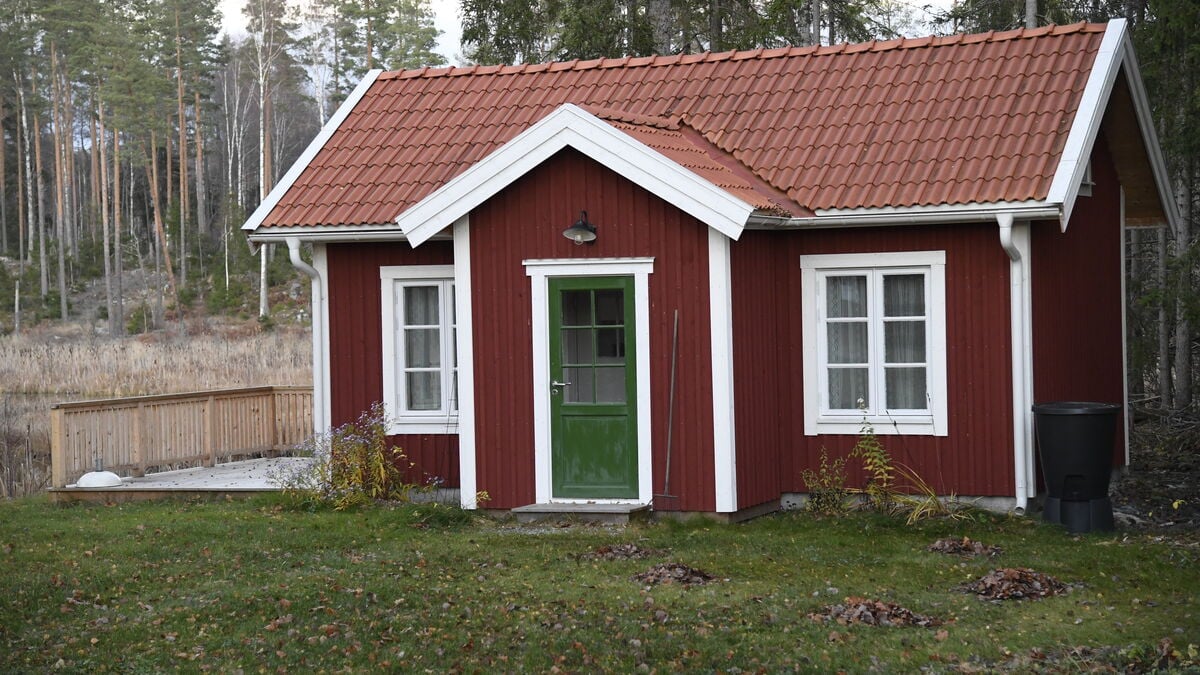
Compared to last winter, the insurance company has received 70 percent more claims reports regarding water damage to vacation homes in January and February than it did last year. Now, last year was relatively mild, but this year's reported claims are still high, 30 percent above normal.
There are hundreds of reports, large and small.
Nightmare
The nightmare scenario is if it has been leaking for several months and you haven't checked your house, and then you get moisture damage throughout the house. Then we're talking about enormous amounts of money, says Sara Aschan.
So please check during the winter to detect any damage in time.
Do you always replace or does it depend?
"We generally cover this type of damage. Leaks from pipes are covered by your insurance for your holiday home. However, there is a slightly higher deductible if it is frost damage," she says.
You have your own responsibility, the insurance company emphasizes.
If you are deemed to have been negligent, for example because you let the temperature in the house get very low or because you did not check on it, then there may be a deduction from the compensation, says Aschan.
But in times of high electricity prices, many people may turn off the heating completely.
Yes, but there are risks that come with it, she says.
Tips and tricks
It is now, when it starts to thaw and the first visit after winter takes place, that many people discover the damage.
There are some tips on what to do before turning on the water:
Close the taps (if they were opened before the winter closure) before turning on the water. Feel the pipe joints and taps and check that the water meter is not ticking; if it is, that indicates there is a leak somewhere.
It is otherwise normal for the system to make noise when the water is turned on; it is air in the system that needs to be released.
Be careful, she advises.
Don't turn on the water and then walk away for many, many hours.