There is no doubt that quick and powerful decisions are required if we are to achieve the goals, says Åsa Persson, Chair of the Climate Policy Council.
There is no simple "quick fix", but rather a combination of measures is required for Sweden to be able to reach the various national goals and EU requirements linked to 2030.
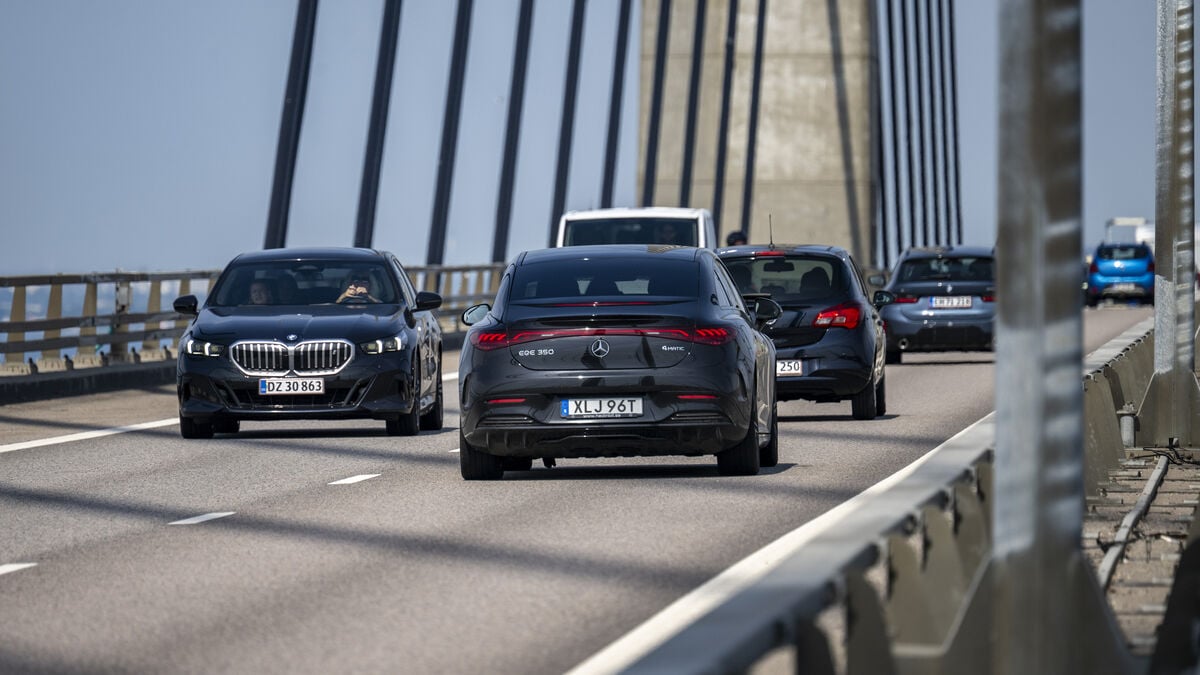
The sector that is flashing red the most is transport. The Climate Policy Council, which is tasked with evaluating the government's climate policy, wants to see several measures there. Both because transport accounts for around a third of Swedish emissions and because they are considered capable of decreasing relatively quickly.
What can make a difference in the short term is the consumption of petrol and diesel, says Åsa Persson.
More expensive petrol
This could involve both raising the petrol and fuel tax, which the government has lowered in several stages, and raising the reduction obligation, i.e. the blending of biofuels into petrol and diesel, which has also been lowered in recent years. Both measures raise the “price at the pump”, which was one of the biggest issues in the 2022 election.
So it is a politically sensitive issue, even though climate is also among voters' most important issues.
My impression is that more people are pragmatic now and see that the reduction obligation may be a policy instrument we need in the short term, says Åsa Persson.
And it would happen in a context where Sweden has very low fuel prices compared to other EU countries.
There is greater agreement that electrification is the solution in the long term. But it takes time to replace the vehicle fleet and there are policy instruments that can speed up the transition, for example through electric car premiums or favouring electric cars through energy taxes, believes Persson.
Short on time
A third measure to reduce emissions is to make it easier for people to use public transport.
"All parties need to have a very clear plan already during the election campaign, because there is no time to appoint more investigations. There are already many fully investigated political proposals," says Åsa Persson.
So what happens if the goals are not met?
In addition to the fact that emissions accumulate, which is negative for the climate, there could be hefty fines for countries that fail to meet their EU commitments. It is difficult to know how expensive it could be for Sweden, but an estimate from the Climate Policy Council points to around 40 billion kronor.
The overall climate goal is that Sweden should have no net emissions of greenhouse gases into the atmosphere by 2045, and then achieve negative emissions. The EU should be climate neutral by 2050.
Sweden's interim target for 2030 is that emissions should then be 63 percent lower than in 1990.
By 2030, emissions from domestic transport, excluding domestic flights, should have decreased by at least 70 percent compared to 2010.
The EU's so-called ESR commitment by 2030 means that Sweden must reduce emissions by 50 percent compared to 2005.
Emissions covered by the EU's emissions trading system ETS 1 are not included in the interim targets for 2030. They mainly cover transport, agriculture, heating of properties and work machinery.
Source: Swedish Environmental Protection Agency