The World Weather Attribution (WWA) research network, together with glaciologists, has compiled what lay behind the devastating mudslide in Nepal at the end of August.
Their conclusion is that the disaster was not the result of a single weather event but a combination of several unfortunate factors. Climatic factors, combined with the destabilisation of the mountain as a result of a major earthquake in 2015, are identified as the main causes.
We cannot accurately assess the role the earthquake played, but it may have weakened the rock mass, says Walter Immerzeel, a researcher in mountain hydrology, climate change and agriculture, with a particular focus on the Himalayas.
Frost and cracks
Although several processes contributed, he points to thawing permafrost as a particularly important factor. The landslide occurred in a transition zone where permafrost is particularly sensitive to warming, and as the cracks in the bedrock thaw, the rock's strength decreases and more water can penetrate the slope.
Throughout the region, glaciers have become about half a metre thinner per year since 2000.
The glacier near the collapsed slope retreated more than 300 metres between 2010 and 2026. That particular glacier is very important because it fundamentally supports the rock wall.
The researchers also point to rising temperatures, which have contributed to more freeze-thaw cycles, where water turns to liquid and then freezes again, exposing the cracks to stress.
There was also an unusually high amount of snow in October and November last year, which meant that the amount of meltwater was far above normal.
“No doubt”
The researchers have also been able to establish that annual temperatures in the area have risen by about two degrees, which is significantly faster than the average rate of global warming.
Although it is difficult to say whether anything was decisive for the extent of the disaster, it is undeniable that climate change played a role, believes Friederike Otto, climatologist and director of WWA.
There is absolutely no doubt that human-caused climate change has contributed to creating the conditions for the disaster, with permafrost thawing, glaciers thinning and precipitation increasingly consisting of rain rather than snow.
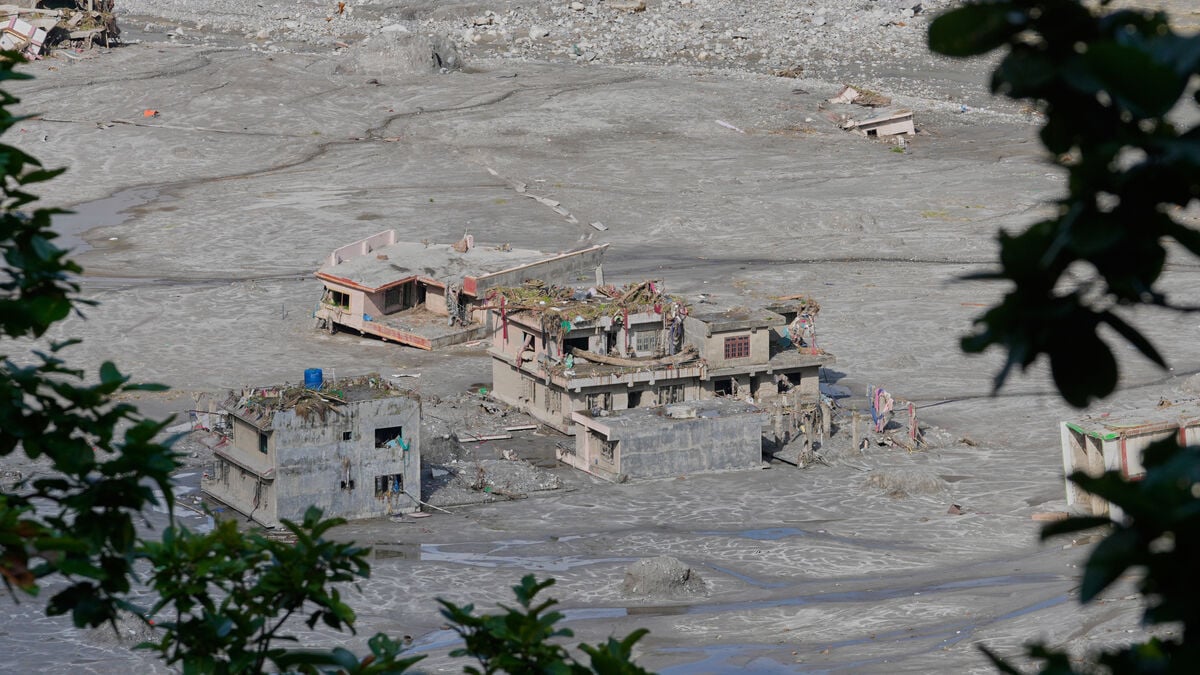
On August 26, extensive landslides and flooding occurred in the Himalayan mountain range, along the border between Nepal and Tibet.
The disaster is believed to have started with an ice avalanche (glacial collapse) on a melting glacier. It created a landslide and a giant flood of water and mud that flowed down the valleys at high speed.
The rock and ice slide was so powerful that it was registered as a seismic event with a magnitude of 5.2.
The confirmed death toll has risen to over 1,400, while more than 6,100 people are missing, including hundreds of foreign tourists and pilgrims.