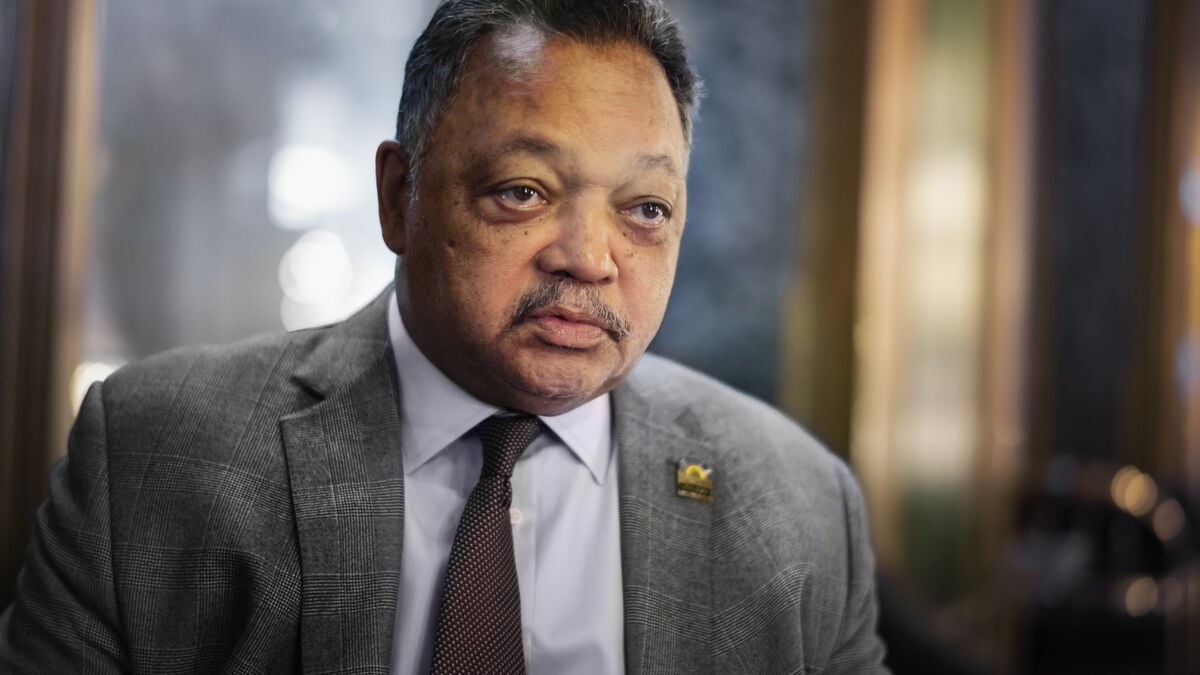
South Carolina-born sociologist and clergyman Jesse Jackson became a well-known figure during the 1960s civil rights movement. He participated in the 1965 Selma-Montgomery march for black voting rights, along with civil rights activist Martin Luther King Jr. Jackson was also at the hotel in Memphis, Tennessee, when King was shot and killed in 1968.
Former US President Barack Obama, the first Black president in US history, expressed his admiration for Jackson and his work:
"We stood on his shoulders," Obama and his wife, Michelle, wrote in a statement.
At the kitchen table
“For over 60 years, Pastor Jackson has helped lead some of the most significant movements for change in human history,” Obama continued, mentioning everything from civil disobedience and boycotts to helping millions of voters register:
“Michelle got her first glimpse as a teenager into political organizing at Jackson’s kitchen table.”
Jackson was active in Obama's 2008 presidential campaign. Despite some disagreements, Jackson has described Obama's presidency as "magnificent".
In 2019, during a visit to Sweden, he told TT that the civil rights movement is "very much alive" but now encompasses more issues and more minorities.
"Now we must learn to live together. Migration pressure is great on European countries, but immigration is not a zero-sum game, it is possible to make room for those in need," he said to Swedes.
Has borne fruit
Jackson has likened King's vision of democratic inclusion of all - regardless of gender or background - to a seed that has borne fruit in many American elections.
"Women, blacks, Hispanics, indigenous people ran and many won. They are all part of our movement," he said of the 2018 congressional elections.
Fifty years ago, we acted by marching; today the right to vote is our main weapon.
Jackson founded the civil rights movement Rainbow Push Coalition in 1971. He tried to become the Democratic presidential nominee in 1984 and 1988, but was not nominated in the primaries.
He was diagnosed with Parkinson's disease in 2017. In early 2021, he underwent gallbladder surgery and later that year was treated for COVID-19.