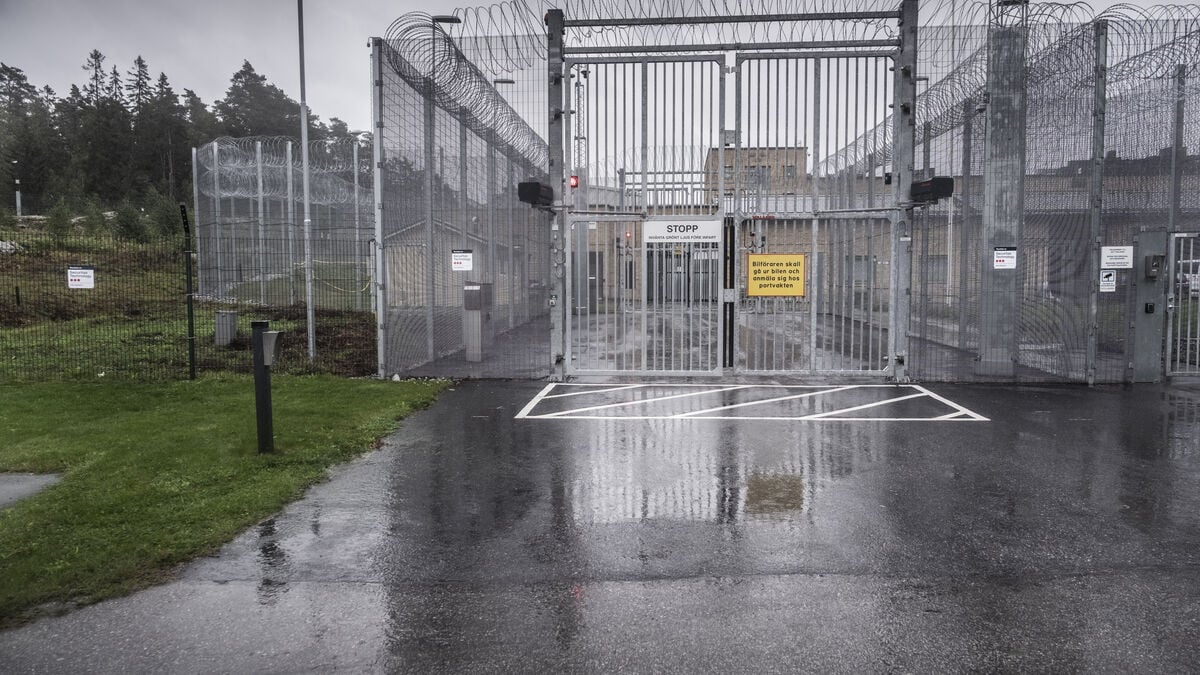
The agency's review shows that up to one in six children remain in locked environments in so-called Sis homes after their need for care has ceased. Sometimes they have to wait months to be discharged.
Girls are overrepresented among those who remain beyond that point, the review shows.
There are probably several explanations for why this is the case. But above all, you can see that there is a clear gap in the chain of care between the municipalities that place the children and these youth homes, says Fredrik Malmberg.
“A stain of shame”
Fredrik Malmberg says that children who are kept in Sis homes after their need for care has ceased are exposed to serious violations of their rights.
This is clearly a disgrace for Sweden. There is no other institution that would allow people to be locked up without a factual basis for it.
It violates human rights.
In the review, the Swedish Institute for Human Rights makes a number of recommendations to the government.
"We need to review the regulations regarding which children end up in Sis. The social welfare board and courts make very different assessments, which in itself is a rights problem. Children should not stay longer than necessary; if they don't need to stay, they absolutely should not. We also think that we need to follow up on how the interventions work after a Sis placement," says Malmberg.
“Major societal problems”
Birgitta Dahlberg is the director of youth care at the Swedish National Board of Institutional Care (Sis). In a message to TT, she writes that the review points to problems in the chain of care when alternatives to Sis placement are lacking. It is the social services that are tasked with finding new placements for children who have completed treatment at Sis homes. Sis has no mandate to discharge children from the homes.
"It is part of a larger societal problem that is primarily due to an increased number of gang-involved young people and girls with extensive psychiatric care needs," writes Dahlberg and continues:
"The fact that children and young people remain at Sis when the need for care no longer exists is negative both for children and young people and for Sis's capacity."
Facts: Sis-home
The Swedish State Institutional Board (Sis) is responsible for state child and youth welfare.
Sis operates 21 special youth homes and the agency has approximately 4,000 permanent employees.
The vast majority of children and young people there are cared for in accordance with the Youth Care Act (LVU), which is used when the young person or their guardians do not consent to care. Young people who have committed serious crimes and are serving a sentence of closed youth care are also placed in the special youth homes.
One of Si's powers is "seclusion", which means that staff are legally entitled to lock children in a special room or isolation cell if they have "ongoing violent behaviour".
The government has announced that Sis will be closed down and reorganized into a completely new authority, more focused on care and treatment, as young offenders from 2026 will be placed in youth prisons instead.
Source: Sis, Ministry of Health and Welfare