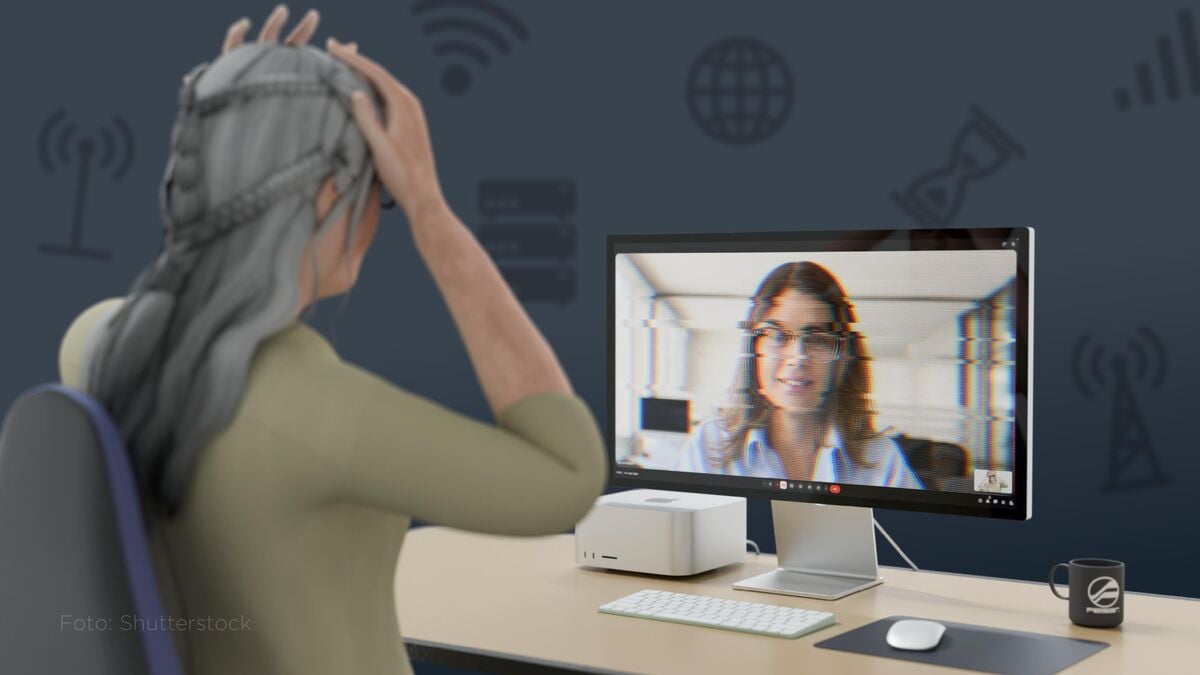
The pandemic gave a boost to video calling, as everything from weddings to morning meetings moved to Zoom, Meet, and Teams. Not infrequently, these meetings were disrupted by small bugs.
The mere presence of these short, small and fleeting freezes, noises and echoes can have a significant negative impact on the outcome of the conversation, says Jacqueline Renee Rifkin, an associate professor at Cornell University in upstate New York.
A kind of discomfort
Most people don't think the disruptions are of any great importance. But in a study published in Nature, Rifkin and her colleagues have been able to show that they do, after all. But it's not that we don't understand the person on the other side, but the problems seem to lie on a deeper level when the illusion of eye-to-eye contact is broken.
It becomes a kind of discomfort; it feels a little scary, ghostly and strange.
The researchers reviewed a wealth of video material and transcriptions, including video calls from American parole negotiations.
Negotiations where there were one or more technical disruptions during the conversation were associated with a lower likelihood that the inmate would be granted release at that time, she says.
Digital divide
Following the discovery, the researchers went on to conduct controlled experiments, comparing the impact of three to four interruptions lasting half a second to two seconds, in conversations that simulated job interviews, medical advice or social contexts. In cases of interruptions, the affected people experienced a poorer connection with the other party.
The consequence is that people are less interested in hiring a potential candidate, listening to a healthcare provider or starting a business relationship with someone who has just made a sales pitch, she says.
At the same time, she points out that video calls in themselves have many positive aspects, and the researchers themselves have mainly met digitally. But it raises questions about whether certain groups are disadvantaged, such as those with poor connectivity in rural areas.
This can create a digital divide where some people systematically and over time have worse outcomes and results than those who are not constantly affected by technological disruptions, says Jacqueline Renee Rifkin.
Facts: Bugged video calls affect
Researchers at Columbia University, Cornell University, and the University of Missouri-Kansas City have investigated how people are affected by bugs in video calls.
Among other things, the researchers have seen that prisoners who applied for release had a 12-percentage-point lower probability of being released if the video calls contained bugs, although it is not possible to say that the connection is causal.
The disruptions also affect how people experience important meetings such as job interviews and healthcare conversations.
Source: Nature