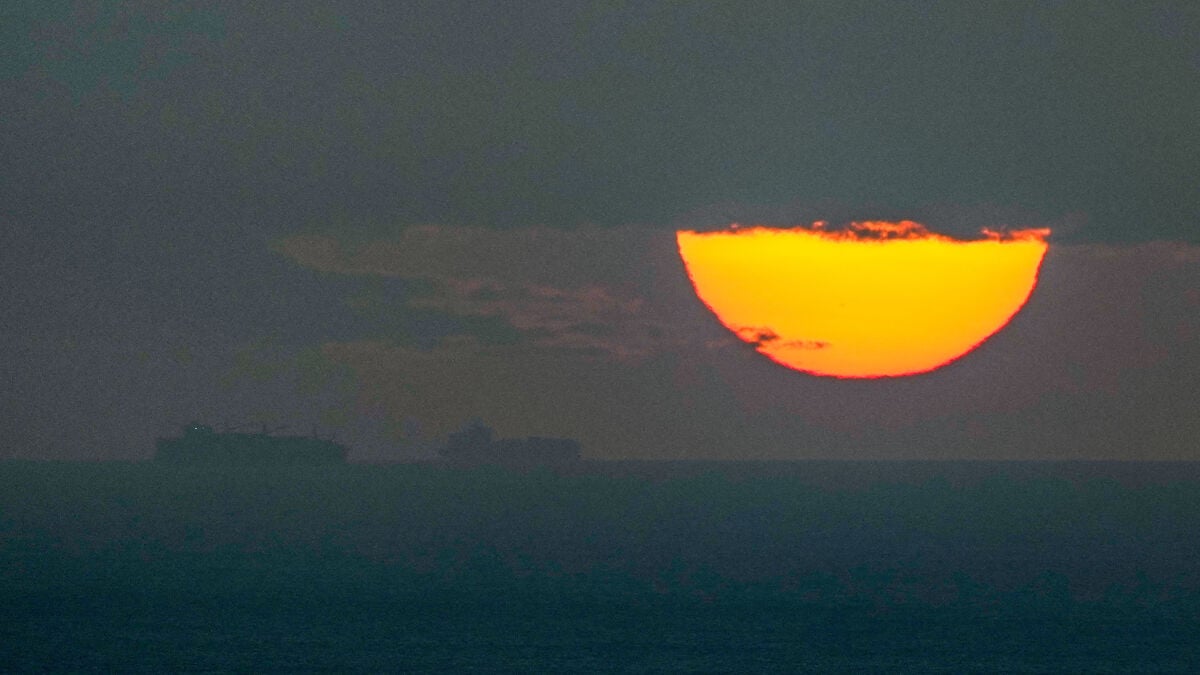
According to the US military command Centcom, more than 10,000 sailors, marines and airmen are participating in the blockade operation. At least twelve warships - including the aircraft carrier USS Abraham Lincoln - and dozens of aircraft and drones are involved in various ways.
"During the first 24 hours, no ships passed the US blockade," Centcom wrote in an update on the X platform.
Six merchant ships are said to have returned to Iranian ports in the Gulf of Oman during the day, following a request from American forces.
"The blockade is enforced impartially against vessels from all nations entering or departing from Iranian ports and coastal areas," Centcom wrote.
Started on Monday
The US blockade began at 4 p.m., local time in Sweden, on Monday after President Donald Trump ordered it on Sunday.
The American military has previously clarified that the blockade does not apply to the Strait of Hormuz itself, but rather all maritime traffic to and from Iranian ports in the Persian Gulf and the Gulf of Oman.
The situation has caused many ships to wait and lie completely still or circulate slowly on both sides of the Strait of Hormuz – which plays a crucial role in oil deliveries from the region.
The tanker Rich Starry is an example, where it first headed through the strait to the Gulf of Oman and then made a U-turn at low speed.
US sanctions
The Rich Starry is said to have been loaded with methanol in an Emirati port. It is sailing under a Malawian flag of convenience, but both the ship and its Chinese owner are under US sanctions due to links to Iran.
Iran blocks the Strait of Hormuz itself and only allows ships from countries considered friendly to pass through.
Several ships have previously identified themselves as Chinese during the war in order to pass unharmed.