On the night of January 3, American fighter jets bombed Venezuela and elite forces captured the authoritarian leader Nicolás Maduro. Just hours earlier, an anonymous, newly created account on the platform Polymarket had bet just over $30,000 on Maduro's exit. The profit is $410,000, over 3.7 million kronor.
On October 10, it was announced that María Corina Machado would be awarded the Nobel Peace Prize. The evening before, the probability that Machado would receive the prize suddenly rose sharply on Polymarket - from 3.74 percent to 72.9 percent - and a newly opened account brought in around half a million kronor.
In the so-called prediction market, led primarily by the American betting sites Polymarket and Kalshi, anyone can bet money or cryptocurrency on almost anything.
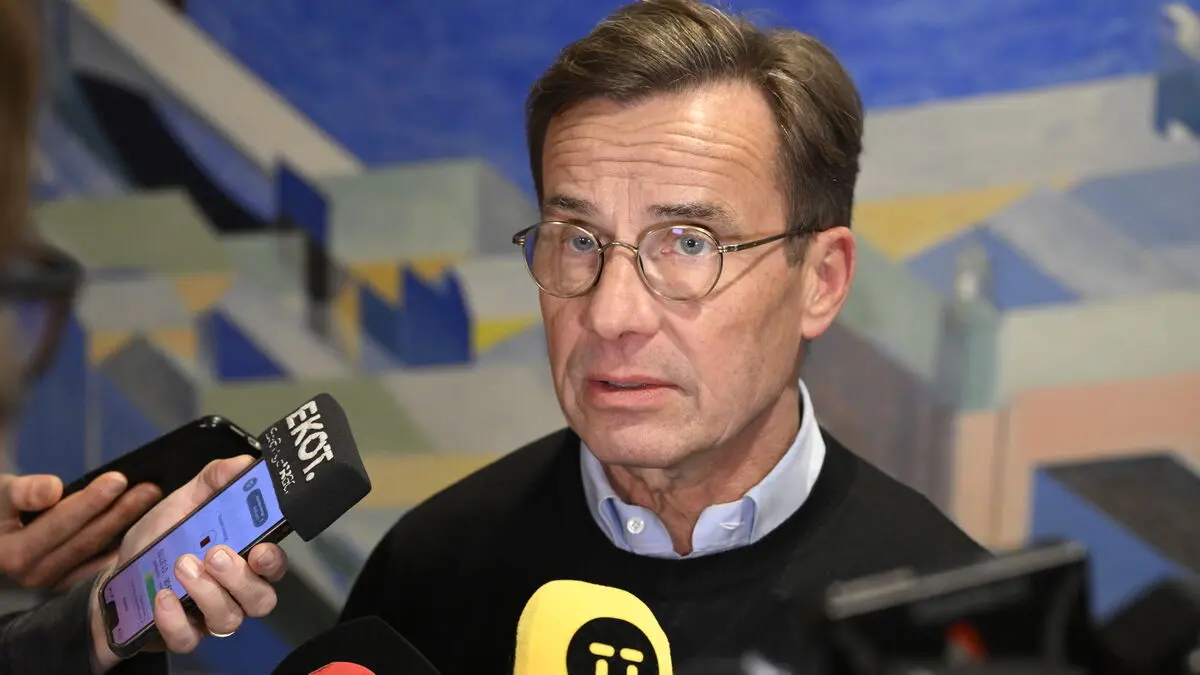
“You play and guess about big things. Sometimes it's completely banal things, like how many times Trump will mention something in a speech - will he say something about Greenland? But then you also play about other things - about war and all sorts of horrors,” explains Gothenburg professor Joakim Sandberg, who researches financial ethics.
Wildfire Games
The idea isn't really new, according to Sandberg. But in the past, it was more about using predictions as a more reliable form of opinion polling, where gambling with real money was thought to give markets the best idea of what would happen. The idea never really caught on.
“Here it is obvious that some economists have gone too far,” people thought at the time: “Should everything be listed?”
But now, in the past year, multimillion-dollar bets have been made on who would become the new pope, who would win the Eurovision Song Contest and when Taylor Swift's wedding will take place. But also on sanctions, airstrikes, regime changes and natural disasters.
“The gamification of everything is evil in the fullest sense of the word,” wrote former environmental professor Tyler Austin Harper on X a little over a year ago, while gamblers made millions guessing how much of California would be consumed by the wildfires that were raging at the time.
Incentives to influence
The question is what is just distasteful and what is immoral - and what is downright inappropriate, says Joakim Sandberg.
“You get a 'stake' in the whole thing. If I guess that there will be war, then I will make money if there is war. You might think that is a bit distasteful.”
But as long as it's about "side bets" - someone guesses there will be war, another that there won't be - Joakim Sandberg doesn't see any major dangers. However, he raises a warning.
“If this market starts to drive a larger part of the economy, then larger parts of the economy will have real incentives to try to influence real events.”
“If you can 'bet' on breaking your leg on vacation - then I will send someone to break your leg.”
Ukraine map changed
When large sums of money are at stake, the risks of corruption and manipulation also increase. Economic incentives can drive individuals to distort information, spread false rumors, exert pressure on decision-makers and analysts, or exploit insider information, say analysts. The market is blurring the lines between predicting events, betting on them, and influencing them.
These are questions that have already been raised in connection with the war in Ukraine, which, according to the gaming site I Gaming Today, has alone attracted around $100 million to prediction sites. But betting has been surrounded by doubts.
In November, for example, the prestigious think tank ISW was rocked by an insider scandal linked to a map of the battlefield. The map, which Polymarket uses in its payouts, suddenly changed and showed that Russia had unexpectedly captured the city of Myrnohrad in Donetsk. Several people won large sums of money as a result - but as soon as the winnings were paid out, the map was changed back. An ISW employee was subsequently fired.
Prediction markets thus reward those who can obtain factual information - or change it - and influence the course of events. In geopolitics and war, this can mean people close to power: officials, soldiers, entrepreneurs or leaked intelligence.
Trump's son involved
In the US, it can also mean people close to the president. Donald Trump's eldest son, businessman Donald Trump Jr., is an investor in and an unpaid adviser to Polymarket and a paid adviser to Kalshi. He also heads the Trump family's social media company, which recently announced it will launch its own prediction platform called Truth Predict.
This inevitably raises thoughts of insider trading, notes Professor Joakim Sandberg.
“He likely has a great opportunity to use knowledge of what his father will do to bet on various things and make money from it.”
But there is also a worse, more ominous scenario:
“If Trump can be influenced to do things that his son has asked for - then it becomes really dangerous,” says Sandberg.
“Reveals dark world”
The prediction market has the potential to corrupt the entire state apparatus, warned New York Democrat Ritchie Torres after Maduro's capture. He called for a ban on elected officials and government employees profiting on the sites.
“Imagine for a moment that a member of the Trump administration placed a bet predicting Maduro would be ousted. As both a government insider and a player in the prediction market, that individual would have a perverse incentive to push policies that would line his or her own pockets,” Torres wrote in The Washington Post.
Kalshi and Polymarket reveal a dark world, writes British journalist and author Iian Overton:
“A world where the line between understanding conflicts and profiting from them is uncomfortably thin.”
The prediction market consists of betting sites where bets are placed on future events, such as political elections, conflicts, award ceremonies or economic results.
With the goal of making money from correct predictions, trading is done on the probability of different outcomes.
Those who invested money or cryptocurrency on a correct outcome get paid.
The largest players today are the American Polymarket and Kalshi, but the market is steadily growing in size.
Several countries have chosen to restrict or block Polymarket, citing, among other things, conflicts with local financial and betting laws.