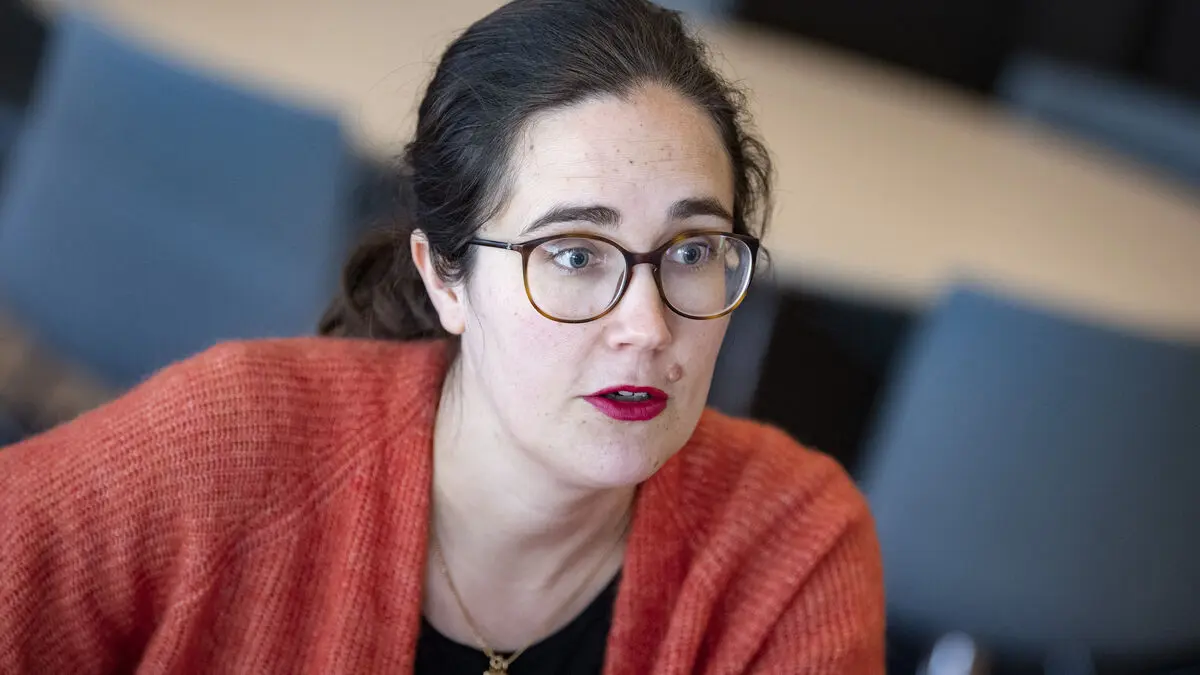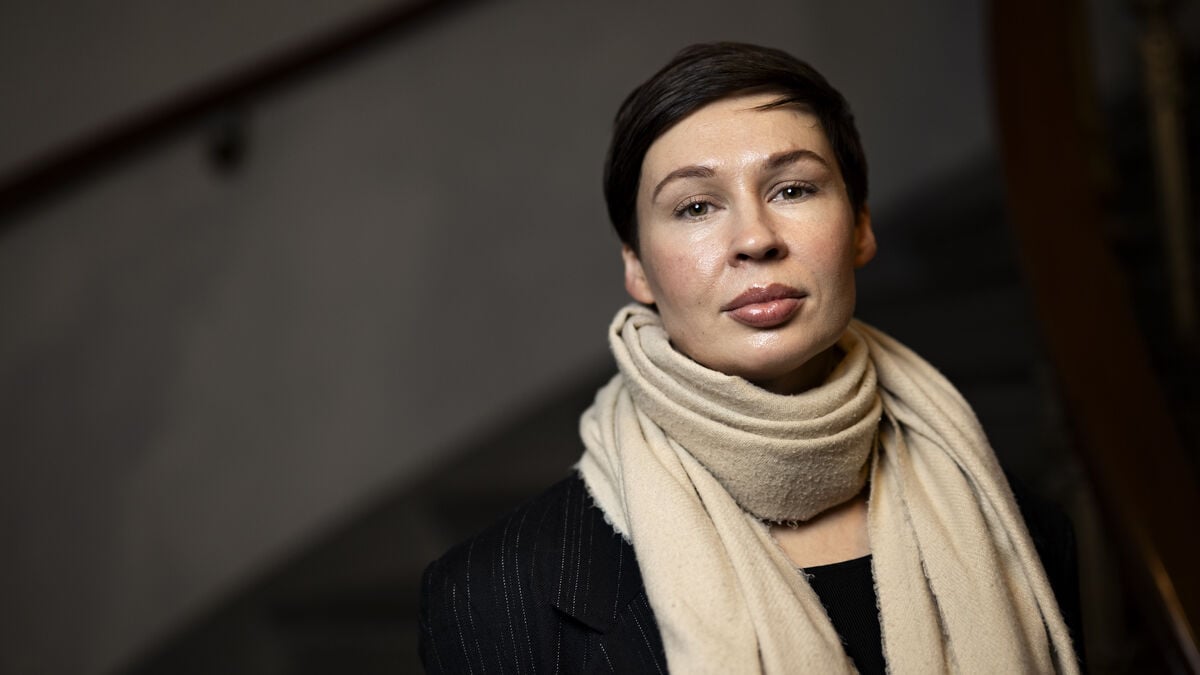
She has come to Stockholm via Poland together with her soon-to-be 18-year-old daughter.
"It's especially nice for her to get away from home," says Sofia Andrukhovych, who has been living almost completely without electricity for the past three weeks but, unlike many others, still had heat.
"I would say that the most difficult time in the entire war is now."
They have had electricity for three hours at a time at most, and then they have had time to charge their power banks, phones and computers. The Russian attacks in Kyiv come practically every day, she says, and two nights a week it is "really bad" with perhaps 50 robots and 700 drones. Sofia Andrukhovych has made a bed for herself and her daughter in the apartment’s windowless corridor.
"The only thing it would help against is broken glass," she says.
Right now there is widespread fatigue.
"We live in this constant tension. Even though it feels like we're used to it, we're not. It would be impossible; this is a whole other level."
Growing hunger
Sofia Andrukhovych began writing "Amadoka" after the Maidan Revolution in 2014. She was 32 years old at the time and was encouraged by a growing hunger for previously obscured Ukrainian culture.
In the thousand-page epic, she depicts Ukraine's forgotten and painful 20th-century history, including the pogroms and executions of Ukrainian Jews during World War II.
"Not only the role of victim but also that of perpetrator is part of our identity, and the most important thing is to know what happened in reality."
The second part deals with Stalin's systematic extermination of Ukrainian writers and cultural figures, including Mykola Zerov, a linguist and poet - "a Ukrainian Rilke," says Sofia Andrukhovych of her personal favorite. Together with thousands of others, Zerov was shot in Karelian Sandarmoch in 1937.
"It was difficult to comprehend the extent of the Russian killing," she says, adding that the archival discoveries shocked her.
Sold out
Now Zerov's poetry is being republished alongside the works of other murdered writers. Earlier this week, the day after the worst attack on Kyiv to date, Sofia Andrukhovych received a request to participate in a literary evening from one of the organizers, a mother of three without electricity or heating, who organizes book talks in a Kyiv theater for 600 people. It always sells out.
"The culture of Ukraine is so important now."
Sofia Andrukhovych about...
...the future:
I'm a realist. When I look at everything that's happening, it's hard to imagine the future. At the same time, I know that we have to imagine it in the best possible way, even though we know it's probably a dream.
...the way forward:
The world has changed. The only way is to work together and not trust the power that has proven to be too unpredictable, too selfish, too chaotic. We are so grateful to Europe and the Nordic countries, at the same time, Ukrainians know that they must trust themselves.
Born: 1982, daughter of one of Ukraine's most famous writers, Yuri Andrukhovych.
Lives: In Kyiv, with daughter and husband who is also a writer and translator.
Career: Debuted at the age of 18 and later had her international breakthrough with "Amadoka", which came out in 2020 and in Swedish in 2024 ("Amadoka I") and 2025 ("Amadoka II") in translation by Nils Håkanson.
Right now: Will be spending a month in Paris where she has been granted a writing residency. "Amadoka" will also be published in French later this year.