"It's very sad, it was never meant for her to die," says the 26-year-old.
The man, who wears glasses and is dressed in green prison clothes, sits leaning forward with his arms crossed.
"At that moment, I didn't think that a stab wound could, in other words, cause the person to die," says the man, who states that he regrets it.
Since he does not believe he had the intent to kill, he denies murder, but admits to aggravated assault.
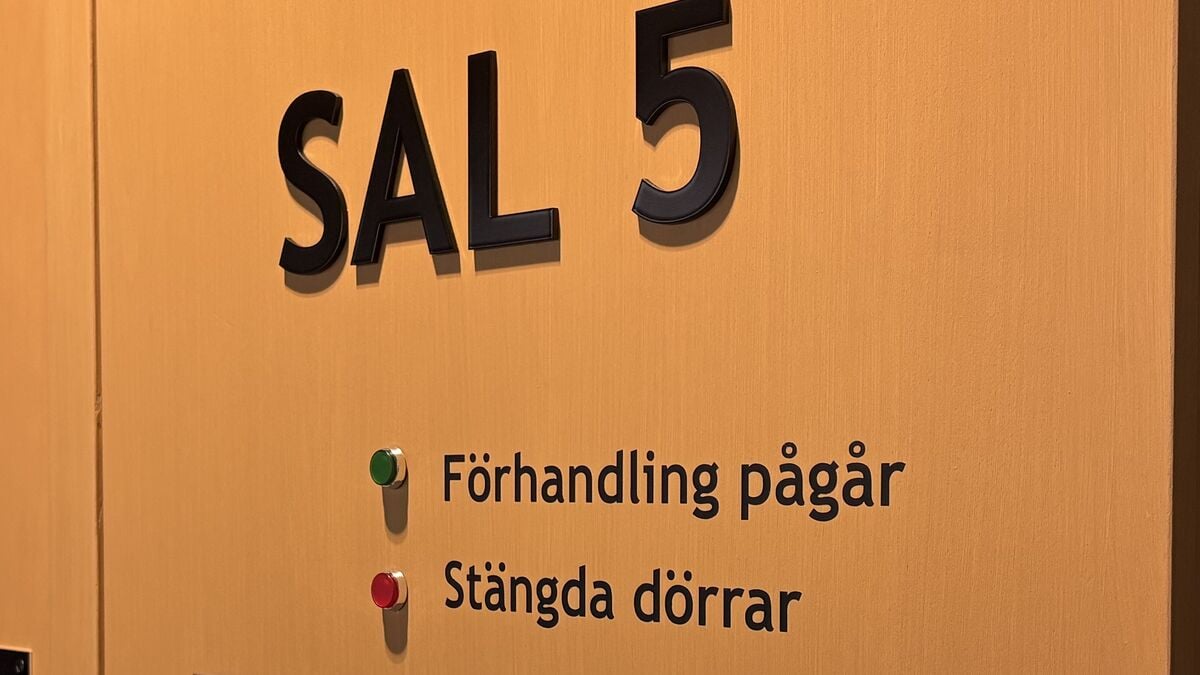
Audience members are following the trial via video link from a side room. Among them are colleagues of Helena Löfgren and also a representative from the Ambulance Association, which has long called for a system for flagging dangerous people.
Suicidal thoughts
It was on the morning of September 20 that the man alerted SOS that he was having suicidal thoughts and asked them to send an ambulance to his home in Harmånger.
In the conversation, he calmly told me that a few days earlier he had been threatening when he was taken to the psychiatric hospital by the police. However, this did not reach the two ambulance paramedics who went out, who were told that he was not acting aggressively.
When they knocked, however, he stood ready with a knife and attacked the paramedic who was standing closest, 47-year-old Helena Löfgren.
– I didn't have time to understand much. It was only then that I sort of attacked with the knife.
When asked what he did, he shows a stabbing motion from below.
Like this, says the man. Then they screamed and ran out.
Helena Löfgren collapsed outside her home and later died from her injuries.
The 26-year-old says he only remembers one stab, even though it is clear that she was stabbed several times. When asked, he says there may have been more, but that it is not something he remembers.
“Stone that fell”
He doesn't know what made him change from wanting to hurt himself to hurting others, but he says it was like a "stone fell" when he saw the woman collapse.
I've kind of handed my problems over to her, so I don't have them anymore. It felt good.
The man remained in the apartment after the crime but was arrested three hours later.
It soon emerged that three days earlier he had attacked another ambulance paramedic. The paramedic wrote a non-compliance report and reported the incident to his manager.
During the trial, the prosecutors explained that the man had repeatedly expressed thoughts about killing people in various contexts in August and September, in conversations with probation officers and with psychiatry.