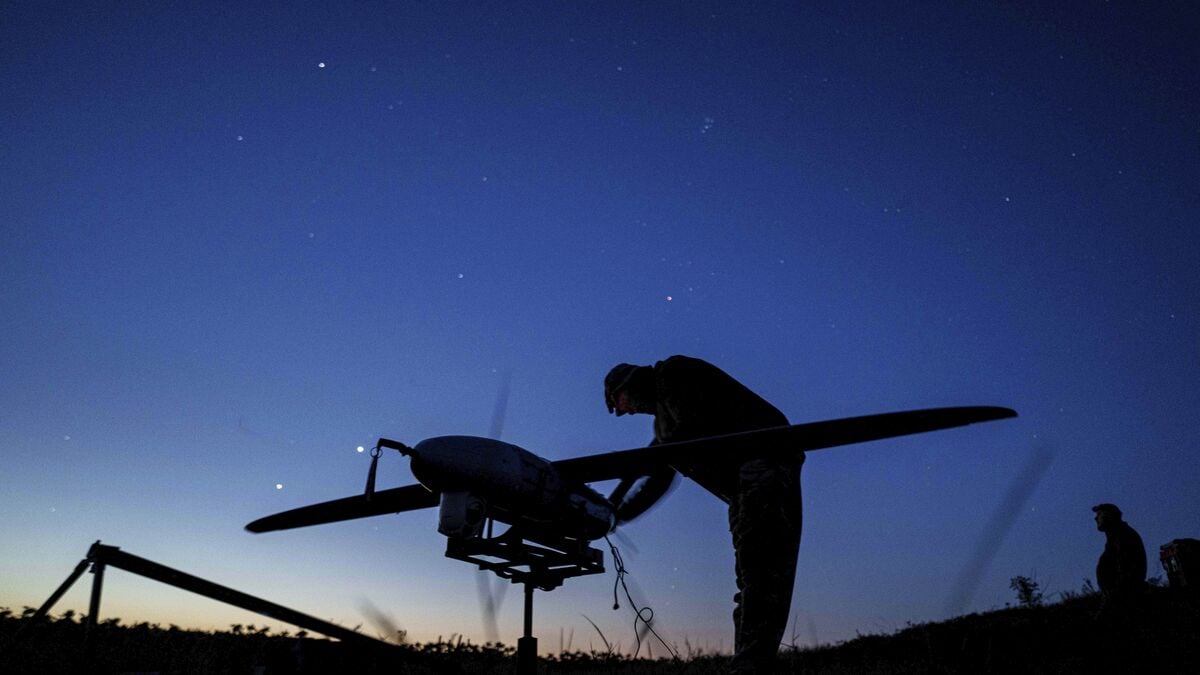
“The occupiers surrendered, and the operation was carried out without infantry and without losses on our side,” Volodymyr Zelenskyy writes on X about the unmanned capture of a Russian position - according to the president, the first such in the Ukrainian war.
Lars Forssell, a FOI researcher specializing in unmanned aerial systems and drone protection, emphasizes that much is unknown regarding the specific operation. But it could be historic.
I am not aware of any unmanned ground or aerial vehicles previously occupying a fortified enemy position in a "real war," so to speak.
At the same time, it is not unexpected.
I'm not really surprised. Unmanned systems, both on the ground and in the air, are advancing and becoming increasingly capable.
Protecting human life
Nowadays, there are unmanned ground robots controlled by AI - completely without human intervention - but Forssell guesses that in the Ukrainian case it is about remote-controlled systems.
It depends on how complicated the terrain is, whether it's very large rocks or open fields, he says.
According to Zelensky, Ukrainian-developed ground-based missile systems have carried out more than 22,000 missions at the front in three months.
"It's about high technology that protects the highest value - human life," he writes in the X post, which is an excerpt from a speech he gave to Ukrainian arms manufacturers on Monday.
"Better and better"
The benefits are great, notes Lars Forssell.
You are operating a machine - there is no need for a person to go first, fire and risk being shot. This reduces the risks for your own personnel.
Automated and robotic systems are expected to become more numerous and increasingly capable.
The trenches will probably still be there, but generally speaking, it can be assumed that the proportion of unmanned systems will increase, says Forssell.
They will get better and increasingly self-driving.
The concept of remote warfare encompasses various types of attacks carried out from a distance, without the need for soldiers on the ground.
Drone attacks are perhaps the most common. Attack drones are controlled by soldiers who monitor progress on a screen, often from a long distance, and fire on their targets with the push of a button.
Other types of military vehicles can also be controlled remotely, such as unmanned tanks and bulldozers.
Cyber attacks are also included in the concept: attacks against computer systems, networks and digital infrastructure that can be launched remotely and from great distances.
There are also automated weapon systems, which are becoming increasingly common. These systems can detect and select attack targets with limited or no human supervision.
AI systems for surveillance are also usually included in the concept of remote warfare.