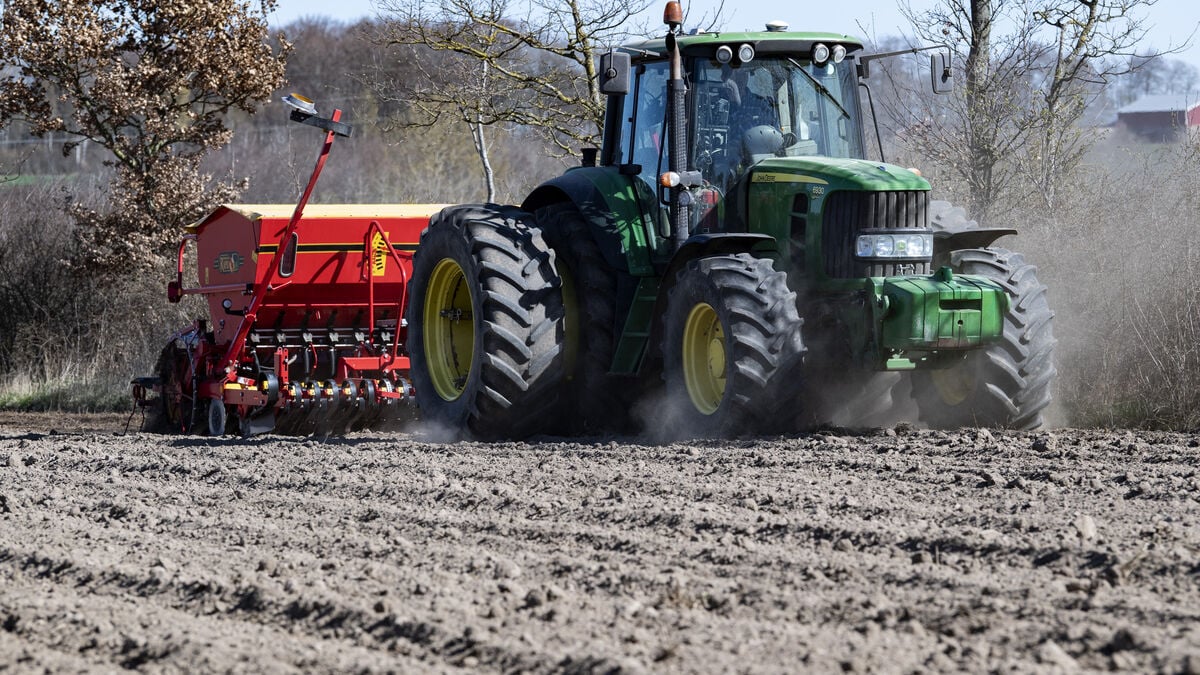
"We are increasingly concerned about the stability of the global fertilizer supply and farmers' ability to afford the nutrients they need to produce to their full potential," writes Tonje Næss, communications manager at Norwegian Yara International, in an email to TT.
Yara International is one of the world's largest producers of fertilizer.
"Rising energy and input costs are already pushing up fertilizer production costs," says Næss, noting that since a large part of the raw materials important for fertilizers are also found in the Persian Gulf, "fertilizer prices are rising sharply."
Doubled gas price
The statement comes after the price of natural gas on the Amsterdam Stock Exchange has more than doubled since the US and Israel began the bombing war against Iran on February 28. Gas futures are now 66.50 euros per megawatt hour – the highest prices since the energy price shock following Russia's full-scale attack on Ukraine in 2022.
“The food system is fragile and dependent on stable fertilizer supply chains to ensure that farmers can produce the food the world relies on,” writes Næss.
According to Næss, Yara International's direct exposure to the war-torn Middle East is limited, and she describes the company as well-positioned to handle turbulence.
"Yara is not directly affected in terms of physical assets or personnel. However, the situation increases risks to the supply chain, energy prices and shipping, and we are monitoring developments closely," she writes.
Reduced production in India
However, adaptation measures to the new gas price level have already been taken, according to an announcement earlier this week.
"Yara has reduced parts of its ammonia and urea production in India due to limited gas availability. As fertilizer prices in India are regulated and heavily subsidized, our margins there remain stable and are not tied to global nitrogen prices," writes Næss.